Look for Evidence of Complete Visual Control
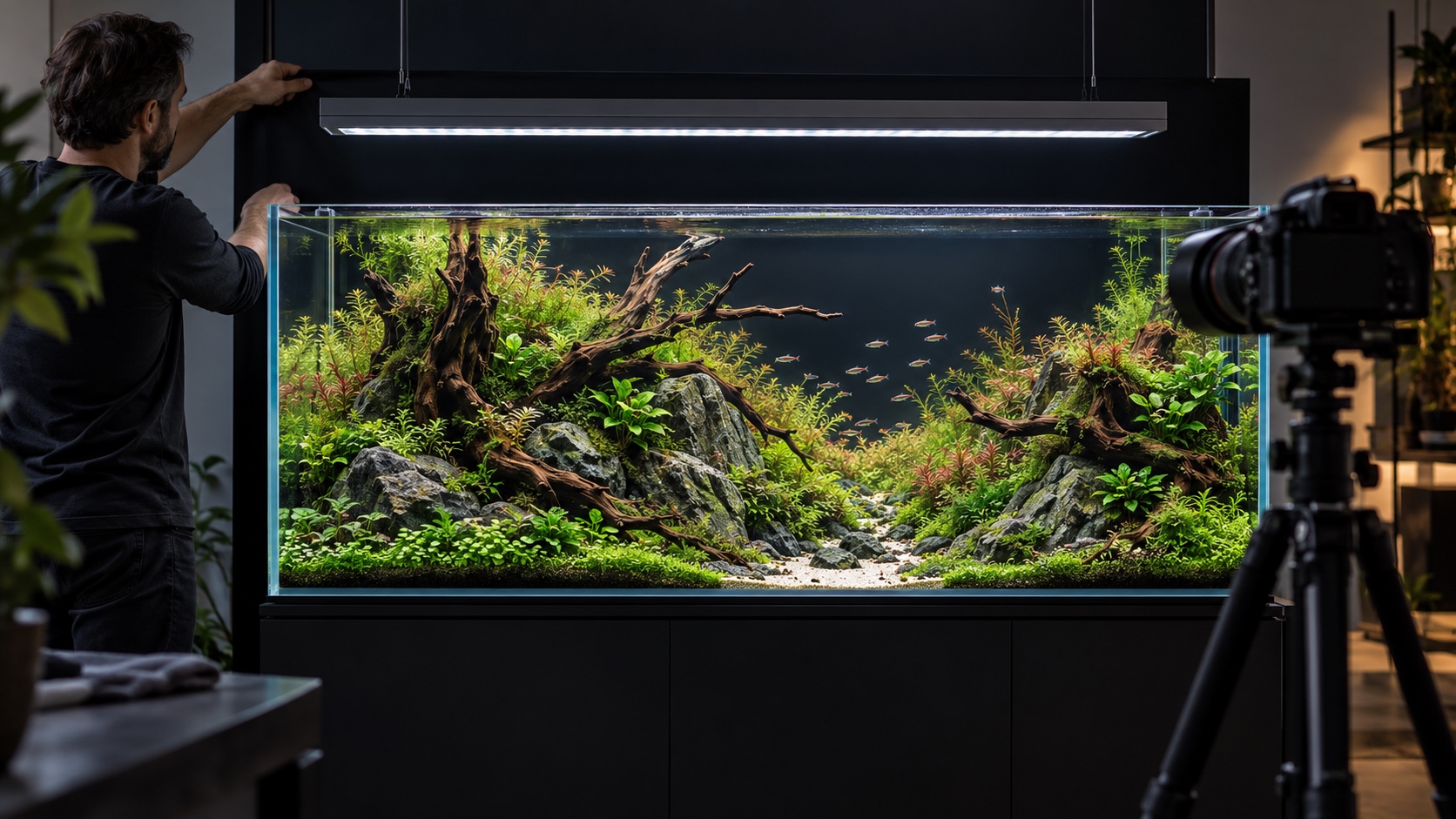
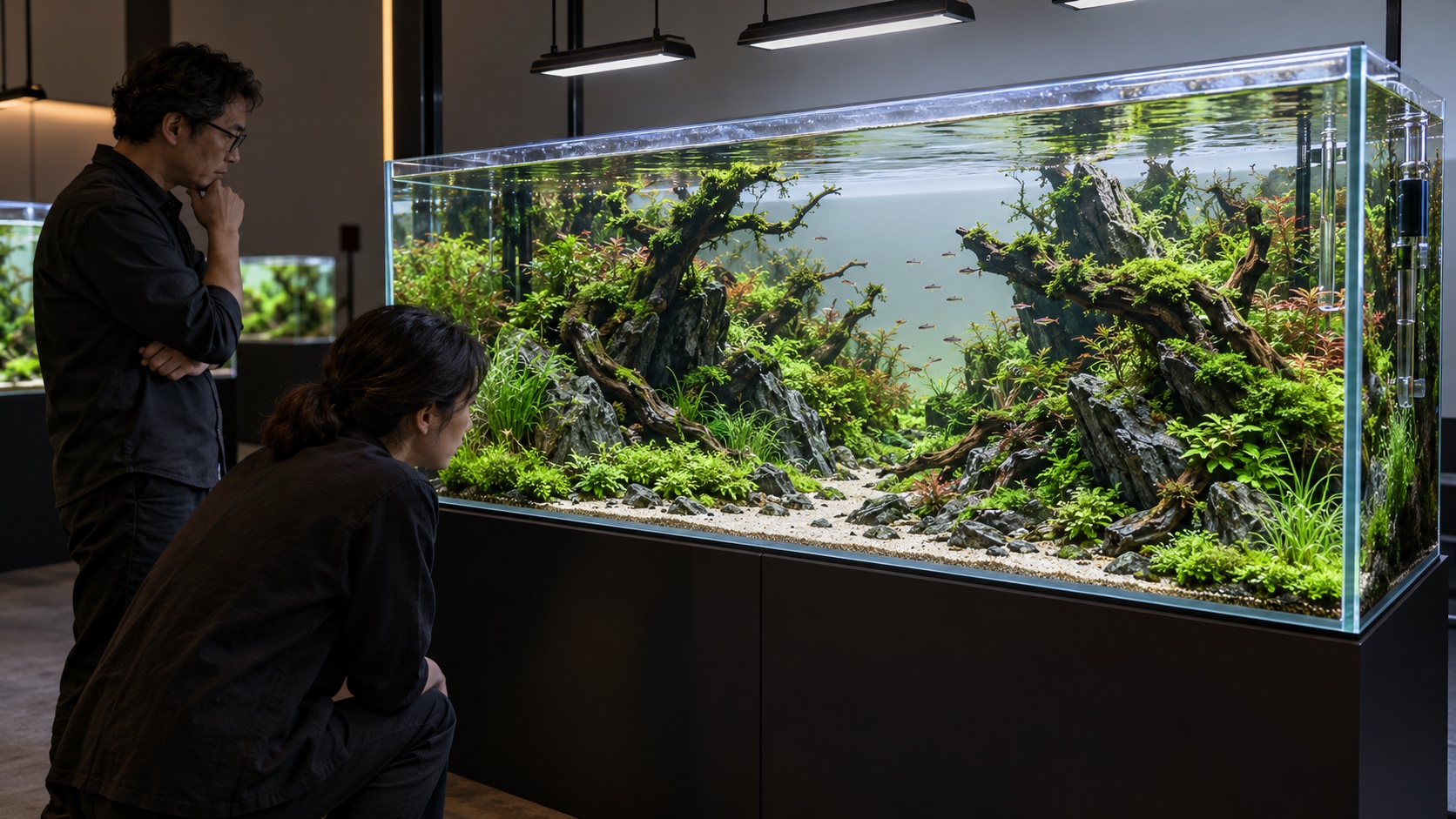
A competition-worthy aquascape is not simply a beautiful planted tank photographed on a good day. It presents a coherent visual argument while also revealing healthy growth, stable construction, believable scale, intentional detail, appropriate livestock, and disciplined presentation. Exact judging priorities vary, so no feature guarantees a score. Still, serious entries make it difficult to identify an unresolved area: the focal hierarchy is clear, transitions appear earned, negative space feels designed, plant condition supports the concept, and the photograph exposes rather than conceals the quality of the work.
A: No. Familiar styles can remain competitive when their relationships, health, finish, and presentation are exceptional.
A: The main concept, mass, direction, depth, and atmosphere should read before fine species detail.
A: Color can reinforce hierarchy, but placement, value, scale, line, and quiet space should establish it first.
A: They show whether materials form a believable integrated scene or merely sit beside one another.
A: No. Excess thickness can hide shaded decline, blocked flow, and a loss of designed boundaries.
A: Keeping open areas legible through months of spreading plants and migrating substrate requires deliberate maintenance.
A: Yes. Their scale, movement, behavior, and welfare affect depth, credibility, and the integrity of the entry.
A: Good photography reveals quality; using it to conceal unresolved work may violate rules and weakens honest evaluation.
A: It can emerge through specific spatial relationships, proportion, atmosphere, and translation of observed natural forms.
A: None. Worthiness comes from many artistic, horticultural, ethical, and technical qualities reinforcing one another.
The Concept Reads Before the Details
At first glance, a strong entry communicates mass, direction, depth, and atmosphere. The viewer does not need an artist statement to locate the main visual idea. Fine plants and stone texture reward longer attention, but they are not responsible for rescuing a confused silhouette.
Concept clarity does not require simplicity in every area. Dense scenes can remain readable when their complexity serves one movement and hierarchy. Problems arise when several attractive regions demand equal attention without a relationship. The viewer should be able to summarize the spatial idea without listing every object.
Hierarchy Guides the Eye Intentionally
The primary focal area should earn its emphasis through placement, contrast, scale, line convergence, or surrounding quiet. It should not depend on the brightest red plant alone. Color accents are most effective when the structure already directs attention.
Secondary interest provides a route rather than competition. Repeated branch angles, plant textures, stone faces, or open channels can carry the eye from one region to another. The sequence should feel discoverable without becoming mechanical.
Edges matter. An important line that collides with the rim, side pane, waterline, or another branch can stop movement abruptly. Competition-level finish accounts for the rectangular frame as part of the composition.
Negative space participates in hierarchy. Open water, sand, or a low planting zone gives the dense mass room to register. Filling every gap usually weakens the contrast that made the focal area powerful.
Scale Remains Convincing Across the Scene
Judges and viewers infer distance through material size, texture, overlap, perspective, and fish. Foreground elements carry greater visual weight; distant elements become finer without disappearing. An oversized rear leaf or equally thick branch at every depth can collapse the illusion.
Scale should remain coherent at the side boundaries and surface. A miniature valley framed by a visibly massive heater or coarse rear substrate loses credibility. Equipment concealment, plant choice, and camera position all influence the result.
Livestock contributes living scale. Adult size and group spacing should fit the imagined landscape. Fish that dominate the scene or scatter chaotically can make the aquascape feel smaller and less composed.
Hardscape Appears Structurally and Visually Integrated
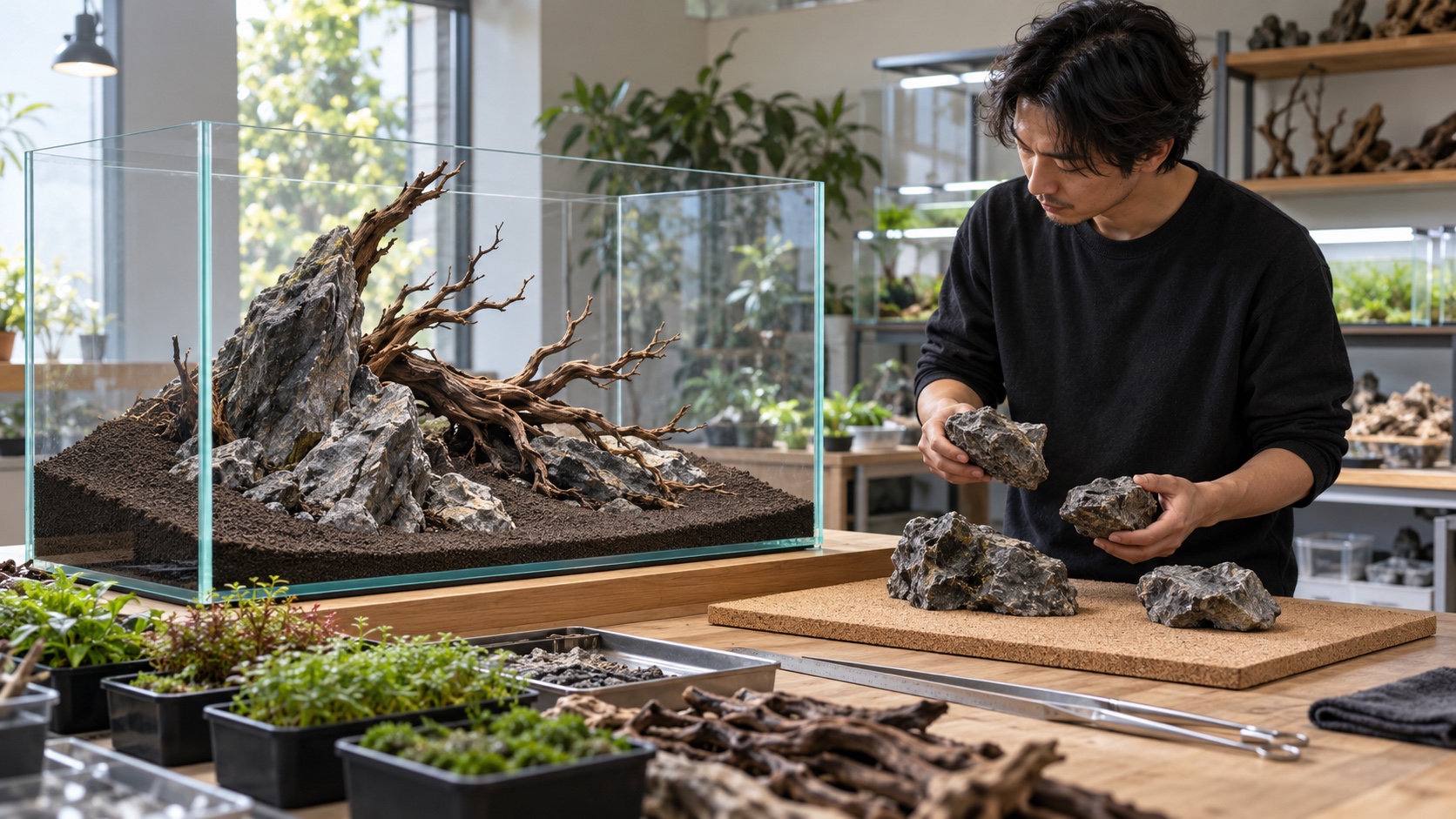
Competition-worthy hardscape is stable enough to survive long maintenance and specific enough to support the concept. Stone strata, grain, fracture, and wood taper follow related directions. Bases connect to substrate through believable contact, fragments, roots, planting, and shadow. Stability should not depend on the surrounding plants hiding a precarious balance. Large pieces need support appropriate to their weight and the tank, while branches must resist maintenance contact and water saturation changes. Look for visual evidence that construction has remained in position through the grow-in period: slopes retain their shape, paths do not collapse, and major joints stay aligned. A strong design makes stability invisible without making it optional.
Planting Strengthens the Architecture
Plants should reveal, soften, frame, and extend hardscape rather than cover indecision. A moss line can continue a branch; a rosette can anchor a shadowed base; fine stems can suggest distant canopy. Each group has a spatial purpose beyond species display.
Healthy growth is visible in intact tips, appropriate internode length, firm crowns, clean leaf surfaces, and natural response to trimming. A perfect silhouette built from stressed plants is not complete execution. Damage may be normal in a living system, but widespread decline weakens credibility.
Transitions Reward Close Inspection
The meeting points between rock, wood, substrate, and plants often separate a convincing landscape from an arrangement. Large objects rarely end in isolation. Smaller related forms, roots, accumulated substrate, and irregular plant margins explain how surfaces connect.
Detail density should vary. Important contacts may be rich with fragments and fine leaves, while open regions remain quiet. An even sprinkle of identical pieces looks applied rather than formed.
Foreground transitions deserve particular care because the camera resolves them clearly. Carpet thickness, sand contamination, exposed mesh, cut runners, or abrupt plant borders are visible evidence of whether the layout has matured under control.
Close detail must still support the distant read. A technically elaborate foreground that pulls attention away from the intended focal mass is over-resolved. Competition worthiness comes from coordinated scales of attention.
Negative Space Feels Protected
Open areas tend to shrink as plants spread and fragments migrate. Preserving them requires trimming, runner removal, sand maintenance, and sometimes redesign. Their continued clarity shows that the aquarist managed the composition over time instead of allowing growth to determine every boundary.
Color Supports Structure and Atmosphere
Green contains many values and temperatures, so a predominantly green aquascape can still possess rich contrast. Red, bronze, or pale accents should occupy deliberate areas and repeat only when the repetition helps visual movement.
Color consistency matters in photography. Extreme channel balance or saturation can separate plants from the world implied by stone and wood. Controlled color lets texture, health, and depth remain believable.
Dark backgrounds and shadows must retain information where important. Crushing every recess to black can create drama while hiding unfinished joints. A competition image should make the aquarium’s strengths inspectable.
Livestock Looks Appropriate and Undisturbed
Fish and invertebrates must suit the actual water, temperature, space, current, cover, and social conditions. Their pose in one photograph cannot compensate for inadequate husbandry. Normal coordinated behavior is both an ethical requirement and a visual asset. Examine whether a schooling group has enough individuals and open distance to move naturally. Territorial species need boundaries that do not turn the focal opening into a conflict zone. Bottom dwellers need substrate and floor access compatible with the foreground design. The aquarium should remain a suitable home after lights, camera, and room are returned to ordinary use.
Stocking should not be manipulated into a dense photographic cloud through crowding or startling. Patient photography captures useful group positions while preserving animal welfare. An image of distressed livestock undermines the entire entry. Feeding can influence position, but excessive or unfamiliar feeding immediately before capture may disturb water clarity and behavior. Avoid tapping glass, chasing with nets, or using abrupt darkness to force movement. A longer quiet session with a remote release is more consistent with competition-level care and often produces a more convincing arrangement of fish.
Technical Finish Survives Full-Size Viewing
Clean glass, controlled algae, even background, concealed permitted equipment, tidy substrate boundaries, clear water, and resolved plant cuts form the baseline. These are not glamorous features, but their absence is immediately visible.
Focus, exposure, white balance, reflection control, and framing must reveal the aquascape accurately. A sophisticated design photographed with soft focus or clipped highlights cannot be evaluated fully. Presentation is part of communication, not a cosmetic afterthought.
Image processing should remain within the rules and preserve the true state of the tank. Removing an unwanted object digitally when it was present in the aquarium may cross an event’s limits. Technical finish should be achieved primarily before capture.
The file itself must comply. Dimensions, format, color space, naming, metadata, and submission fields may be judged administratively rather than artistically, but mistakes can prevent a worthy tank from reaching the panel.
Originality Emerges From Specific Relationships
Originality does not require materials nobody has seen. It can arise from an unusual spatial observation, a distinctive balance of mass and emptiness, or a fresh translation of a familiar habitat. The relationship between parts matters more than novelty shopping. Trace the design’s influence to what the aquarist noticed rather than which winning entry was imitated. Common stone, wood, and plants can feel singular when their proportion, direction, and atmosphere express a specific observation. Novel materials without an organizing idea remain merely unfamiliar.
The Aquarium Appears Viable Beyond the Photograph
A credible entry suggests that plants can be maintained, hardscape will remain stable, animals have adequate space, and service access exists. Some competitions emphasize long-term viability explicitly; even when they do not, a visibly unsustainable arrangement can feel theatrical rather than complete. Look for evidence that glass can be cleaned, stems can be reached, filter flow can continue, and open swimming areas remain useful at adult stocking size. Clever concealment should not make essential equipment impossible to inspect. A scene can appear immersive while still acknowledging that it is a living aquarium requiring repeated physical care.
Growth should appear mature but not exhausted. Over-thick carpets, shaded lower stems, collapsing moss pads, and blocked flow may produce temporary fullness while signaling decline. Controlled density is more convincing than maximum density. Examine how light reaches lower tissue and whether current can pass behind the major masses. Plants at the surface should not form an accidental lid unless the concept and livestock support it. Mature planting retains internal structure, not merely volume, and its next maintenance step should be understandable from the visible form.
The aquarium’s energy level should match its operation. Strong light, injected carbon, heavy fertilization, circulation, and trimming form one system. Evidence of uneven growth across the footprint suggests the resources or maintenance have not been coordinated. Competition photography can hide neither distorted new tips nor bare lower stems when the image is inspected closely. Consistent growth at the far ends, behind hardscape, and beneath the canopy demonstrates distribution rather than a favorable central zone. The livestock should also remain calm through the full daily energy cycle.
Recovery after trimming is part of viability. Plant groups should branch, root, and regain natural edges predictably. A composition that requires constant replacement rather than managed regrowth has not reached the same level of horticultural control. Look for coherent age structure within groups: fresh tips, supporting mature tissue, and deliberate removal of weak bases. A recently cut hedge with exposed identical stubs may be healthy but not yet photographically resolved. A group that has recovered should have a shaped volume with natural surface variation and no obvious loss of its lower foundation.
Competition worthiness is therefore cumulative. Clear concept, hierarchy, scale, integration, health, transitions, negative space, livestock care, photography, originality, and viability reinforce one another. No isolated trick substitutes for that agreement, and the strongest entries allow close examination without losing their first visual impact. Evaluation should also remain tied to the event’s actual criteria. A habitat-focused category may reward a different balance of authenticity, equipment visibility, and plant density than an artistic open category. Compare entries within the correct framework rather than applying one personal checklist universally. Even so, unresolved contradictions tend to remain visible across systems: a dramatic path that cannot be maintained, rare plants in poor condition, a beautiful mass without hierarchy, or a polished photograph that obscures animal stress. A competition-worthy tank aligns what it claims to be with what its construction, living condition, and final image actually demonstrate.