Spend on Stability Before Decoration
Budget aquascaping works when the aquarium is designed around a firm total limit instead of assembled from whichever cheap items appear first. The essentials still have to support safe water, suitable temperature, biological filtration, dependable lighting, stable hardscape, healthy plants, and compatible livestock. Savings should come from restraint, used equipment inspected carefully, slow-growing plans, propagated plants, and materials chosen for several roles. A small coherent aquascape with accessible maintenance will usually look more intentional than a larger tank whose safety and operation were compromised to afford decorative variety.
A: No. Specialized dimensions, instability, and limited equipment choices can make very small systems unexpectedly costly.
A: Structural support, electrical safety, suitable filtration, temperature control, water care, and livestock welfare come first.
A: Only when they are confidently identified, uncontaminated, physically safe, and compatible with the desired water chemistry.
A: No. Many plants can grow in suitable inert substrate with an appropriate water-column and root-nutrition plan.
A: Choose compatible species that propagate well, start with healthy groups, and allow time for controlled expansion.
A: It can be, but tanks, stands, seals, cords, motors, and replacement-part availability require careful inspection.
A: Yes in appropriate systems, provided its biological capacity, flow, noise, and livestock fit are sufficient.
A: Yes, including proper group size, food, quarantine, long-term care, and potential veterinary needs.
A: Upgrade when repeated observations identify a real capacity or reliability constraint that the purchase will solve.
A: A limited material palette, healthy grouped plants, clean boundaries, stable proportions, and consistent maintenance create coherence.
Set the Complete Cost Ceiling First
Include the tank, stand, light, filter, heater if required, substrate, hardscape, plants, water conditioner, test supplies, timer, maintenance tools, livestock, food, quarantine needs, and an emergency reserve. A decorative budget that ignores safe operation is not a complete plan.
Separate one-time purchases from recurring expenses. Electricity, filter media where needed, fertilizer, replacement lamps or fixtures, water, food, and livestock care continue after setup day. Choose a system whose ordinary upkeep fits the same financial reality as the initial build.
Reserve money for failures. A heater, pump, or light can stop unexpectedly, and livestock cannot wait for the next sale. The emergency amount may mean using fewer plant species or delaying decorative upgrades.
Write a “not now” list for attractive extras. A second wood type, premium tool, decorative background, or advanced gas system can wait until the aquarium proves that it needs the function. Delayed purchases are easier than recovering money spent on incompatible equipment.
Choose Dimensions That Work With Common Equipment
A very unusual tank shape may require specialized lighting, lids, stands, and filtration. Standard dimensions often create more used-market choices and easier replacements. Compare total system cost rather than assuming the smallest tank is automatically cheapest.
Water volume affects stability and stocking, while height affects lighting and maintenance reach. A shallow, modest tank can create a strong aquascape with less hardscape and easier coverage, but it still needs a safe level stand and appropriate care.
Buy Used Hardware With a Safety Inspection
Inspect aquarium seams, chips, scratches, brace condition, and repair history. Do not buy a tank whose structural integrity is uncertain simply because the price is low. Ask to see it holding water when practical, then perform a controlled leak test in a safe location before placing it indoors.
Check filters and lights for damaged cords, corrosion, unusual heat, missing seals, noise, and unavailable replacement parts. Electrical equipment near water deserves caution. Never operate a device with compromised insulation or an improvised repair.
Used stands must support the aquarium’s full filled weight across the intended footprint. Look for swelling, racking, rust, loose fasteners, and an uneven top. Furniture that happens to fit the glass is not automatically an aquarium stand.
Limit Hardscape to One Strong Material Family
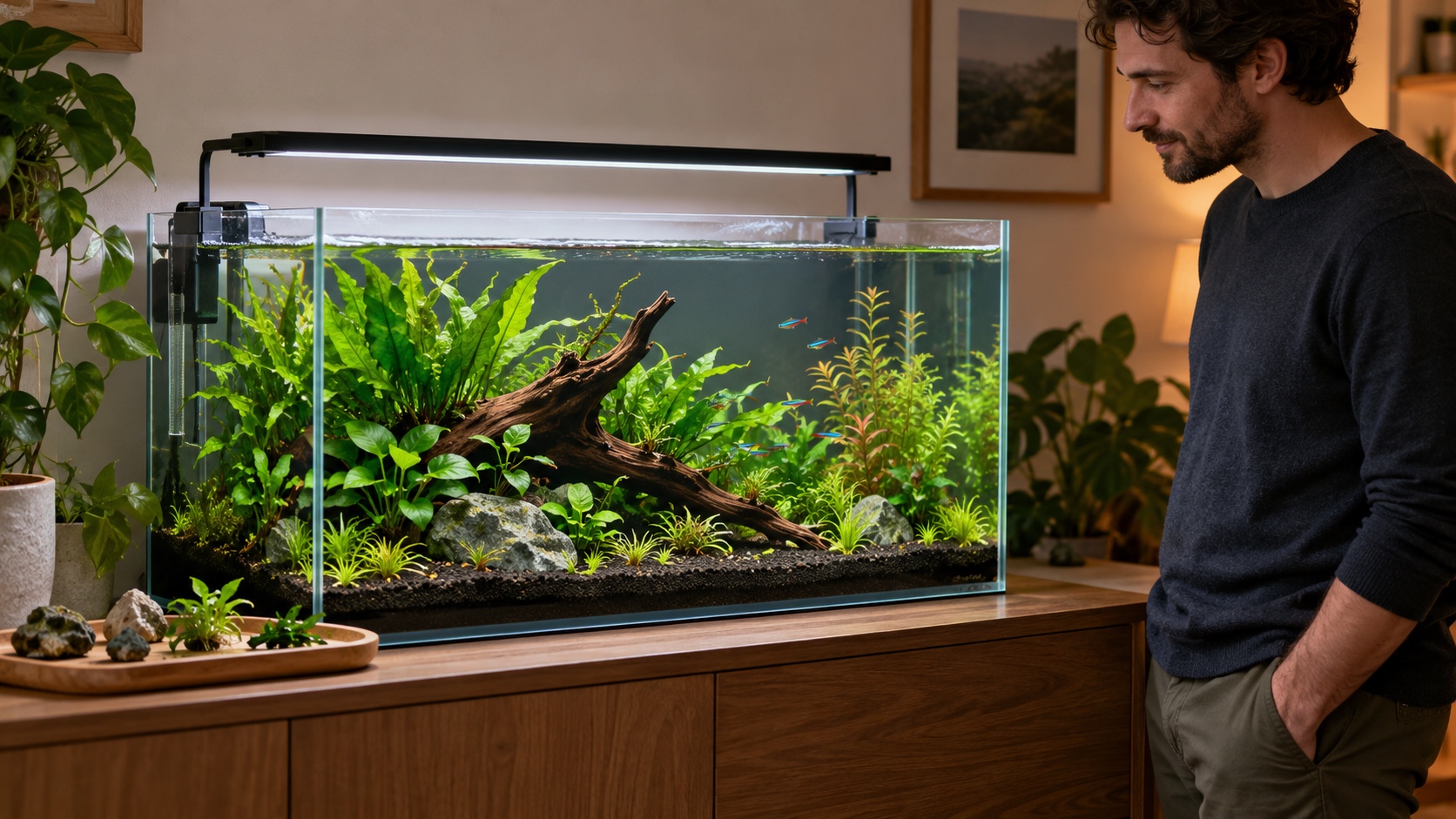
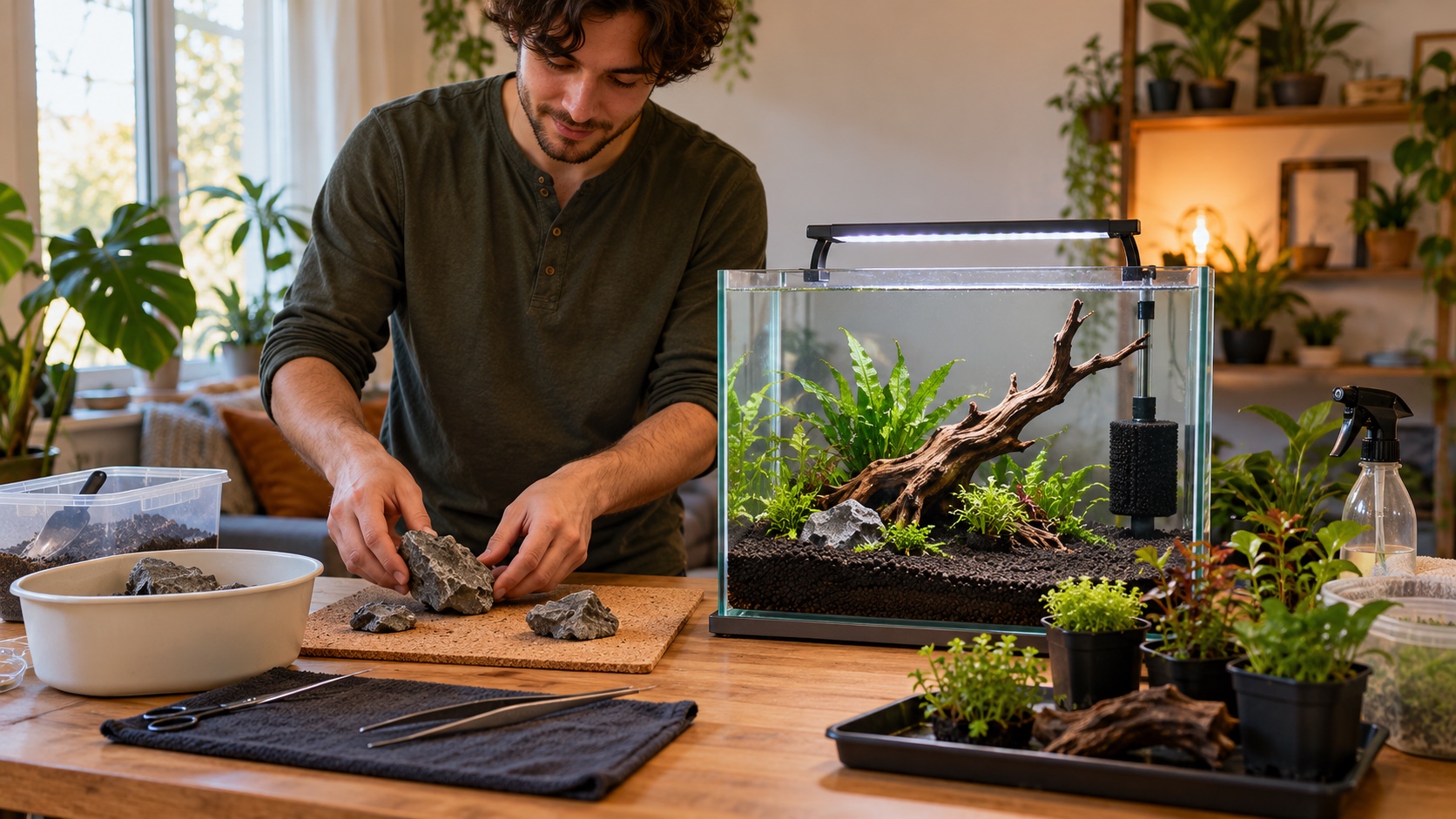
A few related stones or one expressive piece of aquarium wood can establish more unity than a basket of mismatched bargains. Plan the silhouette before buying by using cardboard shapes or ordinary blocks as scale stand-ins. Purchase only the sizes the composition requires. Carry the tank’s interior dimensions when visiting a shop or seller, and compare pieces from the intended viewing height. Dry stone can change color underwater, while wood may require soaking and may initially float. Include those behaviors in the plan. One oversized bargain that cannot be stabilized or leaves no swimming and planting room is more expensive than a smaller piece selected for the actual footprint. Photograph trial combinations before choosing, because the camera quickly reveals duplicated shapes and scale problems.
Use Aquarium-Safe Materials, Not Unverified Finds
Free material is not economical if it changes water chemistry unpredictably, carries contaminants, has sharp unstable fractures, or decays. Identify stone and wood confidently and follow appropriate preparation guidance. When identity is uncertain, choose material sold for aquarium use by a reliable source.
Do not boil large rocks, bake unknown materials, apply household sealants casually, or use metal fasteners that can corrode. Preparation methods must match the material and avoid creating pressure, fumes, fire, or contamination hazards.
Keep hardscape stable with sound construction rather than a hidden pile of expensive specialty products. Appropriate supports, contact surfaces, and conservative heights can reduce material quantity. Test the dry layout from several directions before adding substrate and water.
Save small matching fragments for transitions. They help integrate a limited material set without requiring a second rock type. Use them in clusters where larger pieces meet the ground rather than scattering them uniformly.
Select Substrate by Planting Method
Inert sand or gravel can support many designs when roots receive needed nutrition through a planned method and plants suit the grain size. Active aquasoil can simplify some demanding plant goals but costs more and may affect startup chemistry. Compare the complete method, not the bag price alone. Include root tabs, replacement or topping schedules, startup water changes, and the difficulty of separating decorative sand from nutrient soil. The cheapest first bag may create the most expensive maintenance method for the chosen layout.
Use depth where roots and slopes require it instead of creating an unnecessarily thick uniform layer. Hidden inert support can reduce premium substrate volume only when it remains stable and appropriate for the layout. Prevent mixing that will become difficult to maintain.
Build the Plant List Around Propagation
Choose a small number of compatible species that can expand through division, runners, or stem cuttings. One healthy group grown out over time often creates a more convincing mass than many single specimens. Verify mature size so the eventual volume suits the tank.
Trade Speed for Lower Plant Cost
Begin with enough healthy material to establish each group, then allow it to propagate under moderate stable conditions. Sparse planting requires patience and careful algae management, but it can reduce the urge to buy duplicate pots before roots settle.
Use fast growers strategically as temporary nutrient uptake and cover, but decide how they will be removed or reduced later. A cheap plant that overwhelms the intended layout creates maintenance cost in time.
Join local aquarium clubs or responsible plant exchanges when available. Confirm identification, inspect health, and quarantine according to the aquarium’s risk plan. Free or inexpensive cuttings still deserve careful handling.
Choose Low-Energy Operation Deliberately
Easy plants, moderate light, a timer, useful circulation, and realistic growth expectations can avoid the expense and maintenance of a pressurized carbon system. Low energy does not mean no fertilizer or testing; it means demand is designed to remain manageable.
Run the fixture at the lowest effective intensity and duration. This may reduce electricity slightly, but its larger benefit is preventing a demand level that forces additional equipment and constant intervention. Extra output can remain available for later.
A simple sponge filter can suit some modest aquariums when its flow, capacity, noise, and livestock compatibility fit. Other layouts need a different filter. Choose by biological and circulation requirements, not by a rule that one cheap device serves every tank.
Use timers and routines to protect consistency. Forgotten lights, irregular fertilizer, and postponed water changes often cost more through algae outbreaks and plant replacement than basic scheduling tools would have cost.
Spend Carefully on Livestock
Stock for adult size and social needs, not the lowest unit price. A species that outgrows the tank, requires a larger group, or damages plants can force expensive correction. Calculate the full appropriate group and quarantine setup before purchase.
Delay livestock until the aquarium is cycled and stable. Plants do not make ammonia or nitrite exposure safe. Replacing animals lost to a rushed start is ethically unacceptable and financially wasteful.
Maintain the Aquascape With a Small Reliable Kit
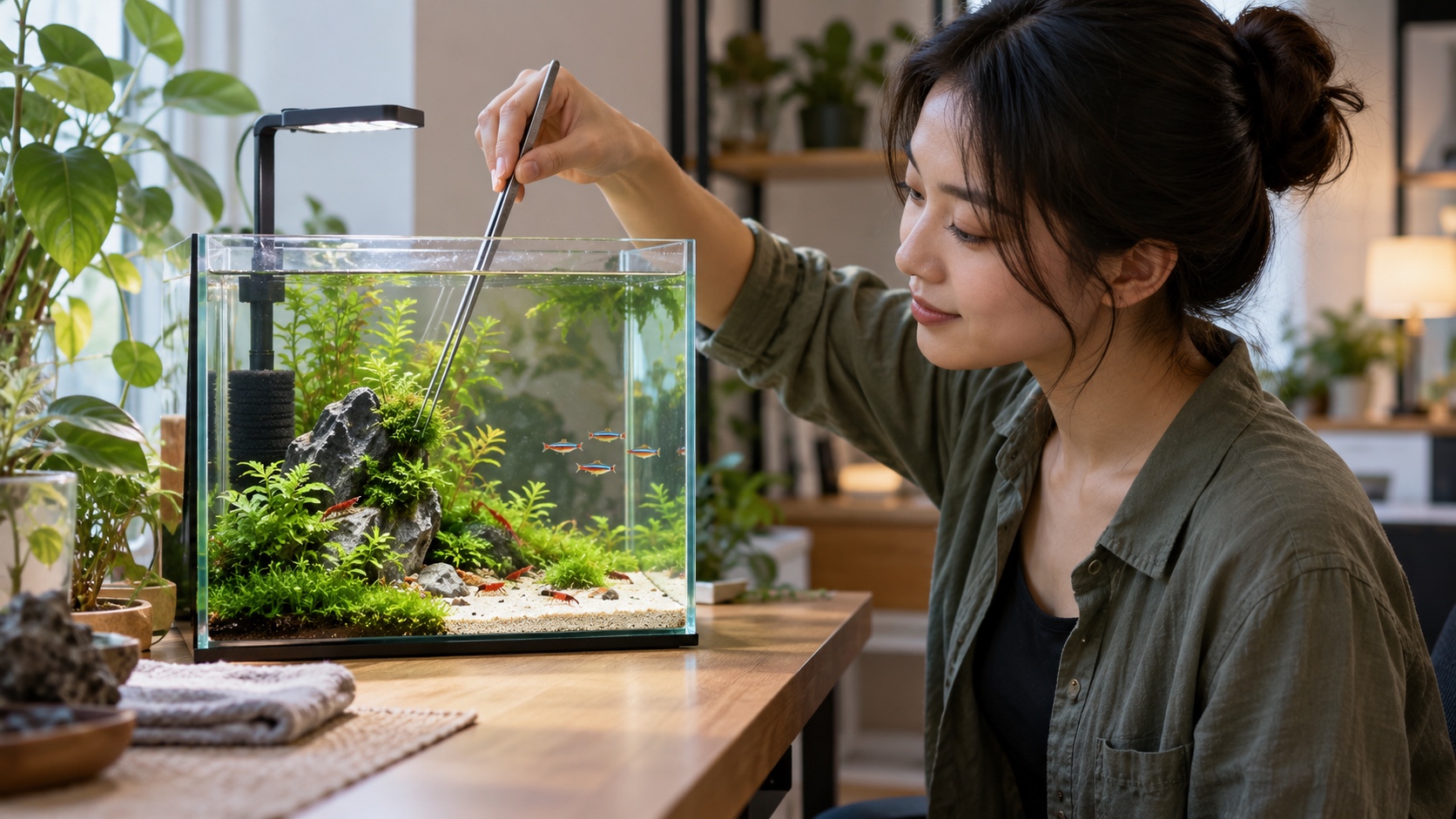
Useful basics may include a dedicated bucket, water-change hose or siphon, algae tool suitable for the glass, plant scissors, long tweezers when the tank requires them, towels, and accurate measuring tools. Buy fewer tools that fit the aquarium rather than novelty sets with unused pieces.
Clean and dry tools appropriately, store them together, and use dedicated aquarium containers. Cross-contamination from household chemicals can destroy far more value than a second bucket costs.
Propagate before replacing. Healthy tops, divisions, and runners can refill thin areas after correction. Do not multiply diseased, algae-covered, or unidentified plants merely because new stock costs money.
Keep a simple expense and maintenance log. Small repeat purchases reveal where the design is inefficient. If one plant or device consumes ongoing rescue spending, replace the underlying strategy rather than treating each failure as isolated.
Upgrade Only When Evidence Identifies the Constraint
Photograph the aquarium weekly and record light, fertilizer, flow, water quality, trimming, and livestock behavior. When a problem repeats, confirm whether equipment capacity is actually responsible before shopping. Many issues originate in placement, maintenance, or incompatible expectations. Compare the same camera angle and point in the maintenance cycle so growth can be judged fairly. Note when a plant was moved or divided, because temporary weakness after disturbance is different from a persistent equipment limitation. A short record prevents the latest frustrating day from outweighing several weeks of steady improvement.
Prioritize safety and reliability upgrades first. Replace questionable electrical equipment, undersized filtration, unstable stands, or failing heaters before buying decorative materials. The aquarium’s appearance depends on the system remaining intact. Use drip loops, appropriate outlets and protection required for the location, and keep power connections away from spills. Do not extend the service life of corroded or overheating equipment through makeshift repairs. A modest safe device is a better budget decision than a feature-rich bargain carrying unresolved risk.
Borrow or rent specialized measurement tools when local resources permit. A temporary PAR meter, for example, may answer a lighting question without becoming a permanent purchase. Use borrowed equipment correctly and return it clean. Aquarium clubs may also lend fish traps, large containers, moving equipment, or reference books. Confirm cleaning requirements before equipment touches another system, especially when disease transfer is possible. Shared resources save money only when they are handled responsibly and do not create a biosecurity cost.
Sell or trade equipment that no longer fits rather than storing every experiment. Describe its condition honestly. Recovering part of the cost can support a purposeful replacement while reducing clutter around the aquarium. Keep one true emergency spare only where failure would create immediate risk and the spare can be stored safely. Label compatible parts and retain manuals so they remain useful. A cabinet full of unidentified hoses, damaged lights, and incomplete filters is not a reserve; it is money and space that no longer serves the plan.
A strong budget aquascape makes restraint visible as coherence. It spends first on a safe vessel, dependable operation, compatible living material, and accessible care. Time, propagation, and informed upgrades then add maturity without turning every design decision into a purchase. Review the cost plan after three and six months. Compare predicted recurring expenses with actual conditioner, fertilizer, food, electricity, replacement, and travel costs. If one choice repeatedly exceeds the plan, redesign the method while the system remains stable instead of waiting for a crisis. The best savings are durable: standard parts, healthy propagated plants, limited materials, moderate energy, appropriate livestock, and a routine simple enough to perform on time.