Make Restraint the Main Design Tool
A beautiful budget aquascape does not need to advertise what it lacks. It needs a clear silhouette, a limited material family, healthy grouped plants, useful negative space, and proportions that suit the tank. Once safety and dependable operation are funded, visual impact comes from how a few elements relate rather than how many objects were purchased. The build becomes affordable by rehearsing before buying, propagating compatible plants, choosing moderate energy, and allowing time to create fullness. Beauty grows from coherence and care, not from disguising a crowded list of inexpensive compromises.
A: Yes. Strong proportion, repetition, transitions, and mature plants can make limited materials feel intentional.
A: Safety and dependable operation come first, followed by elements that establish the main design.
A: Use a full-scale footprint and substitute shapes, then photograph the arrangement from tank height.
A: No. Variation in height, grouping, texture, and negative space can make a small compatible palette rich.
A: Yes. Consistent trimming and planned group boundaries turn propagated material into cohesive mature masses.
A: Replace it when verified coverage, reliability, or plant-demand limits persist after cleaning and placement checks.
A: No. A safe plain external background can reduce distraction and clarify the existing composition.
A: It gives visual contrast and depth without requiring another object or plant group.
A: No. Confirm identity, health, compatibility, and quarantine needs before adding any material.
A: Coherence, healthy growth, clean transitions, controlled proportions, and consistent maintenance create polish.
Choose One Visual Promise
Write a short description of the finished view: a shaded root bank, a quiet stone island, or a planted slope opening onto sand. The promise narrows purchases. Materials, plants, and equipment that do not support it can remain at the store, even when discounted.
Allocate Money by Consequence
Fund the safe tank, level support, appropriate filtration, temperature control when needed, water care, and reliable light before decorative variety. A failed stand or unsuitable heater has greater consequences than an imperfect rock.
Reserve a small emergency amount. The final plant pot or ornament can wait; a replacement pump may not. Keeping the reserve untouched is part of the design because it protects the living system after setup.
Separate purchases that determine appearance from those that merely add options. One correctly scaled wood piece may determine the whole composition. A third tool, second substrate color, or extra plant species may contribute little.
Track recurring costs alongside setup spending. A design requiring constant plant replacement, excessive electricity, or proprietary media can exceed a slightly higher but stable initial choice.
Rehearse the Composition at Full Scale
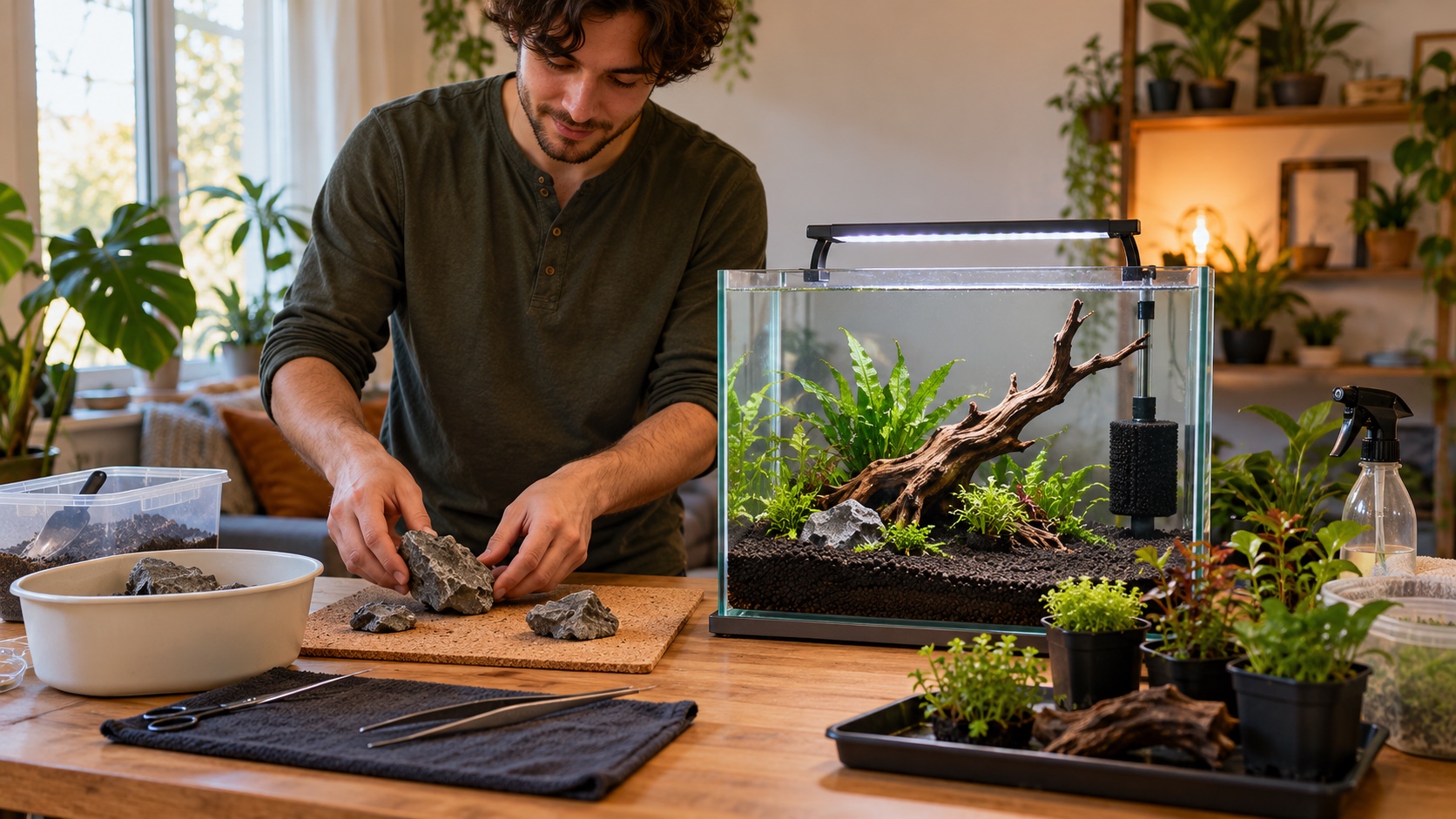
Mark the interior footprint on cardboard and arrange substitute shapes before shopping. Use folded paper for stones and sticks for branches. Photograph the trial from the future camera height to estimate mass and negative space.
Take the dimensions and photographs when selecting materials. A piece that looks modest on a warehouse floor can dominate a small aquarium. Buy for the mapped role rather than for impressive size outside the tank.
Build a Strong Silhouette With Few Pieces
Choose one primary object and let smaller related pieces support its direction. Rotate stone for grain and wood for taper. The main structure should remain readable before plants soften it.
Group secondary pieces instead of distributing them evenly. A concentrated stone base and a quiet open area create stronger contrast than many isolated rocks. Save matching fragments for contacts with substrate.
Check stability from every service direction. A low material count is not permission for precarious balance. Design supports and contact points while the tank is dry and accessible.
Use Substrate to Shape Space
Raise the substrate only where roots, perspective, or hardscape support require it. A controlled slope can direct the eye and reveal the foreground, but it needs retention that survives maintenance. Keep decorative sand zones simple enough to clean without continually replacing mixed material. Calculate bag quantity from the actual depth map rather than covering the entire base at the maximum depth. Where hidden support is appropriate, ensure it cannot collapse, expose sharp material, or create anaerobic waste pockets. Test the intended siphon and planting tools in the dry layout. A narrow sand path may look economical on setup day but become costly if ordinary cleaning mixes it with dark soil every week.
Choose Plants That Multiply Into the Design
Start with a few species that share light, temperature, water, and nutrient needs. Give each a visual role. Repeating the same fern, crypt, moss, or stem in several deliberate groups creates unity and makes propagation useful.
Buy healthy tissue rather than the largest damaged portion. Remove packing, inspect crowns and rhizomes, and plant according to anatomy. A smaller viable plant can expand; a cheap rotting base may never become value.
Use runners and cuttings to fill planned areas over time. Keep the boundaries visible by removing expansion into open sand or another group. Propagation should strengthen composition, not merely produce maximum biomass.
Trade responsibly through local clubs when available. Verify identity and quarantine as appropriate. Inexpensive cuttings deserve the same pest and contaminant precautions as retail plants.
Let Moderate Energy Protect the Budget
Easy plants under the lowest effective light reduce the pressure to add carbon equipment or replace algae-damaged leaves. Set a consistent photoperiod with a timer. Increase intensity only when documented new growth across the tank supports the need.
Match fertilizer to plant mass and source water using one coherent method. Combining partial bottles and guessed doses is not economical when it creates uncertainty. Measure the actual water volume and record changes.
Create Depth Through Placement
Overlap hardscape, narrow paths, reduce leaf scale toward the rear, and use open foreground to establish distance without additional objects. Move a group before buying a new one. Spatial relationships cost nothing after the materials are owned.
Make Maintenance Part of the Composition
Leave a route to the filter, heater, glass, and planted groups. A design that must be dismantled for ordinary care will become expensive in damaged plants and postponed maintenance.
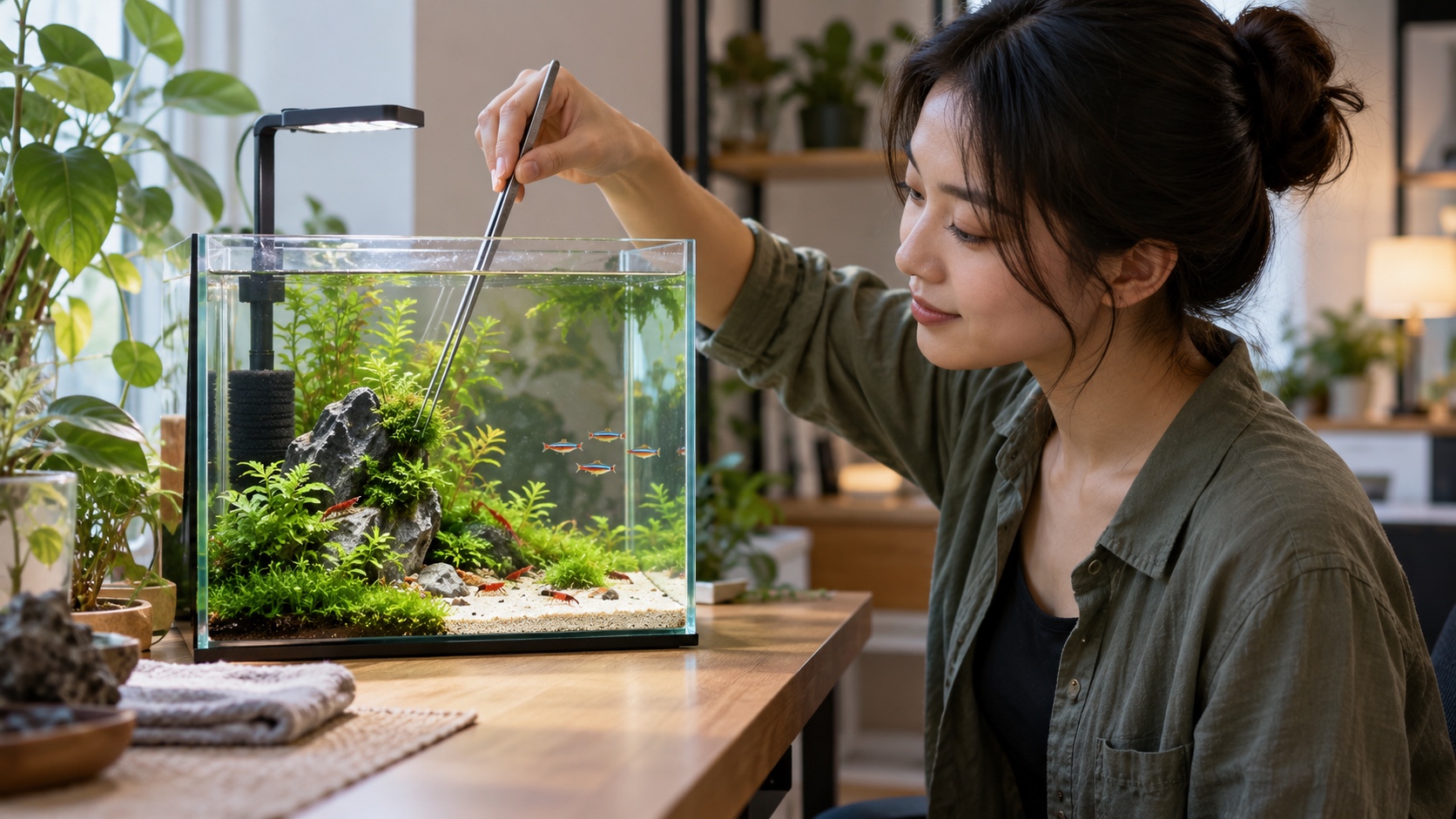
Trim to preserve the original silhouette. Thin from inside dense groups, replant only strong tops, and remove runners that close the intended negative space. Use photographs to compare the mature tank with the plan.
Keep dedicated containers and clean basic tools together. Preventing contamination and lost equipment is cheaper than replacing livestock or repeatedly buying small accessories.
Use Livestock to Complete the Scale
Choose animals for the aquarium’s adult capacity, water, temperature, group needs, and aquascape. A correctly sized school can make a modest layout feel expansive. Overstocking to make the tank appear active increases cost and reduces welfare. Compare the price of the proper group, food, quarantine, and lifetime care rather than the cost of one juvenile. A bargain species that needs a larger tank is not a budget choice. Select fish whose normal swimming height complements the composition and whose behavior will not uproot the limited plant stock. Let mature planting and open water provide visual activity instead of forcing density through stocking.
Cycle the aquarium fully and budget for quarantine, food, and long-term care. Plants do not make ammonia or nitrite safe. Delay livestock rather than spending the reserve to correct a rushed start.
Protect swimming space and feeding access as plants spread. The original design must adapt to real animal behavior. A beautiful picture is not worth creating territorial traps or inaccessible waste pockets.
Observe how fish use shade and open water before changing the layout. Their preferred routes may reveal a useful gap or unsafe chokepoint. Correct function with rearrangement before purchasing more shelter.
Refine the Finished View Without Shopping
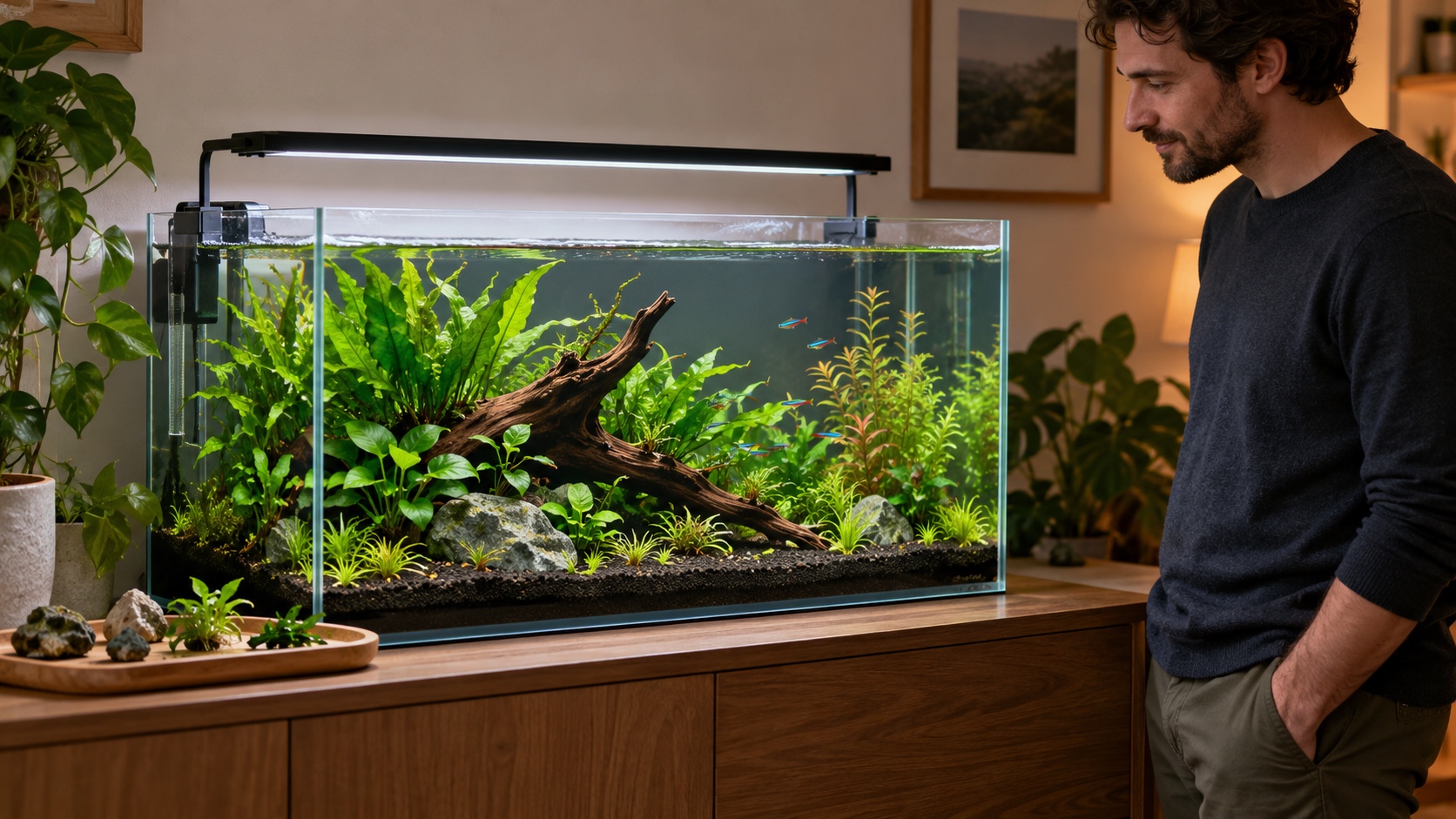
Clean the front glass, straighten the waterline, remove equipment clutter outside the tank, and choose a quiet background. These presentation changes reveal the aquascape already present. They should not conceal unsafe equipment or reduce ventilation. Route cords with drip loops and keep power connections accessible even when hiding them from the main view. Clean the fixture lens and lid so existing light reaches the plants before purchasing a stronger lamp. Remove labels, spare bottles, nets, and food from the cabinet top. A calm surrounding makes the aquarium appear more finished while improving the keeper’s ability to notice leaks, mineral deposits, and equipment drift.
Adjust plant height to reveal important hardscape. Move one conflicting accent rather than adding another. When the eye cannot find a focal area, subtraction usually costs less and works better than a new centerpiece.
Upgrade Only After the Tank Identifies a Limit
Keep weekly photographs and a short record of light, fertilizer, flow, trims, and plant response. Confirm whether a recurring problem is caused by capacity, placement, maintenance, or species choice before buying equipment. Photograph from the same height after the same maintenance interval so apparent changes are comparable. Note outages, seasonal window light, room-temperature changes, and large plant removals. When one region fails while the rest of the tank grows, investigate shade, circulation, planting depth, or livestock disturbance before replacing the fixture. When every region changes together, verify the shared equipment and routine. A record turns an upgrade from a reaction into a testable decision with a stated expected result.
Prioritize safety and reliability. Replace damaged cords, unstable furniture, failed seals, and inadequate filtration before adding decorative polish. The visual investment depends on the system remaining secure. Inspect power connections for appropriate drip loops and protection, keep plugs away from splash zones, and stop using equipment that overheats or exposes conductors. Verify the stand remains level and dry, especially around cabinet edges that can swell. Check filter seals, impellers, heater operation, and intake guards on a schedule. These tasks may be invisible in the finished photograph, but they protect every plant, animal, and purchased material inside the tank. A decorative upgrade cannot compensate for a system whose failure is predictable.
Borrow a specialized meter or tool for a short diagnostic when possible. A measurement can show that the existing light is adequate or that the problem is distribution. Purchase only when repeated use justifies ownership. Local clubs may lend PAR meters, fish traps, long forceps, moving containers, or reference materials. Clean shared equipment according to agreed biosecurity rules before it contacts another aquarium. Record the measurement conditions, including water depth, fixture height, intensity, and location, so the borrowed session remains useful later. A single number without context can encourage the wrong purchase; a simple map of several positions can reveal that repositioning or plant relocation costs nothing and solves more.
Sell or trade incompatible supplies honestly. Recovering part of their value can fund a purposeful correction. Do not keep every failed experiment simply because money was once spent on it. Clean items safely, photograph their true condition, list missing parts, and never pass on equipment with concealed electrical or structural damage. Retain one emergency spare only where failure would create immediate harm and the spare can be tested and stored properly. Label tubing, seals, and adapters with the equipment they fit. An organized cabinet prevents duplicate purchases; a box of unidentified parts creates the illusion of value while making the next repair slower.
A beautiful budget aquascape is built twice: first by deciding what the composition can omit, then by growing the remaining elements into balance. Safe operation, a limited palette, patient propagation, clean negative space, and evidence-based upgrades produce a tank that looks deliberate rather than inexpensive. Review the build after three months and again after six. Compare the original cost plan with actual replacement, electricity, fertilizer, food, and maintenance expenses. Identify which decisions saved money without creating extra work and which merely moved cost into the future. Adjust the method while the aquarium is stable: simplify an unreliable plant group, reduce excessive energy demand, or replace a recurring disposable with a dependable standard part. Keep the visual promise visible during these changes. Budget discipline is not a one-day shopping achievement; it is the continuing ability to sustain the design without sacrificing safety, animal care, or ordinary household finances. Photograph the same front view each month and let visible growth guide the next purchase. Often the least expensive improvement is pruning, repositioning one stone, cleaning the glass, or waiting for planted mass to mature rather than adding another product.