Growth Begins With a System the Plants Can Repeat
Live aquarium plants grow when species choice, planting method, light, carbon, nutrients, water, and maintenance support the same pace. No single bottle or lamp can compensate for a plant whose roots are buried incorrectly or whose mature form does not fit the tank. The practical path is to plan the growing environment, prepare each plant by its anatomy, establish it without damaging roots, and judge new growth over several weeks. This approach may feel slower than changing settings whenever a leaf melts, but it creates evidence. Once the aquarium produces repeatable new leaves and roots, shaping the layout becomes gardening instead of rescue.
A: Plants can be installed during setup, but livestock still requires proven biological filtration and safe water conditions before introduction.
A: Bury enough bare lower stem and nodes to hold securely while keeping leaves above the substrate and spacing the cuttings.
A: They may be too shallow, bundled, disturbed by strong flow, or missing sufficient bare stem below the surface.
A: No. Plants can grow in inert substrate with appropriate nutrition, while active soils offer different benefits and startup behavior.
A: Wait until the plant is rooted and actively producing suitable submerged growth, then trim according to its growth form.
A: Only when nutrition is the limiting factor; excess cannot replace correct planting, suitable light, carbon, flow, or healthy roots.
A: Remove soft decaying tissue gradually while protecting a firm crown, rhizome, roots, and any emerging submerged growth.
A: No. Bubble formation depends on several physical conditions and is not a universal measure of plant health.
A: Timing varies by species and conditions; use rooted attachment and repeated healthy new growth rather than a fixed deadline.
A: Roots hold, new leaves appear predictably, trims recover, water remains safe, and the routine can be repeated consistently.
Plan the Growing Environment Before Buying Plants
Measure the tank’s internal height and planting footprint. Record temperature, pH, hardness, alkalinity, substrate, filter flow, light model, and fixture height. Decide whether the aquarium will use ambient carbon only or a pressurized system. Select plants whose verified requirements overlap with the livestock and one another.
Draw a mature planting map. Reserve foreground access, midground transitions, background height, swimming routes, and equipment clearances. Mark hardscape shade and the filter’s circulation path. This prevents a light-loving plant from being assigned to darkness or a large rosette from closing the only feeding area.
Build a Stable Substrate and Nutrient Plan
Choose substrate for both animals and roots. Active aquatic soil can provide nutrients and change water chemistry, while inert sand or gravel may require root tabs or water-column fertilization. Follow the product’s startup and replacement guidance. Keep heavy hardscape on stable foundations rather than compressible planting media.
Decide how nutrients will reach different growth forms. Rooted rosettes and heavy root feeders can draw strongly from the substrate. Stems, mosses, floaters, and epiphytes depend substantially on water-column availability. Use a complete method that accounts for plant mass, source water, livestock feeding, and water changes.
Record the starting method and avoid layering several overlapping fertilizers. More nutrients do not force growth when light or carbon is limiting, and reducing all nutrients does not automatically cure algae. Give one coherent program time to show results in new tissue.
Prepare Plants by Anatomy, Not by Pot
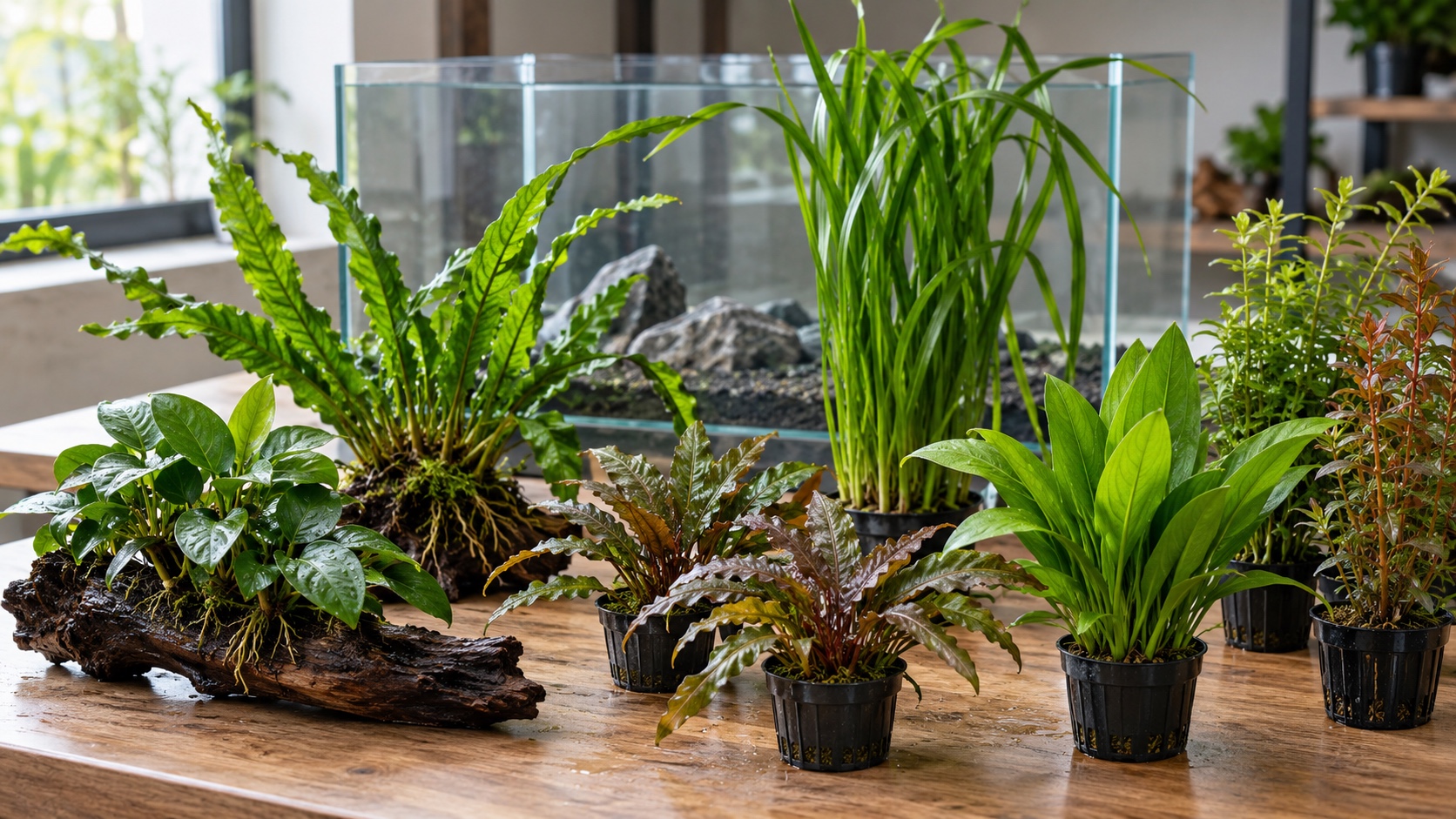
Remove plastic pots, metal weights, gel, and rock wool carefully. Rinse roots and inspect crowns, rhizomes, stems, and leaves. Trim clearly dead roots and damaged tissue with clean tools while preserving healthy structure. Separate bundled stems and crowded rosettes into manageable individuals. A retail pot is packaging, not a planting unit. Confirm whether each plant should be rooted, attached, floated, or allowed to run before it enters the aquarium.
Plant Each Growth Form at the Correct Depth
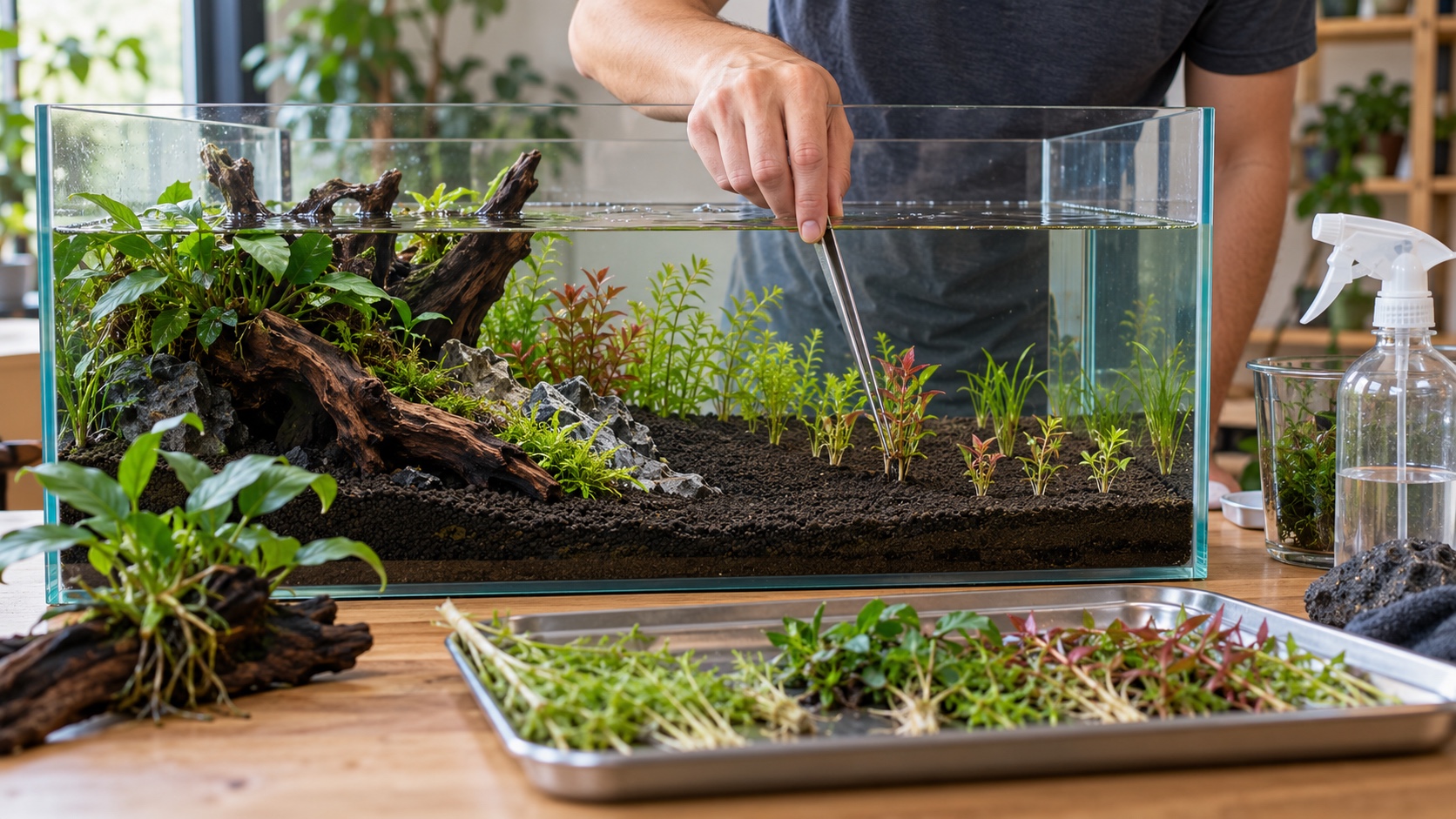
Insert stems one at a time with bare lower nodes beneath the surface and leaves above it. Angle tweezers slightly, release, and withdraw without pulling the cutting back out. Space stems so light and flow reach their lower sections. Dense groups can be built over time through branching.
Place rosette roots into the substrate while leaving the crown exposed. Long roots can be shortened conservatively when needed for handling, but do not remove a healthy root system merely to fit a shallow hole. Firm substrate around the roots without packing the crown.
Attach rhizome plants to wood or stone with aquarium-suitable methods. Keep the rhizome and growing tip uncovered. Moss should begin as a thin layer. Heavy clumps trap debris and detach before the inner portion receives flow.
Plant carpet plugs in small portions across damp substrate, maintaining species-appropriate spacing. Avoid burying the leaves or crowns. Place more plugs in zones where rapid closure is needed and fewer near stones that should remain exposed. Mist plants during long dry work.
Fill Slowly and Protect the New Root Zone
Cover the substrate with a plate or plastic sheet and add conditioned water gently. Pause at shallow depth to replace floating stems and repair soil channels. Start the filter at the correct water level and direct broad circulation across plants without uprooting them. Remove loose leaves before they enter the intake. Test the filled water, especially when active soil may release ammonia or alter hardness and pH.
Expect some emersed nursery leaves to be replaced by submerged growth. Watch crowns, roots, rhizomes, and new tips. Remove soft decaying tissue while preserving firm healthy parts. Do not uproot every plant to check progress; visible new growth and gentle selected checks are better evidence.
Set Light According to the Slowest Limiting Resource
Begin with moderate intensity and a consistent timer-controlled photoperiod. Higher light increases demand for carbon and nutrients and can expose startup instability. Adjust mounting height or distribution before extending hours. Shade from wood, floaters, and tall stems changes the light at the leaf.
Supply Carbon Safely and Consistently
Low-energy aquariums can grow many suitable plants without injected carbon dioxide, but growth will generally be slower and plant choice more constrained. Keep light aligned with that pace. Maintain surface movement and circulation so plants and animals receive stable gas exchange.
For pressurized systems, use proper equipment, secure the cylinder, check connections, and follow manufacturer instructions. Establish repeatable delivery and distribution before raising light. Monitor livestock closely. Carbon dioxide should not create gasping, loss of balance, or inadequate overnight oxygen.
Do not use bubble count alone as a universal dose. Diffuser efficiency, circulation, water chemistry, surface exchange, and volume differ. Track a consistent method appropriate to the system, record changes, and prioritize animal safety over maximum pearling.
Feed Plants With Measured, Complete Nutrition
Follow the chosen fertilizer method at consistent intervals and measure accurately. Observe whether fast stems, slow epiphytes, and rooted plants respond differently. A single yellow leaf does not identify one missing element. Check plant age, light, carbon stability, roots, and water movement before isolating a nutrient.
Water changes can reset accumulated compounds and replenish source-water minerals, depending on the system. Match temperature and chemistry for livestock. Clean mechanical debris without replacing all biological media. An aquarium with active soil may need a different early water-change schedule from an inert mature tank.
Use Trimming to Create More Healthy Growth
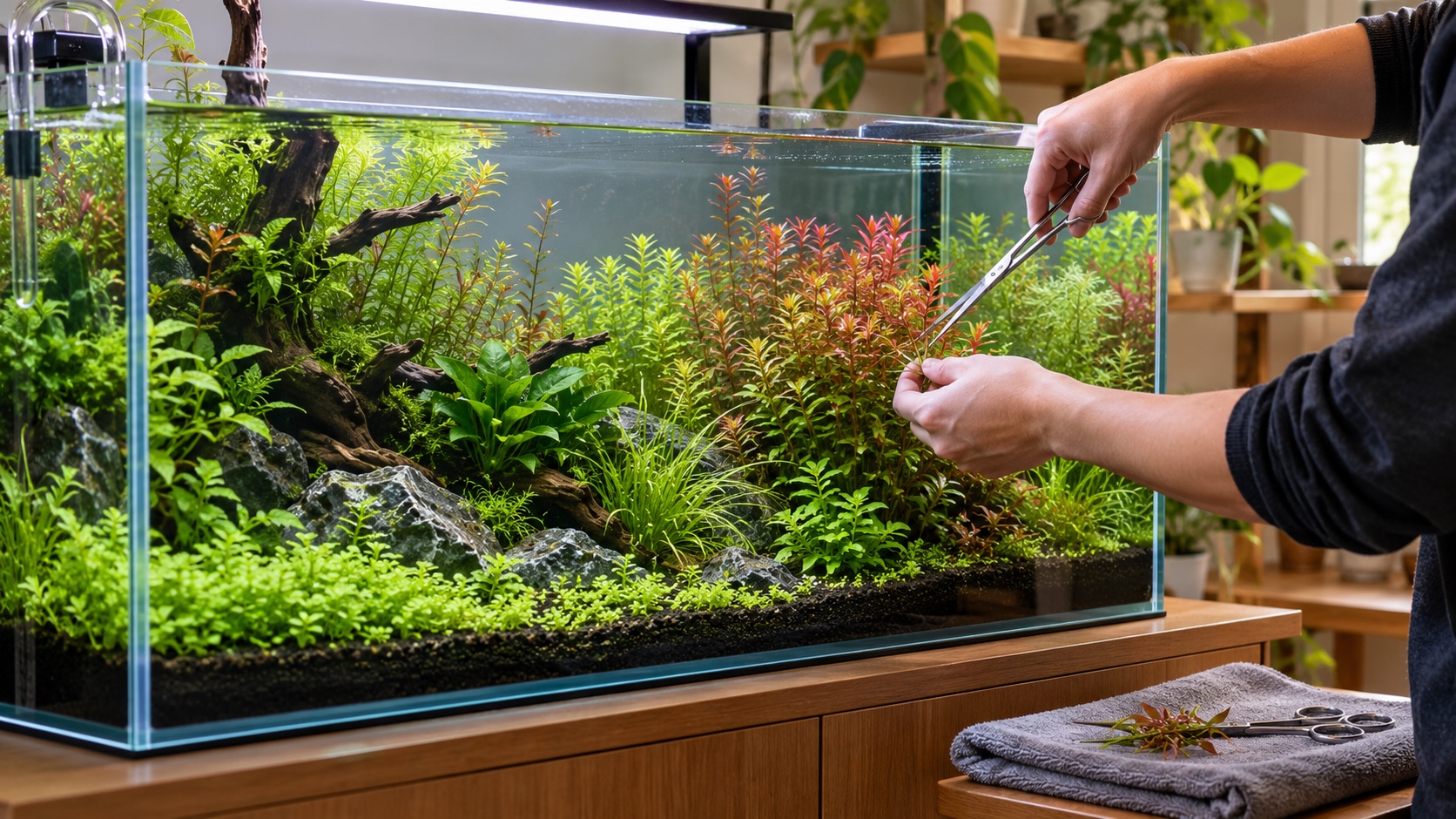
Cut healthy stems above nodes once they are rooted and actively extending. Side shoots will often branch below the cut. Replant selected tops with space and remove weak bases when necessary. Collect fragments immediately so they do not shade carpets or clog the intake.
Thin runners and carpet mats before the lower layer loses light. Remove individual old rosette leaves and divide firm rhizomes when both pieces retain roots and growth points. Prune according to anatomy. A uniform haircut may damage crowns or create unnatural cut leaves.
Stagger major trims across the aquarium. Removing too much plant mass at once changes nutrient demand, circulation, cover, and oxygen dynamics. After a deep cut, watch livestock and clean trapped clippings. Let the trimmed region recover before performing another disruptive session.
Shape groups to preserve access. Keep glass, filter parts, open substrate, and feeding routes reachable. Plant health declines when routine care is postponed because every task requires dismantling the garden.
Correct Problems Through Controlled Experiments
When growth slows, confirm the timer, fixture, carbon equipment, filter flow, temperature, and fertilizer measurements. Compare affected locations and species. If only lower leaves fail, shade and crowding may be involved. If new tips across several groups distort together, investigate shared conditions and possible contamination.
Let the Aquarium Prove Its Growth Rhythm
Keep weekly photographs and a short log for eight to twelve weeks. Record new leaves, runner spread, stem extension, trims, algae locations, and livestock behavior. The log should reveal which plants thrive under the established routine and which need a different location or replacement.
Resist changing light, fertilizer, carbon, and flow together. Choose the most supported cause, make a conservative adjustment, and wait for new-growth evidence. Old damage will remain visible until removed or replaced, so judge the correct tissue.
Replace incompatible species without treating the decision as failure. A plant that requires different temperature, water, or energy from the rest of the aquarium will consume attention indefinitely. A similar growth form with better compatibility preserves the design and improves stability.
Continue cycling and water-quality care regardless of plant growth. Plants can consume nitrogen compounds, but they do not make ammonia or nitrite exposure safe for livestock. Biological filtration, appropriate stocking, and maintenance remain essential. Share the routine with anyone who may care for the aquarium, including which rhizomes must remain exposed and which surface areas must stay clear. Include the correct feeding amount and the signs that require contacting the primary keeper.
A planted aquarium is established when roots hold, new submerged leaves appear predictably, pruning produces recovery, and care fits the keeper’s schedule. Growth then becomes a controllable material. The system does not need to be fast; it needs to be repeatable. A useful establishment checklist begins before planting day. Label each species, note its growth form, and decide whether it feeds primarily from the water column, benefits from substrate nutrition, or simply needs secure attachment and unobstructed circulation. Set out clean tools and containers so roots do not dry while the layout is adjusted. Group plants by destination, then plant from the rear toward the front to reduce accidental disturbance. If the substrate clouds easily, pause rather than repeatedly stirring it with hurried corrections. Once filled, photograph every group and mark the date. For the first week, focus on physical stability, equipment operation, temperature, and livestock-safe water quality rather than chasing rapid growth. Restore uprooted plants gently, remove clearly decaying loose tissue, and keep filter intakes free of fragments. During the next several weeks, distinguish transition from continuing decline. Emersed leaves may melt while firm roots and new submerged shoots remain viable. Conversely, an attractive old leaf does not compensate for a soft crown, blackening stem base, or collapsing rhizome. Inspect the correct growth point for each plant. Keep the lighting schedule conservative and consistent while plant mass is small. Dose any fertilizer from measured aquarium volume and follow a coherent method instead of combining products impulsively. If pressurized carbon dioxide is used, establish its safe, repeatable timing and distribution; do not accelerate it merely because newly planted stems have not yet rooted. Test livestock response through the entire daily cycle. A weekly maintenance rhythm can include a water change appropriate to the aquarium, removal of damaged tissue, gentle debris collection from open areas, glass and equipment inspection, and a review of photographs. Avoid deep vacuuming through active root zones unless the substrate and planting method call for it. Count new leaves or measure representative stems rather than relying on a general impression. When growth becomes dense, thin from within the group so water can move and lower tissue retains access to light. Replant only the healthiest tops, and discard questionable material instead of multiplying a problem. Keep a reserve plan for vacations or busy weeks: a timer that has been checked, a conservative energy level, adequate fertilizer supplies, and clear instructions for anyone feeding fish. A planted tank becomes resilient when an ordinary missed trim does not trigger a crisis. That resilience comes from compatible species, moderate demand, stable equipment, and maintenance routes that stay accessible as the garden fills in.