The Best Beginner Plant Fits the Tank You Actually Have
A plant can be famous for being easy and still fail in the wrong aquarium. Tank height, light distribution, substrate, water chemistry, temperature, livestock behavior, and available space matter more than an “easy” label. Beginners do best with a short plant list whose growth forms and care demands are understood before purchase. The selections below are useful starting points, not universal guarantees. Species names should be confirmed because stores often use broad common names for plants with different adult sizes. Choose plants that can live under one coordinated set of conditions, then give them correct planting depth and enough time to establish.
A: It is useful in many tanks, but its size, light, attachment, water, and livestock compatibility still need to fit.
A: Its roots may touch gravel, but the rhizome should remain exposed and is usually attached to hardscape.
A: Environmental transition can trigger melt; keep a firm crown stable and watch for healthy replacement growth.
A: Growth varies with species and conditions; water sprite and some stems can be quick, but speed also increases maintenance.
A: Only verified compact species or cultivars whose mature spread fits the available footprint and height.
A: Removing unwanted leaves near the base generally preserves a more natural tip and reduces damaged cut edges.
A: Thin attachment improves flow and reduces trapped debris; build coverage gradually through healthy growth.
A: No. They fill a surface role and require thinning, while submerged zones may need different structure and habitat.
A: Use the smallest set that fills the required growth roles under one compatible care system.
A: After its identity, planting method, roots, and conditions are checked and stable new growth still fails to appear.
Use a Selection Filter Before Looking at Species
Write down the tank dimensions, light schedule and mounting height, temperature, hardness, pH, substrate, carbon strategy, and intended animals. Measure the available foreground, midground, and background areas. Decide whether you want slow permanent structure or fast growth that needs frequent trimming. Reject any plant whose mature size, planting method, or temperature range conflicts with the aquarium, even if it appears on every beginner list.
Anubias Provides Durable, Slow-Growing Structure
Anubias species and cultivars offer firm leaves and a rhizome that attaches to wood or stone. Their slow growth suits shaded midground and hardscape details where frequent trimming would be difficult. Keep the rhizome exposed and attach it gently; burying the thick horizontal stem can cause rot.
Slow leaves remain in place long enough to collect algae under excessive light or poor maintenance. Use modest illumination, keep surfaces clean, and avoid placing the plant directly beneath the strongest beam unless the system is balanced for it. Remove severely damaged leaves near the rhizome without injuring the growing tip.
Confirm the cultivar’s eventual size. Compact forms can suit small tanks, while larger forms may shade significant areas. Anubias is not immune to unsuitable water or rough fish. Its value is patience and structure, not indestructibility.
Java Fern Adds Height Without Rooting in Soil
Java fern, typically sold under Microsorum forms, also grows from a rhizome that should remain above the substrate. Attach it to hardscape where its roots can grip. Different forms vary in leaf width, texture, and height, so identify the actual plant rather than assuming every Java fern fills the same role.
Older leaves may develop dark reproductive spots or plantlets, which are not automatically disease. Damaged or algae-covered leaves can be removed gradually. Place the fern where broad circulation reaches it without bending every leaf. The plant grows slowly enough that sudden changes should prompt a review of rhizome condition and environment.
Cryptocoryne Creates Adaptable Rosette Groups
Cryptocoryne species form rooted rosettes in the substrate and work well through foreground-to-midground zones, depending on the species. Many tolerate moderate light and grow steadily once established. Plant roots below the surface while keeping the crown clear. Provide root nutrition when the substrate and fertilizer plan require it.
Crypts are known for leaf loss after major changes in environment, planting, or water. This “melt” can be alarming, but a firm crown and healthy roots may produce new submerged leaves. Remove decaying tissue, keep conditions stable, and avoid repeatedly uprooting the plant to inspect it.
Species identification matters because adult size and leaf shape vary widely. Some spread by runners and can move beyond their intended bed. Leave space between new plants and hardscape, and thin runners before the group blocks access.
Use crypts as a mass rather than scattering single rosettes around every object. Repetition makes a natural transition and simplifies care. Their slower pace pairs well with permanent layouts, provided the keeper accepts a settling period.
Small Sword Plants Can Form Strong Focal Rosettes
Echinodorus species range from modest rosettes to plants that can dominate a large aquarium. Choose by verified adult size, not by the small nursery pot. Root them in a suitable substrate, keep the crown exposed, and provide nutrition appropriate to their substantial root systems. Remove older outer leaves individually and protect emerging center growth. A sword can be beginner-friendly when the aquarium has the footprint and height to accommodate it; an oversized selection becomes a maintenance problem rather than an easy plant.
Vallisneria Builds a Grassy Background Quickly
Vallisneria produces long ribbon leaves and spreads through runners. It can create a useful background or side curtain without stem replanting. Plant individual crowns shallowly with roots covered and the crown visible. Avoid cutting leaves into blunt mid-blade tips when possible; remove unwanted leaves near the base.
Growth speed and leaf length vary by species and conditions. A small tank can be overwhelmed by a tall form. Runners also cross boundaries, so pull or redirect them early. Vallisneria may respond poorly to some liquid-carbon products, making product compatibility part of selection.
Water Sprite Offers Flexible, Fast Biomass
Water sprite can grow rooted or floating, depending on the species and setup. Its finely divided foliage provides cover and consumes nutrients rapidly when healthy. Floating growth can shade the aquarium, so thin it regularly and keep it away from the filter return and feeding opening.
Fast growth means fast decline when conditions shift. Remove yellowing or detached fronds before they clog intakes. Rooted plants need space and should not be buried at the crown. Water sprite is useful during establishment, but its eventual volume and maintenance frequency should be planned.
Use it deliberately rather than as an emergency cure. It will not replace cycling, complete nutrition, or water changes. Its advantage is visible growth that helps a beginner learn pruning, nutrient demand, and surface management.
Bacopa Gives Beginners a Manageable Stem Plant
Bacopa species have sturdy stems and paired leaves that make trimming easy to understand. Plant separated stems with lower leaves removed from the buried portion. Space them so light reaches the base. Cut above a node to encourage branching, and replant healthy tops when lower stems become bare.
Java Moss Covers Hardscape but Needs Restraint
Java moss and similar aquarium mosses attach to wood, stone, or mesh without substrate roots. Use a thin layer and secure it so loose strands cannot enter equipment. Thick pads collect debris and shade their own base, so regular thinning is more important than trimming only the surface.
Moss can shelter fry and small invertebrates, but livestock needs should guide its use. Fine texture catches food, and maintenance tools can pull attached sections free. Place moss where flow can carry debris away and where scissors or fingers can reach without destabilizing hardscape.
Confirm the moss identity and legal availability, since common names are inconsistent. Avoid attaching it everywhere. One controlled area provides softer texture without turning every branch into the same fuzzy shape.
During water changes, gently lift debris with a baster before siphoning nearby. Collect all clippings. A small fragment can establish in an unwanted area, especially among carpets and filters.
Floating Plants Provide Shade With Surface Responsibilities
Amazon frogbit, Salvinia, and other legal aquarium floaters can absorb nutrients and soften overhead light. Species differ in size, root length, temperature tolerance, and sensitivity to wet leaves. Check local regulations and identify the plant correctly before purchase.
Corral floating plants away from the filter return, surface skimmer, and feeding zone. Thin them before they cover the entire surface. A sealed canopy restricts light below and can interfere with gas exchange and fish access. Leave open water around equipment.
Combine Plants by Growth Role, Not by Shopping Appeal
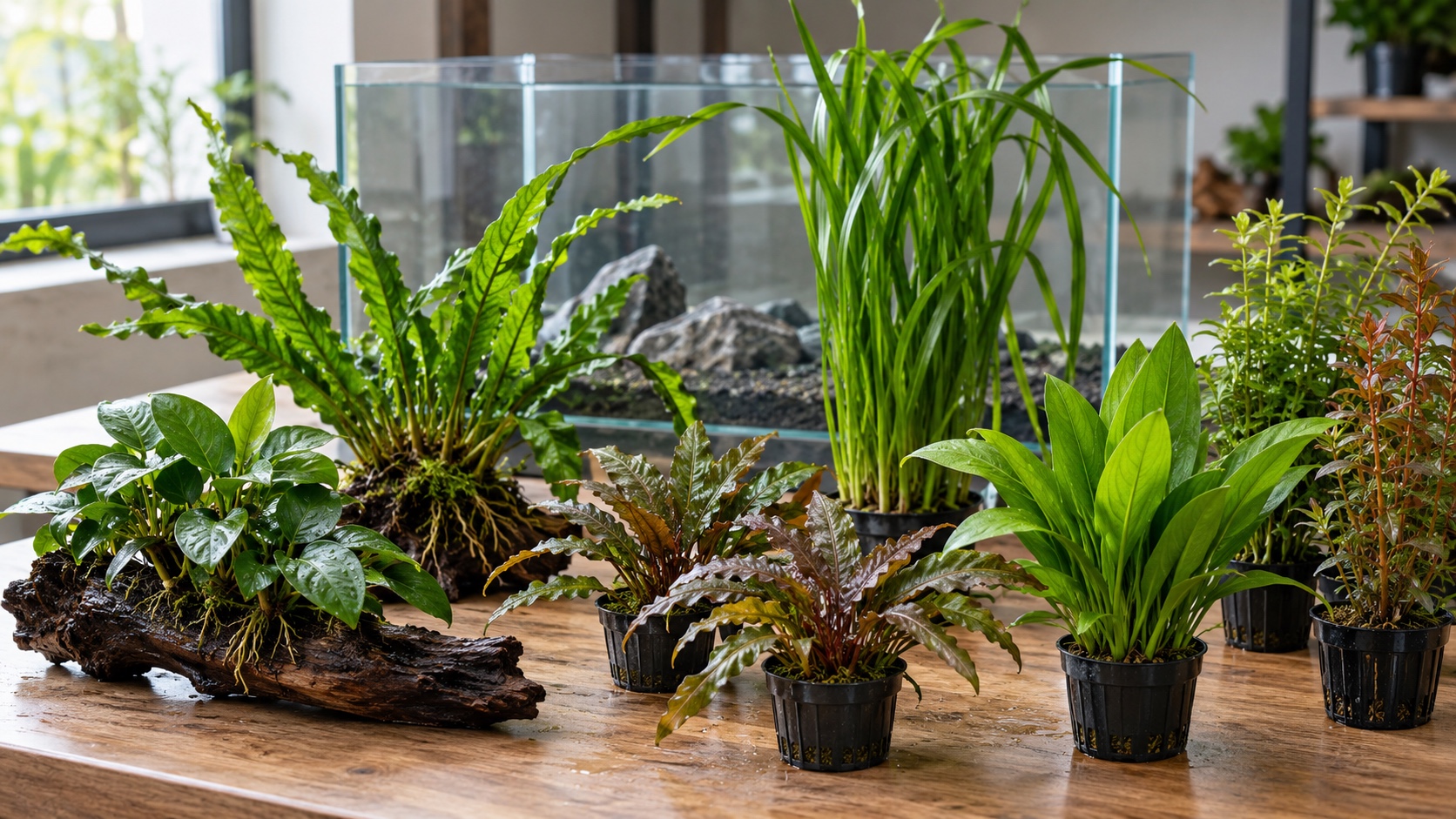
Build a starter palette with one hardscape-attached plant, one rooted rosette, one background or stem group, and optional controlled floater. The roles can be filled by plants that share temperature, water, light, and care needs. This creates contrast without requiring a collection of unrelated species.
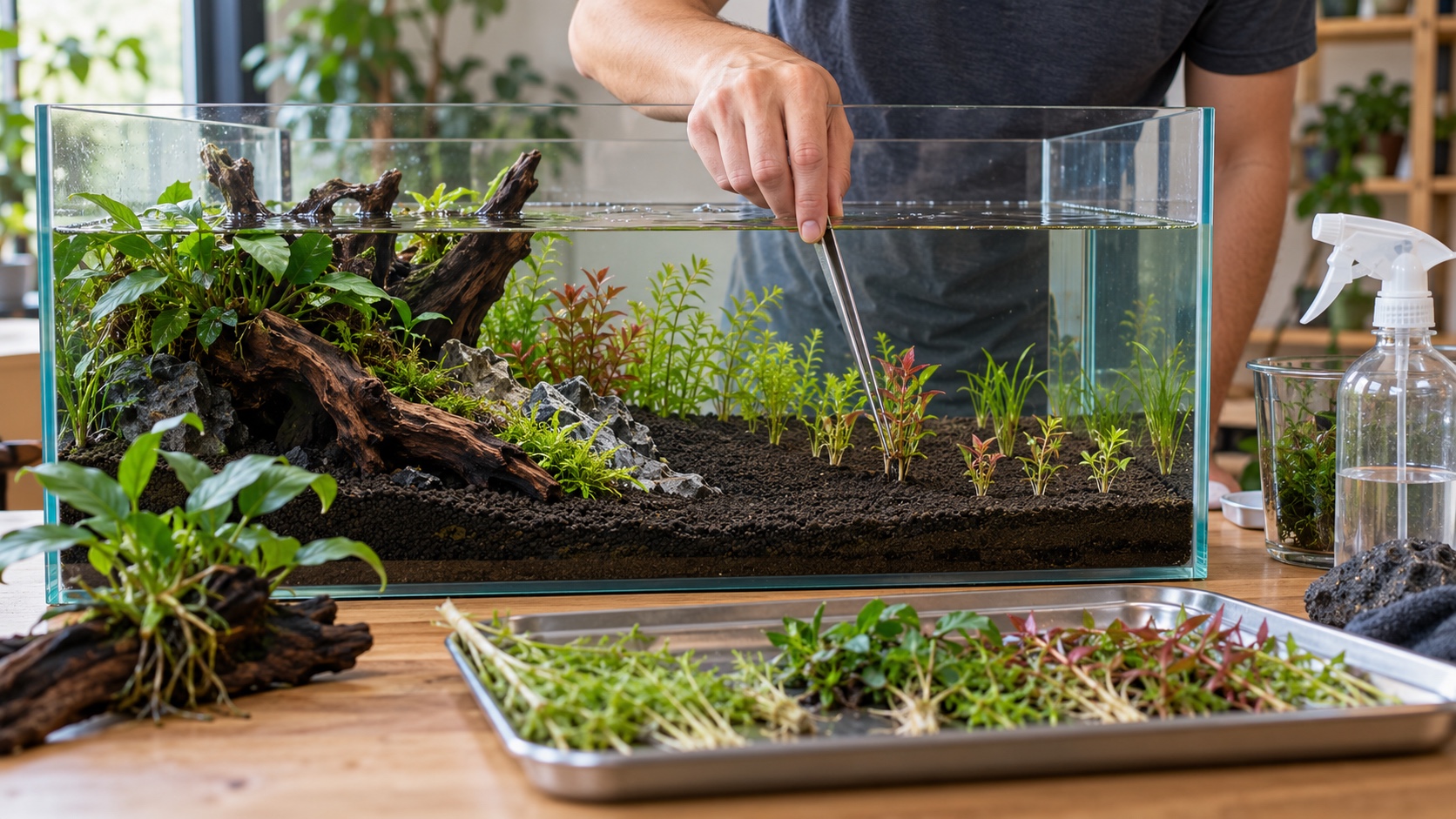
Place slow growers where they will not be smothered by fast stems. Reserve trimming access around runners and moss. Anticipate mature height and width on the planting map. A small pot often contains several individuals that need division, so calculate area from mature plants rather than pot count.
Quarantine and clean new plants using methods appropriate to their species. Inspect for pests, damaged tissue, weights, rock wool, and gel. Never assume a store’s holding water or treatment is safe for sensitive livestock. Introduce plants without adding avoidable contaminants.
Evaluate the First Eight Weeks Before Buying More
Expect emersed nursery leaves to be replaced on some species. Watch the crown, rhizome, roots, and newest growth. Do not discard a firm rooted plant because one old leaf melts, and do not ignore a soft rotting base because the upper leaves remain green.
Photograph each group weekly. Record the light schedule, fertilizer routine, and meaningful maintenance. If one plant fails while the others grow, recheck its identity and requirements. If all groups struggle, investigate shared resources and equipment before replacing the palette.
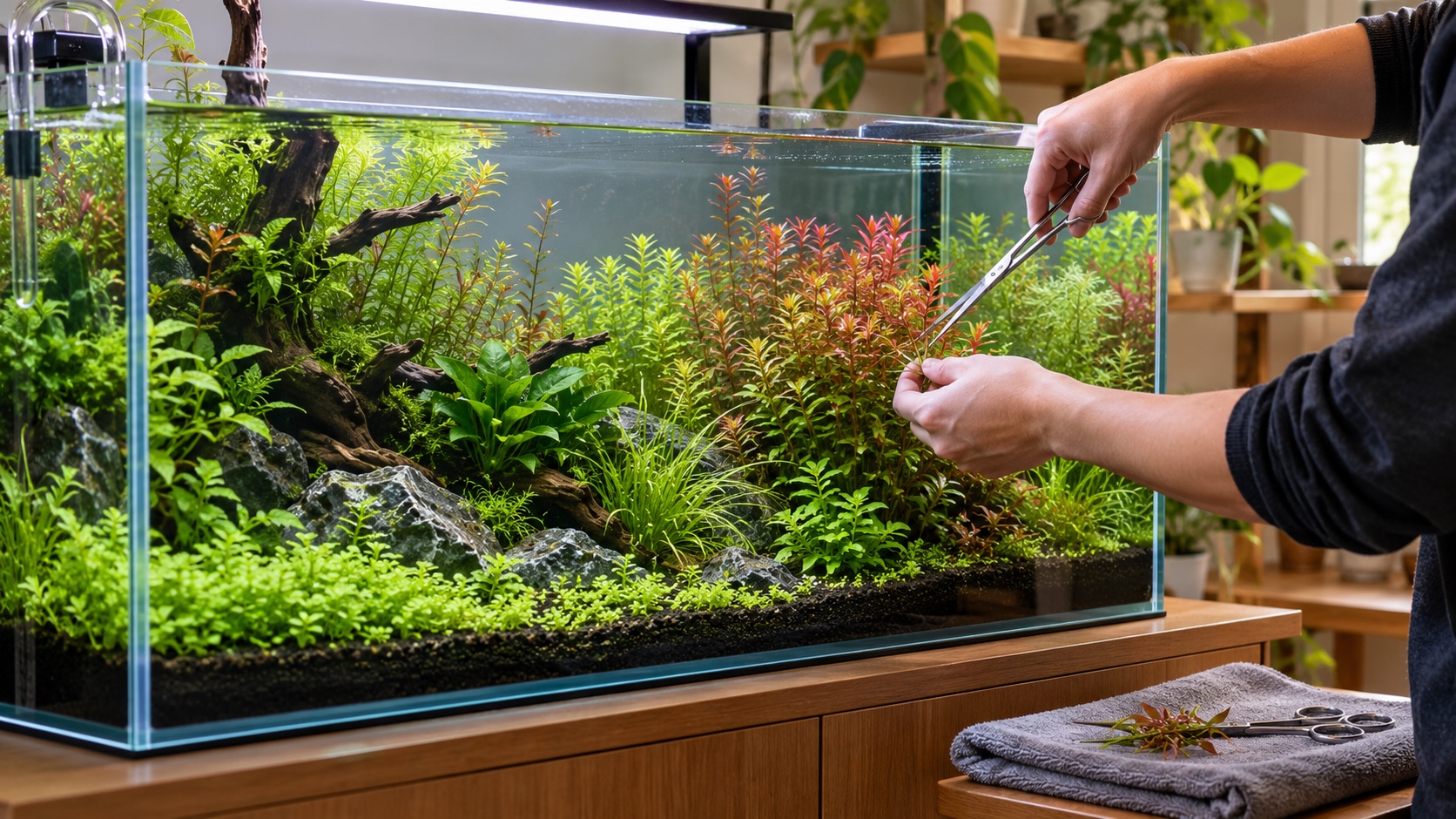
Trim fast growers early enough that slower plants retain light. Remove runners from open zones and thin floating cover. The starter selection should teach a manageable rhythm. If care already exceeds the available time, simplify before adding another species.
Observe how fish use the plants. Dense cover may reduce stress, but it can also divide swimming space or create territorial chokepoints. Adjust plant mass to protect normal behavior. Plant success is part of whole-aquarium success.
The best beginner plants are the ones that remain compatible as the tank matures. Choose verified species, plant them correctly, and let them demonstrate their fit through healthy new growth. A smaller successful palette builds more skill than a crowded collection in constant rescue. Before placing an order, write a one-line job description for every group: shade the shy fish, hide equipment, anchor a focal stone, occupy the rear corner, or add controlled surface cover. This keeps the selection connected to the aquarium rather than to an attractive sales photograph. Confirm the scientific name, expected mature size, growth form, temperature range, and whether the seller grew it emersed. Ask how many separate crowns, rhizomes, or stems the portion normally contains, because a pot is packaging rather than a planting unit. Sketch those units at mature width and leave service lanes around the filter intake, heater, glass, and feeding zone. Beginners often benefit from buying several healthy examples of a few compatible species instead of one specimen from many categories. Repetition creates visible groups, makes changes easier to compare, and reduces the number of care rules to remember. It also reveals whether a weak plant is an isolated damaged individual or a shared environmental problem. On arrival, photograph labels before discarding them and keep a simple inventory. Remove packing material carefully, identify the crown or rhizome, and separate only where the plant naturally permits it. Damaged leaves can be removed with clean tools, but healthy roots should not be aggressively shortened simply to make planting faster. During the first month, inspect attachment points and planting depth after maintenance and after active fish explore the layout. Replant uprooted stems promptly without burying extra nodes or crowns. During the second month, compare new submerged growth rather than the original nursery leaves. Only then decide whether to expand the group. A plant that grows steadily, tolerates the tank’s actual light, and fits the keeper’s trimming schedule has earned more space. A plant that repeatedly blocks flow, invades open sand, or needs conditions that stress the livestock has provided useful information even if it is removed. Good beginner selection is therefore a continuing compatibility test, not a permanent promise made at the store.