Plant Care Works Best as a Stable Routine
Healthy aquarium plants do not require constant intervention, but they do require conditions that agree with one another. Light drives demand. Carbon availability, nutrients, circulation, substrate, temperature, and plant choice determine whether that demand can be met. Beginners often respond to a damaged leaf by changing several products at once, which hides the original cause and creates new instability. A better care routine observes new growth, records meaningful settings, removes failing tissue, and adjusts one major variable only when the evidence supports it. The goal is not flawless leaves at every moment. It is predictable growth that the aquarium and the keeper can sustain.
A: Most damaged tissue does not repair; judge the newest growth and remove old leaves gradually when the plant can support it.
A: No. Plant mass, substrate, livestock load, water changes, water source, and carbon strategy determine an appropriate complete method.
A: The thick horizontal stem should remain visible above the substrate while only the fine roots enter or attach below it.
A: Crowding, shade, weak circulation, transition, or unstable resources can all contribute, so inspect the local bed before dosing more.
A: Usually not until plant choice, carbon, nutrients, distribution, and fixture cleanliness have been checked under a stable schedule.
A: Follow the product guidance and plant response, recording placement so concentrated nutrients are not added blindly or exposed.
A: They can contribute within their care needs, but they do not correct excessive demand, decaying tissue, poor flow, or inconsistent upkeep.
A: Trim according to each species' growth and the layout's access needs rather than forcing every plant onto one calendar.
A: Recheck its species requirements and planting method; replacement with a better-matched plant may be the responsible choice.
A: New growth stays predictable, maintenance restores access, livestock remains comfortable, and changes are limited to evidence-based corrections.
Establish a Baseline Before Diagnosing Anything
Write down the aquarium volume, temperature, water source, light model and schedule, filtration, substrate, fertilizer method, and whether carbon dioxide is injected. List each plant with its position and approximate planting date. This baseline turns “the plants look wrong” into a specific comparison between species, locations, and time.
Test the water parameters relevant to the livestock and plants, using reliable methods and consistent timing. Include pH, hardness, alkalinity, ammonia, nitrite, and nitrate where appropriate. A planted aquarium is still an animal habitat, so plant changes cannot compromise oxygen, temperature, or biological filtration.
Photograph the tank from the same front and side positions each week. Close photographs of new leaves are more useful than isolated images of old damage. Mark the date of major trims, fertilizer changes, and new livestock. Growth records reveal slow patterns that daily viewing tends to hide.
Judge New Growth Separately From Old Leaves
Plants do not repair most damaged leaf tissue. An older leaf may remain pale, torn, algae-covered, or pinholed after the underlying condition improves. Evaluate the newest fully opened leaves, stem tips, roots, and attachment. Healthy new growth alongside declining nursery leaves can indicate normal transition to submerged form. Remove old tissue gradually when it blocks light or decays, but preserve enough functioning leaf area for recovery.
Keep Light Predictable Before Making It Stronger
Use a timer and begin with a moderate, consistent photoperiod. Fixture power, mounting height, tank depth, surface movement, tannins, floating plants, and hardscape shade all affect the light reaching a leaf. More hours do not compensate for weak distribution, and greater intensity raises carbon and nutrient demand.
Inspect the whole footprint. Pale growth in one shaded corner may be local, while algae and compact growth directly under the fixture may show excess relative intensity. Clean the cover glass or fixture shield as instructed, thin floating plants, and restore the recorded mounting height before changing output. Give plants time to respond.
Coordinate Carbon Availability With Circulation
In non-injected aquariums, choose plants and growth expectations that fit naturally limited carbon. Avoid repeatedly raising light in pursuit of speed. Surface movement supports gas exchange, while broad circulation brings dissolved nutrients and carbon to leaves. Dead zones behind dense growth can cause local decline even when the filter rating appears adequate.
With pressurized carbon dioxide, use purpose-built equipment, secure the cylinder upright, and follow manufacturer guidance. Stabilize delivery before increasing light. Observe livestock throughout the photoperiod and maintain adequate oxygenation. A drop checker, pH profile, or bubble count is only a tool for consistency; animal behavior and safe system control remain essential.
Trim dense stems and redirect the return when flow no longer reaches lower leaves. Fine bubbles that race straight to the surface or collect in one corner indicate poor distribution. Do not solve uneven circulation by blasting delicate plants or fish. Broader flow and better layout access are usually more useful than raw velocity.
Use a Complete Nutrient Method Instead of Chasing One Element
Select a fertilizer approach appropriate to plant mass, livestock load, substrate, and water changes, then follow it consistently. Root-feeding species may benefit from a suitable planted substrate or carefully placed root nutrition, while epiphytes and stems rely heavily on the water column. Avoid combining several overlapping products without calculating what they add. Deficiency charts can suggest possibilities, but similar symptoms arise from root damage, unstable carbon, shade, or transition. Change one part of the program, record the date, and judge several rounds of new growth.
Care for Roots, Crowns, Rhizomes, and Substrate Correctly
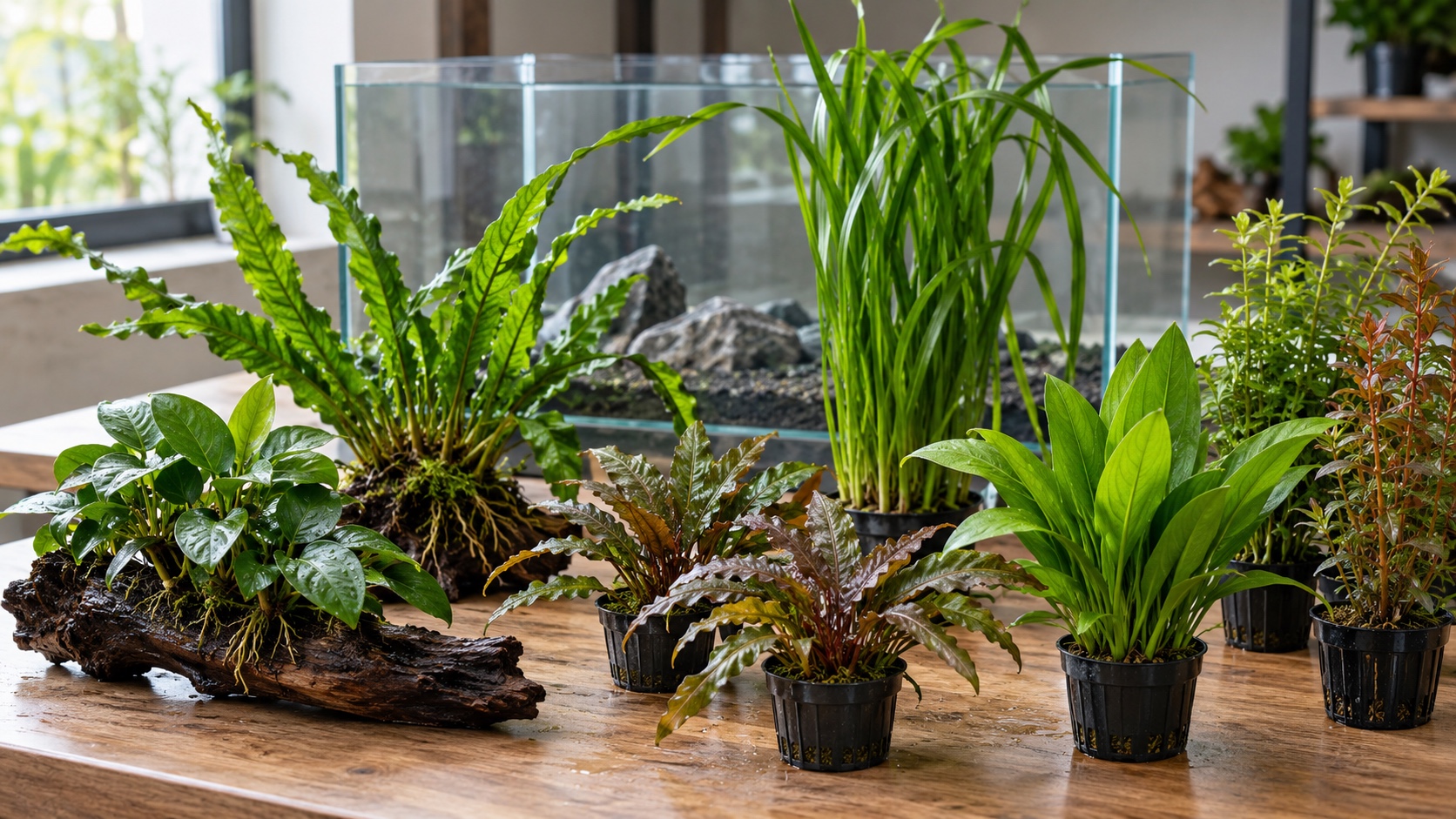
Keep Anubias, Java fern, and other rhizome plants attached above the substrate. Burying the rhizome encourages rot even when the leaves initially remain green. Secure the plant gently to wood or stone and leave space for the growing tip. Remove only soft, failing rhizome tissue with clean tools.
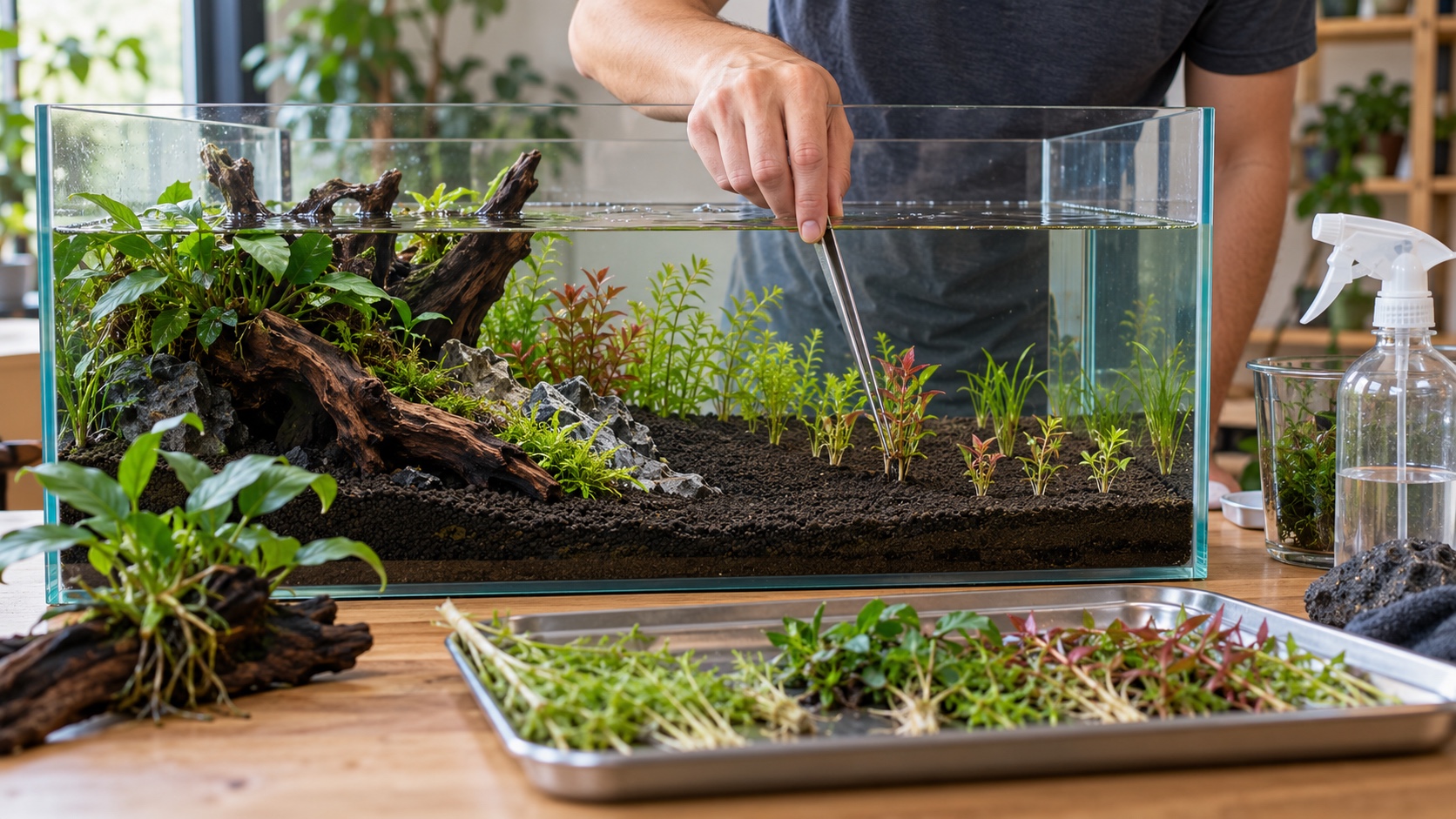
Plant rosettes with roots in the substrate and the crown exposed. A buried crown traps debris and weakens new leaves. When moving an established rosette, lift around the root zone rather than pulling from the leaves. Some species resent frequent relocation and need time to rebuild fine roots.
Insert stem cuttings deeply enough to hold while keeping lower leaves out of the substrate. Space them so light and water can reach the base. Crowded bundles may root poorly and shed shaded lower leaves. Replant strong tops after trimming when old bases become weak.
Vacuum exposed substrate gently and avoid deep disturbance around active roots. Replace displaced soil at borders without crushing crowns. If bottom-dwelling fish repeatedly uproot plants, use species and planting locations compatible with their behavior rather than relying on sharp anchors or unsafe weights.
Prune According to the Plant’s Growth Form
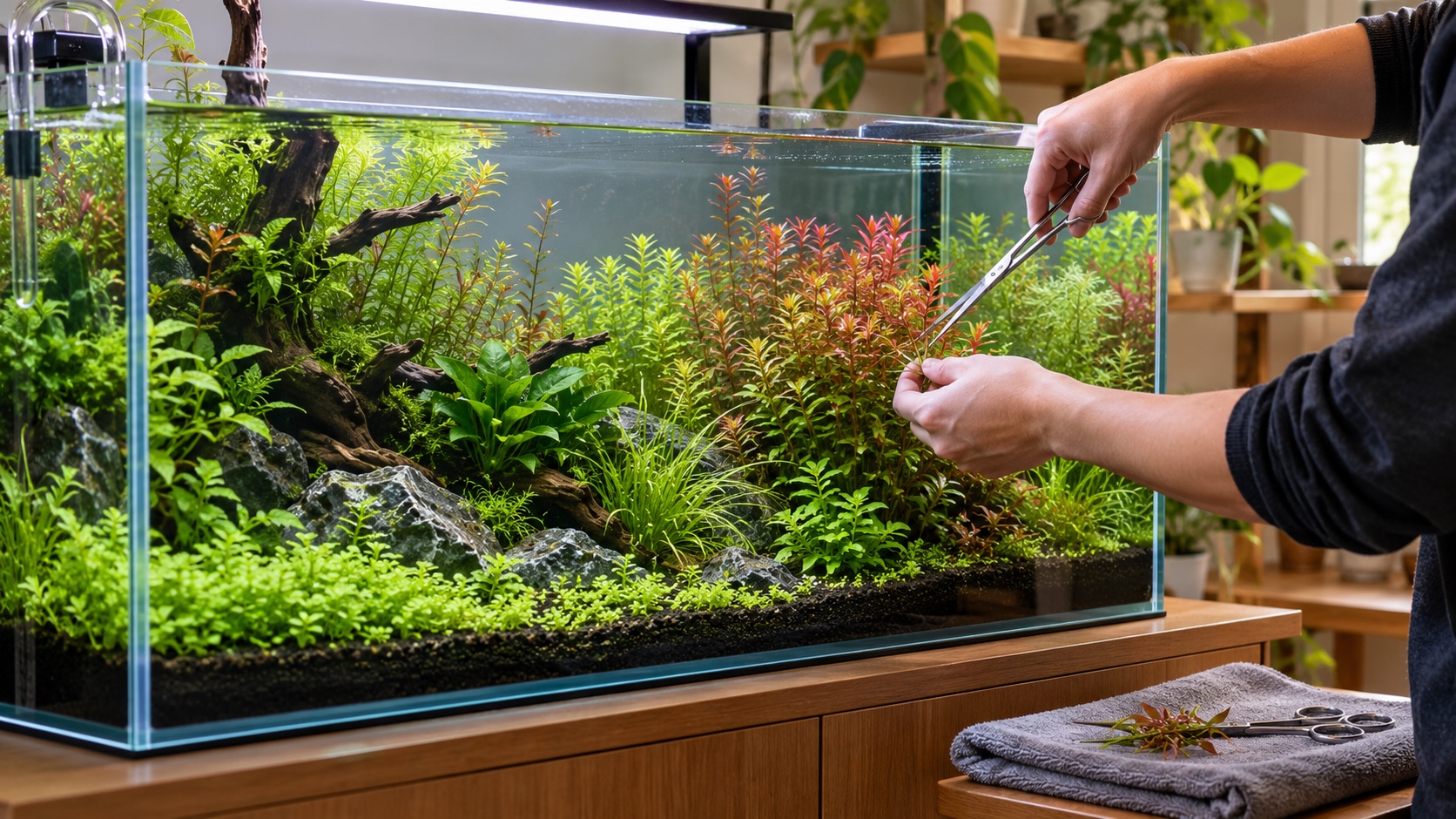
Trim stems above healthy nodes to encourage branching, then remove cuttings before they enter the filter. Replant selected tops with fresh spacing when the lower section declines. Do not shear every species into one flat surface; stagger heights and preserve enough leaf mass for recovery.
Remove individual outer leaves from rosettes near their base, thin runners that invade open areas, and divide crowded rhizomes with sterile tools when the plant is healthy. Carpets need thinning as well as shortening because a dense upper mat can shade and detach from its base. Schedule major cuts before a water change so fragments can be collected.
Prevent Algae by Balancing Demand and Maintenance
Algae does not identify one universal mistake. It responds to available light, nutrients, surfaces, organic waste, grazing, and competition. Remove manageable growth manually, clean the glass, and restore plant access to light and flow. Avoid chemical shortcuts until livestock safety and the actual cause are understood.
Healthy plant mass is useful competition, but unhealthy leaves become algae substrate. Remove decaying tissue, keep filters and prefilters functioning, and feed animals appropriately. Perform regular water changes matched to the system. Sudden deep cleaning can be as disruptive as neglect when it removes biological capacity or disturbs enriched substrate.
Review recent changes before adjusting equipment. A longer photoperiod, missed fertilizer week, clogged intake, large trim, new fish group, or floating-plant bloom may explain the timing. Reverse the unnecessary change or correct the maintenance lapse, then wait for new plant growth. Scrubbing the symptom every day without restoring balance will not stabilize the aquarium.
Diagnose Patterns by Location and Plant Type
Compare affected and unaffected plants. Damage across unrelated species near the surface may point toward light, temperature, or chemical exposure. Decline only in one shaded bed suggests distribution or crowding. A single newly purchased species may simply be unsuitable for the tank. Check roots, stems, and growing tips before assuming a water-column shortage. Confirm that test kits are valid, equipment operates on schedule, and no medication or household contaminant entered the system. A location-based pattern is often more revealing than the color of one old leaf.
Protect Plant Health During Livestock Care
Stock animals whose adult behavior fits the planting plan. Some fish uproot, eat, or crush soft growth, while others need open floor or current that conflicts with delicate carpets. Plant choice should adapt to those needs. Never reduce oxygenation, swimming space, or safe water conditions to preserve a particular leaf.
Feed where leftovers can be seen and remove persistent waste. Quarantine plants when practical to reduce unwanted hitchhikers and chemical residue, using methods appropriate to the species. Quarantine fish separately as needed. Avoid adding unverified plant dips directly to the display, and rinse prepared plants according to safe guidance.
Review the Aquarium Monthly and Simplify the Routine
Compare photographs and records from the same point in the maintenance cycle. Note which plants produce healthy new leaves, which require repeated rescue, and where growth blocks circulation. A species that continually fails under otherwise suitable stable conditions may be a poor match rather than a challenge to overpower.
Check timers, fixture height, carbon equipment, tubing, filter flow, heater accuracy, and fertilizer supplies. Replace worn parts according to their instructions. Small equipment drift can appear as a biological mystery when the actual cause is a timer reset or clogged diffuser.
Rotate intensive work. Deeply thin one region while leaving another stable, and avoid uprooting every bed on the same day. Plants and microbes need continuity. After a major trim, watch oxygen, debris load, and livestock behavior because the tank’s demand and flow pattern have changed.
Update the plant map as runners spread and stems are replanted. Preserve open feeding and service routes. If routine access disappears, edit the plant mass before maintenance becomes destructive. The best layout is one the keeper can continue caring for without postponing necessary work.
Stable plant care should become quieter over time. Consistent light, complete nutrition, appropriate carbon, gentle circulation, correct planting depth, and species-specific pruning produce evidence in new growth. Use that evidence to make fewer, better changes and let the aquarium mature. A practical monthly review can begin with one full-tank photograph, close views of each planting group, and a written note about the last trim. Compare these records at the same time of day because stem position, leaf angle, and visible oxygen bubbles can change over the lighting cycle. Measure only the parameters that help answer a real question, and record the units so later comparisons remain meaningful. The review should also include the ordinary physical details that are easy to miss: a runner crossing an open path, a loose rhizome tie, roots exposed by digging fish, or a shaded lower bed collecting debris. Correcting these small conditions early is usually gentler than rebuilding a declining section later. When a plant must be moved, prepare its destination first, lift it with as much healthy root as practical, and avoid repeatedly relocating it while it adapts. Keep an inventory of plant names and approximate locations so care advice can be matched to the actual species rather than a store label such as “assorted aquatic plant.” Note whether new leaves formed underwater, since emersed nursery foliage can look and behave differently after transition. If the aquarium receives seasonal daylight, room-temperature changes, or different household schedules, include those influences in the log before blaming the fertilizer. Review recurring labor honestly as well. A beautiful species that demands weekly rescue in a monthly-maintenance tank is not truly low care for that aquarium. Replace it with a compatible growth form, or simplify the layout so the reliable plants have room to mature. The objective is not to eliminate every imperfect leaf. It is to maintain a stable garden in which problems are noticed, causes are tested one at a time, livestock remains safe, and healthy growth steadily replaces normal damage.