Choose Decorations as Habitat Components
The best decoration for a themed aquarium supports the story while remaining safe, stable, cleanable, and useful to its inhabitants. A dramatic ruin, cave, arch, log, or background can create an immediate world, but its coatings, openings, weight, edges, and long-term behavior matter more than its shelf appeal. Successful themed tanks rely on a limited visual language rather than a collection of unrelated props. By selecting one anchor piece, repeating materials and colors, adding live plants, preserving swimming space, and planning maintenance access, aquarists can create atmosphere without turning fish habitat into a crowded display case.
A: One well-scaled anchor supported by related materials and plants usually reads more clearly than many props.
A: Use only items confirmed safe for continuous aquarium submersion; unknown ceramics and glazes may be unsuitable.
A: It must remain comfortably larger than the intended animal at adult size through the narrowest interior point.
A: Aquarium-rated resin can be suitable when intact, stable, smooth, and used according to reliable product guidance.
A: They are optional, but compatible plants can integrate props, support habitat, and create a more believable world.
A: Only if burial preserves stability, safe openings, cleanability, and the correct planting depth around it.
A: Use sight lines, background, plants, and hardscape without blocking flow, heat, intake access, or service.
A: Large surfaces and hollow pockets interrupt flow and create areas where food and debris settle.
A: Remove it when coatings peel, material softens, cracks create sharp edges, or safe cleaning is no longer possible.
A: A single visual language, limited anchors, repeated materials, mature plants, and protected negative space create unity.
Start With the Animals and the Story
List adult size, group behavior, territory, current, substrate use, cover, and feeding before choosing a theme. A decoration that creates shelter for one species may trap debris or block swimming for another.
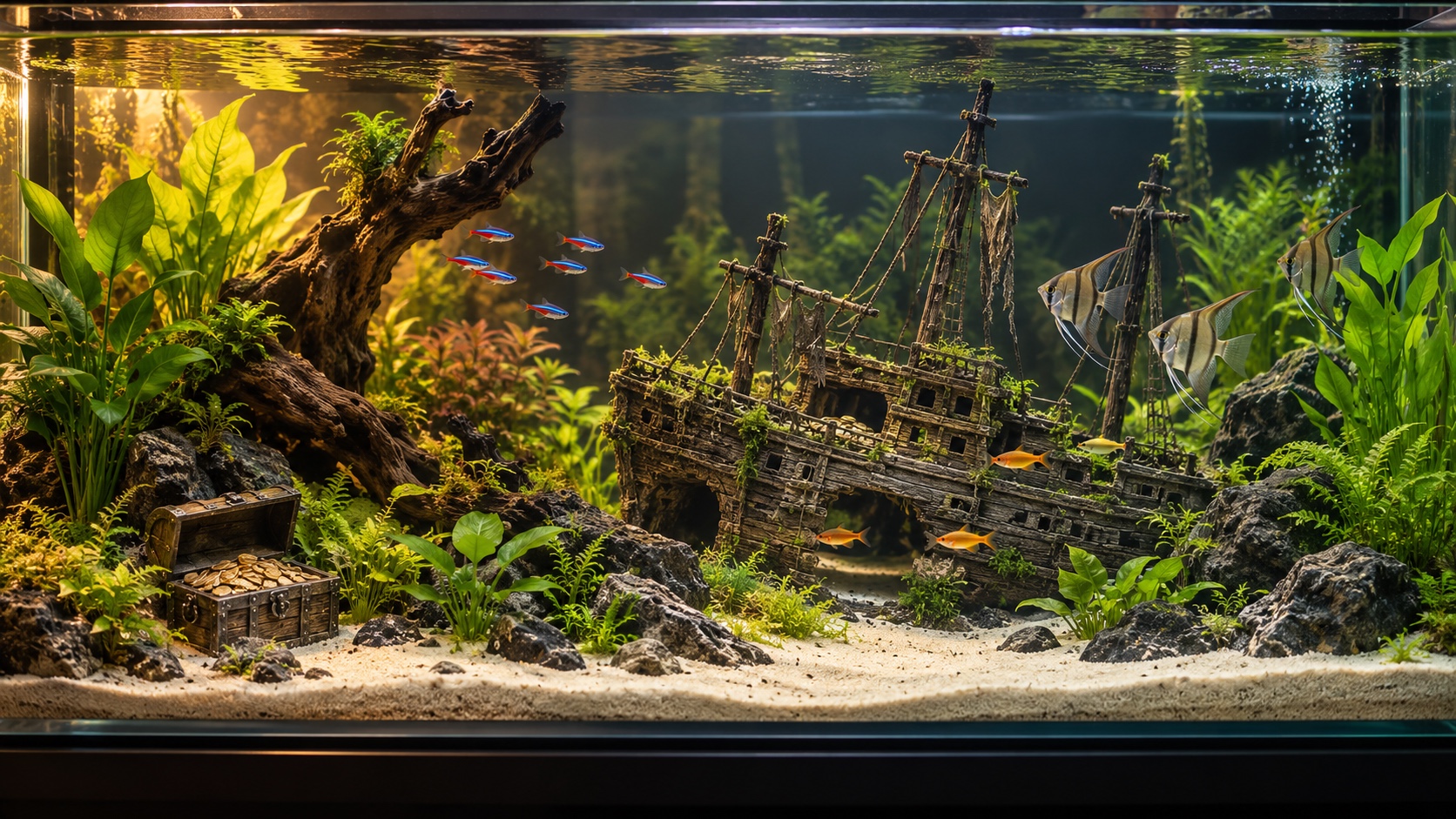
Describe the world in one sentence, such as an overgrown river ruin or a quiet submerged garden. The sentence filters purchases. A pirate ship, neon castle, and natural root cave may each be safe but do not necessarily belong in one visual system.
Set a maximum footprint for decorations. Mark equipment service zones, open water, feeding areas, and plant beds first. Props receive the remaining space rather than displacing essential function.
Decide how mature plants will change the theme. Leaves can soften a ceramic edge, moss can imply age, and roots can connect an ornament to substrate. Leave enough room for that growth.
Use One Anchor Decoration
A substantial ruin, ship, cave, arch, or sculptural wood form can establish the theme. Choose its scale relative to the tank and livestock, then let smaller elements support it. Several equal anchors create a shelf-display effect.
View the anchor from the main seated angle. Check silhouettes, openings, and reflection against the background. A beautiful top view may become a flat block through the front pane.
Screen Every Material for Aquarium Use
Prefer items sold for aquarium use by a reliable source with clear material information. Household ceramics, painted figurines, craft resin, metals, glues, and found objects may leach, corrode, soften, or shed coatings underwater.
Inspect Openings and Edges
Run a careful finger along accessible edges before submerging the item. Look inside tunnels and windows for casting seams, sharp points, narrowing cavities, and blind pockets. Fish can enter spaces the aquarist cannot see.
Every opening must remain safely larger than the intended animal as it grows. Avoid paired holes that create a wedge shape. If a fish could attempt passage, judge the narrowest interior point, not the decorative entrance.
Consider fins, barbels, and body armor. Long-finned fish need smooth routes, while bottom dwellers may repeatedly brush entrances. A surface that is harmless to a hand can still damage delicate tissue through constant contact.
Choose Decorations That Stay Stable
Test the item on the intended substrate before filling. Tall narrow ornaments can tip during cleaning or burrowing. Hollow pieces may trap air and float until fully flooded; never force them down beneath unstable rock.
Keep heavy objects from resting on loose substrate alone when shifting could threaten glass or livestock. Use appropriate stable foundations and follow tank-manufacturer constraints. Do not improvise metal fasteners or household adhesives underwater.
Account for buoyant wood and hollow resin. A piece that shifts during the first week can crush plants or block an animal inside. Prepare and secure it using aquarium-appropriate methods before stocking.
Retest after major maintenance. Moving gravel, lifting a cave, or removing plants can change support. Replace the item deliberately instead of assuming its former stability remains.
Compare Ruins, Arches, and Architectural Pieces
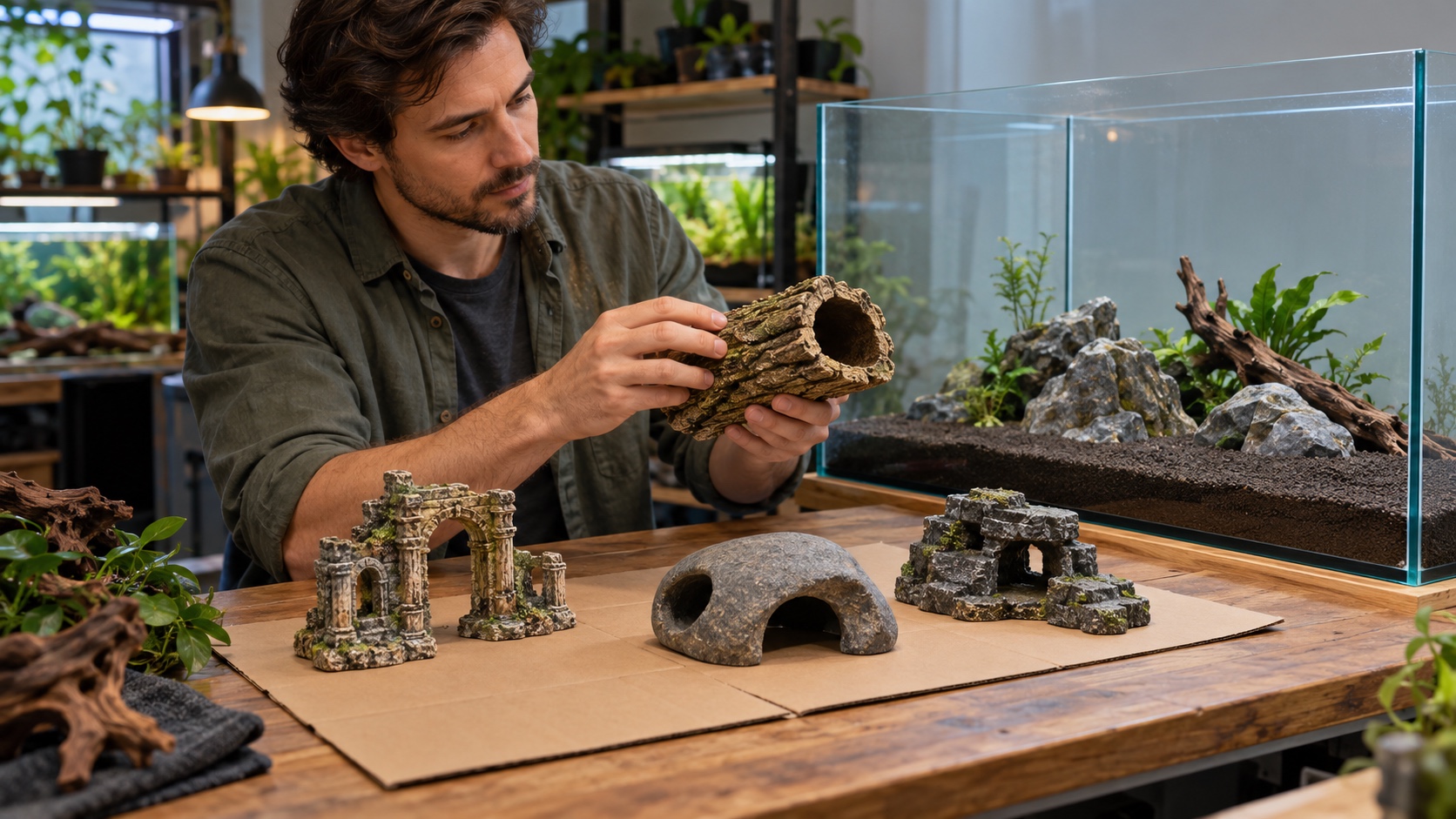
Architectural ornaments create a strong theme with one object. Broad arches can frame open water and guide sight lines. Choose forms with enough negative space to avoid becoming a solid wall.
Weathered color usually integrates more easily than high-gloss paint. Repeat a stone tone in nearby aquarium-safe rock or substrate rather than adding another competing ornament family.
Use Logs, Roots, and Natural-Looking Shelters
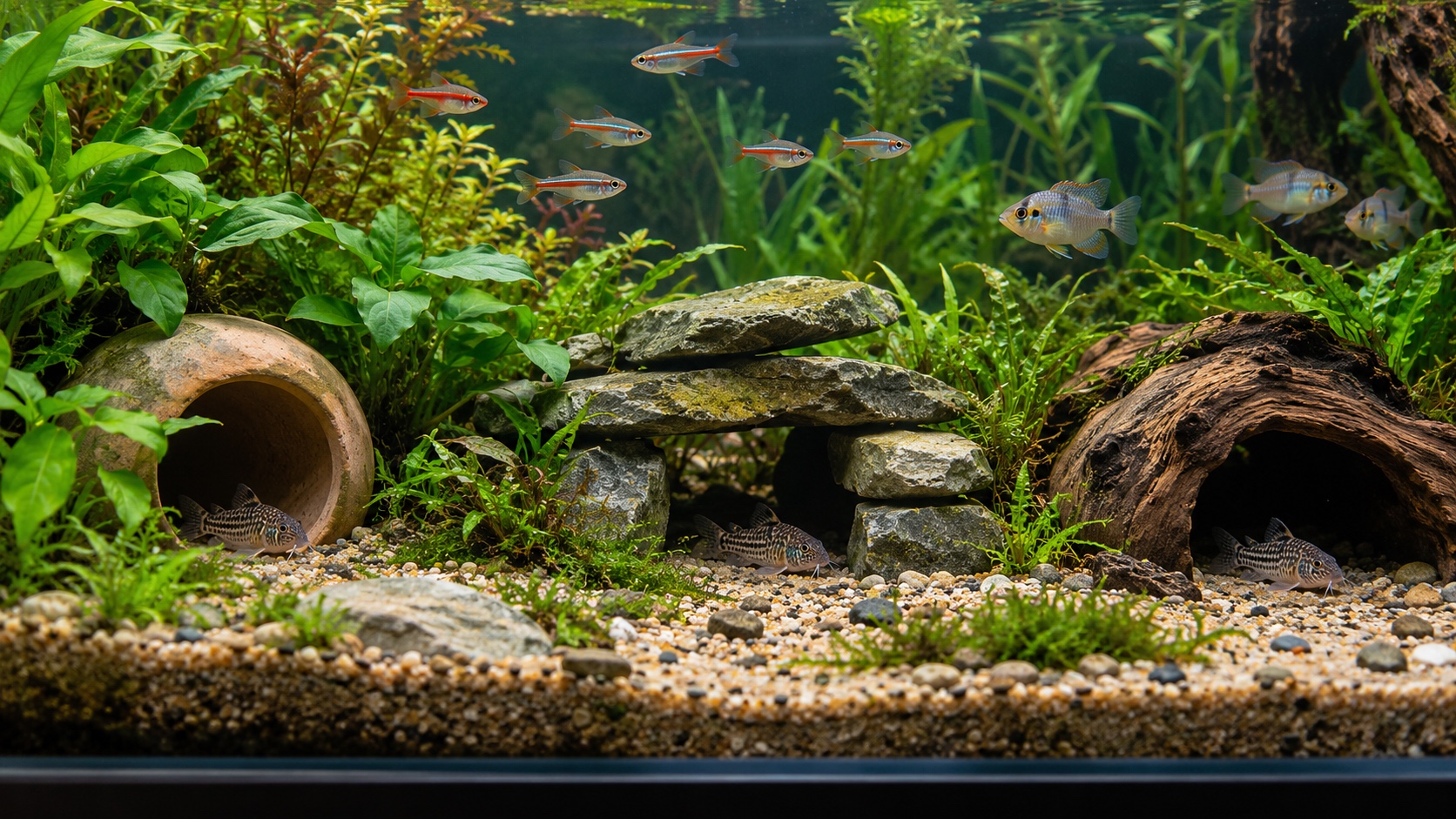
Hollow-log decorations can bridge themed and natural design, especially when live plants attach nearby. Inspect the internal tunnel, drainage, and cleaning access. A sealed-looking end may trap waste.
Natural aquarium wood provides unique grain and can serve the same visual role, but it may release tannins, grow temporary biofilm, or alter the layout as it saturates. Choose between natural and manufactured material based on the system, not appearance alone.
Combine only when color and texture agree. A realistic resin log beside unrelated plastic bark can make both look artificial. Repetition should be subtle enough to create unity.
Use Backgrounds to Extend the Theme
A plain dark, pale, or softly textured external background can enlarge the world without occupying water volume. Keep it outside the aquarium unless the product is specifically designed for internal use. Prevent moisture from becoming trapped against equipment. Test the color behind a filled tank before committing because water, light, and plant density change its appearance. Dark backgrounds can strengthen silhouettes but may hide equipment shadows and fish of similar color. Pale backgrounds can suggest openness while exposing algae and cords. Secure the material without tape or adhesives entering wet areas, and keep ventilation around lights and filters. A background should simplify the scene, not complicate safety or service.
Add Plants as Connective Tissue
Place plants where they explain how the decoration belongs in the environment. Epiphytes can soften bases, stems can create a distant horizon, and low growth can interrupt an overly straight edge.
Do not bury crowns, rhizomes, or service openings for visual effect. Choose species whose anatomy and mature size suit the location. A tiny plant may later seal an entrance or hide the anchor entirely.
Repeat a limited plant palette around multiple objects. This connects the theme more effectively than assigning a different species to every prop. Allow some decoration to remain visible as contrast.
Trim for access. Remove runners and moss that enter windows, intakes, feeding zones, or narrow caves. Plants should age the scene without making it impossible to inspect.
Preserve Swimming and Maintenance Space
Walk the intended fish routes through the tank on paper. Check that animals can turn, school, surface, feed, and retreat without being funneled into conflict. Visual corridors are not automatically usable habitat. Evaluate the routes at adult body size and normal group spacing. Long-finned fish need clearance beyond the body, while bottom dwellers need substrate that remains accessible beneath arches. A dramatic narrow gate may become a territory boundary controlled by one animal. Provide alternate paths and separate shelters so the theme does not dictate conflict. Observe the first weeks closely and be willing to remove a prop whose effect differs from the plan.
Leave enough clearance to siphon behind and beneath large decorations. Hidden waste can raise maintenance demands and water-quality risk. An item too heavy or intricate to inspect may not suit the aquarium.
Test the Completed Layout Before Stocking
Fill the tank, run filtration, and observe how water moves around the decorations. Watch for stagnant pockets, rattling pieces, trapped air, paint changes, or debris accumulation. Remove any item that behaves unexpectedly. Complete this trial before fish enter, and allow enough time to see whether buoyancy or coatings change after saturation. Shine a light through windows and cavities, then use a small amount of harmless visible debris from normal cycling or maintenance observation to understand flow paths without contaminating the tank. Check that heater circulation and intake access remain effective. The empty-system trial is the safest moment to discover that a beautiful object cannot be serviced.
Keep the Theme Convincing as It Ages
Photograph the layout after setup and during maintenance. Compare the visibility of the anchor, the clarity of open areas, and plant expansion. A theme can disappear beneath healthy growth or become fragmented after pruning. Use the same front view and note when the image was taken relative to trimming. If the anchor vanishes, selectively thin plants along its strongest silhouette instead of clearing every surface. If secondary objects begin competing, remove one rather than adding color to the original focal point. Recheck fish routes in the image: expanding groups may have turned a decorative corridor into a narrow territory. The photograph should guide both visual refinement and habitat correction.
Lift removable ornaments only when it can be done without crushing animals or roots. Swish or clean them in removed aquarium water when appropriate to preserve the system and avoid household chemicals. Never use soap. Account for every fish, shrimp, snail, and fry before and during removal. Hollow items can carry an unseen animal into a bucket or trap it against an interior wall when tilted. Prepare a container large enough to keep the object submerged when needed, and inspect it from several angles under light. Replace it on the original stable contacts, then observe the area for animals that may have lost a territory or refuge.
Inspect coatings, seams, suction points, and surfaces for deterioration. Fading alone may be cosmetic, but peeling, softening, corrosion, odor, or exposed unknown material warrants removal. Do not repaint aquarium objects casually. Compare close photographs under similar light when a change is uncertain. Pay attention to high-contact edges, areas buried in substrate, and pockets that stay wet and low-flow. A cracked piece may also become structurally unstable even when the exposed material appears inert. Retire questionable decoration to a dry non-aquarium display rather than testing livestock against an unknown failure. Replacement should preserve shelter and territory before it preserves the visual theme.
Resist seasonal accumulation. Adding a new prop for every idea eventually erases the original composition. Rotate only if the tank can be changed safely and the removed item is replaced without destabilizing territory. Quarantine or prepare every returning item as if it were new, especially after dry storage where cleaners, dust, pests, or damaged coatings may be present. Do not swap major shelters during breeding, molting, or territorial instability. If seasonal change is important, alter the external background or room presentation first. A themed aquarium benefits from continuity because plants, biofilm, microbes, and animals all adapt to surfaces over time.
The strongest themed tank lets viewers understand the story while fish continue to behave normally and the keeper can maintain every surface. Choose decorations for material safety, opening geometry, stability, scale, and cleanability first. Then use restraint, plants, background, and negative space to turn those safe objects into one believable environment. Review the completed design from the animals’ level as well as the viewer’s. Confirm entrances remain usable, sight lines provide both security and escape, and feeding does not send waste into unreachable pockets. Keep a simple inventory of product material, purchase source, preparation, and installation date. That record helps identify deterioration and avoids reintroducing an item whose safety was questioned. When story, husbandry, and maintenance point in the same direction, decoration stops being clutter and becomes habitat architecture. Invite another keeper to inspect the dry layout before filling; unfamiliar eyes often notice blind cavities, unstable contacts, or visual competition that the builder has stopped seeing. After stocking, compare the intended fish routes with actual behavior rather than forcing the original plan to remain unchanged. A prop that repeatedly interrupts schooling, blocks feeding, or concentrates aggression has failed even if it photographs well. Remove it, preserve essential shelter with a safer substitute, and rebalance the composition through planting or negative space. A durable theme is flexible enough to improve when the aquarium supplies new evidence.