Select Caves by Fish Behavior, Not Appearance Alone
Aquarium caves can reduce stress, define territories, support breeding behavior, and give bottom-oriented fish a secure retreat, but only when their dimensions and materials match the animals using them. A decorative hole is not automatically a safe cave. Entrances can narrow, rough interiors can damage barbels and fins, stacked rocks can shift, and closed chambers can collect waste. The best shelter has a stable base, smooth surfaces, adequate adult clearance, useful flow, and an opening arrangement suited to the species. It should also remain visible enough for the keeper to inspect, clean, and account for every animal.
A: No. Shelter requirements vary with species, social behavior, life stage, and the rest of the habitat.
A: Follow species-specific guidance while ensuring smooth adult clearance and a safe exit through the narrowest point.
A: Only known aquarium-safe unglazed material with smoothed openings should be considered; household pottery may be unsuitable.
A: No. Heavy structures need verified stable contacts and support that withstands digging, cleaning, and accidental bumps.
A: It depends on species and purpose, but alternate exits can reduce trapping and territorial control in some settings.
A: The size, light, position, current, entrance direction, competition, or material may not match its preferred shelter.
A: Yes, if growth does not block openings, circulation, inspection, or the plant's correct anatomy.
A: Provide enough separated usable shelters for the social structure, while recognizing that space may still limit stocking.
A: Growth, cracks, shifting support, peeling coatings, narrowed entrances, and accumulated waste can create new hazards.
A: Use visible or angled entrances, light, patient observation, and a layout that permits careful access without blind probing.
Identify the Shelter Behavior
Determine whether the fish needs a daytime refuge, spawning chamber, territorial boundary, molting shelter, flow break, or occasional exploration route. These functions call for different shapes. A pleco tube, cichlid cave, shrimp crevice, and broad community arch are not interchangeable.
Observe where the species naturally rests: on substrate, under wood, against current, in tight contact, or within a broader shaded area. Use reputable species guidance and adult behavior rather than choosing from a generic “cave” label.
Count how many shelters the social structure requires. Territorial fish may need several separated options with broken sight lines. One attractive central cave can become a conflict point when everyone must approach it.
Measure the Adult Fish Against the Interior
Use adult body length and depth, including fins, barbels, armor, and turning needs. Measure the narrowest inner section, not the front opening. Tapered caves can invite entry and prevent exit.
Some species prefer a close fit, but “close” must come from species-specific husbandry, not guesswork. Allow for growth and for another animal blocking the entrance. When uncertain, choose a safer larger passage.
Inspect Every Surface and Hidden Edge
Feel around rims, seams, drainage holes, and interior curves. Use light and a small mirror where possible. Rough casting, sharp stone flakes, and unfinished ceramic holes may injure fish through repeated contact.
Check cracks after purchase and during cleaning. A small fracture can grow or expose a sharp line. Discard damaged caves that cannot be repaired with a verified aquarium-safe method.
Long-finned fish need generous smooth approaches. Bottom dwellers with sensitive barbels require compatible substrate around the entrance. Surface texture and placement work together.
Reject structures that hide spaces too small to inspect but large enough for fry, shrimp, or snails to enter. The keeper must be able to account for animals without destroying the layout.
Compare Ceramic and Terracotta Caves
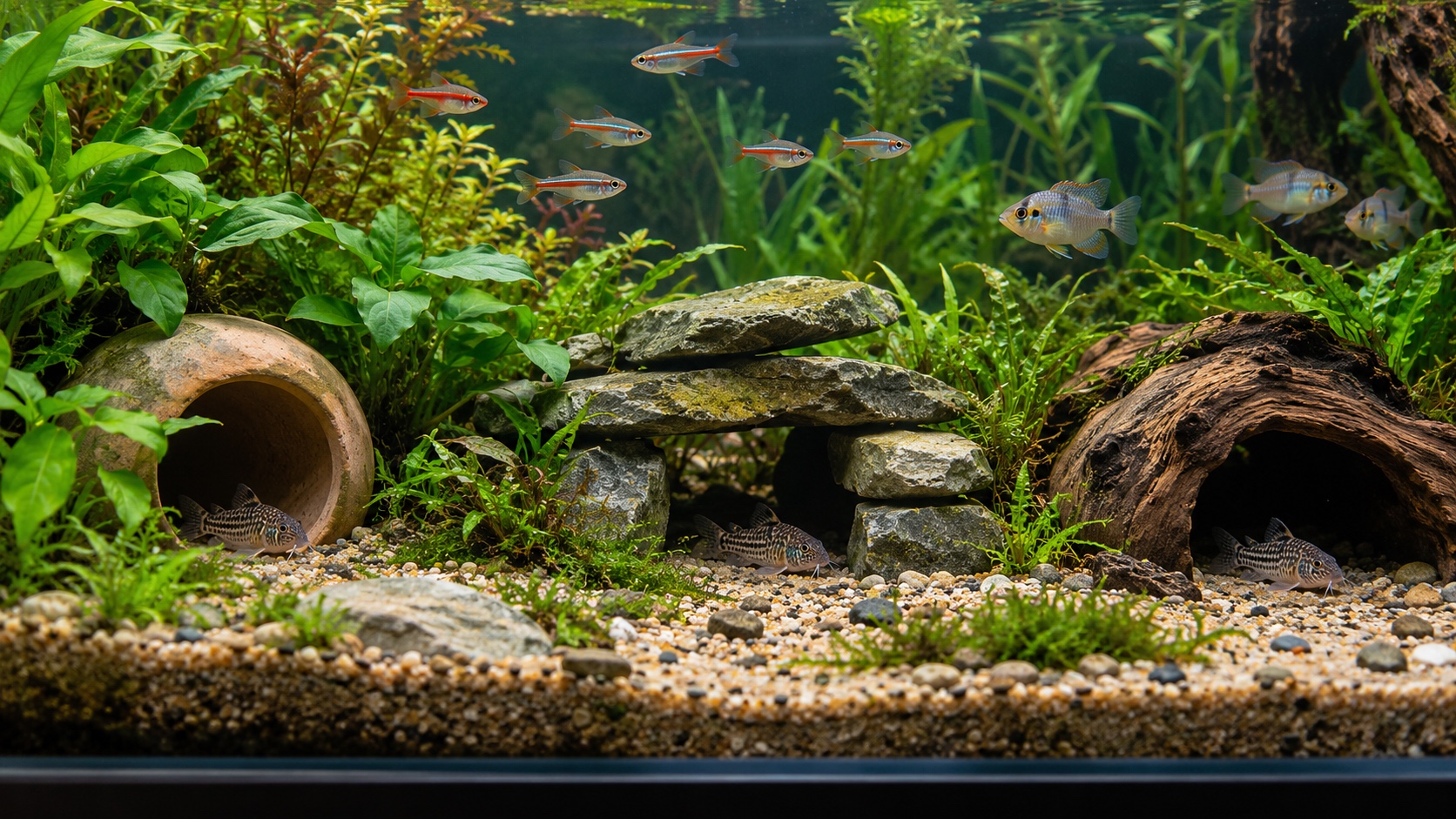
Aquarium-rated ceramic caves offer consistent shapes, smooth interiors, and useful spawning dimensions. Unglazed surfaces may grow biofilm and algae, while glazes require known safe formulation. Household pottery is not automatically aquarium-safe.
Evaluate Resin and Molded Shelters
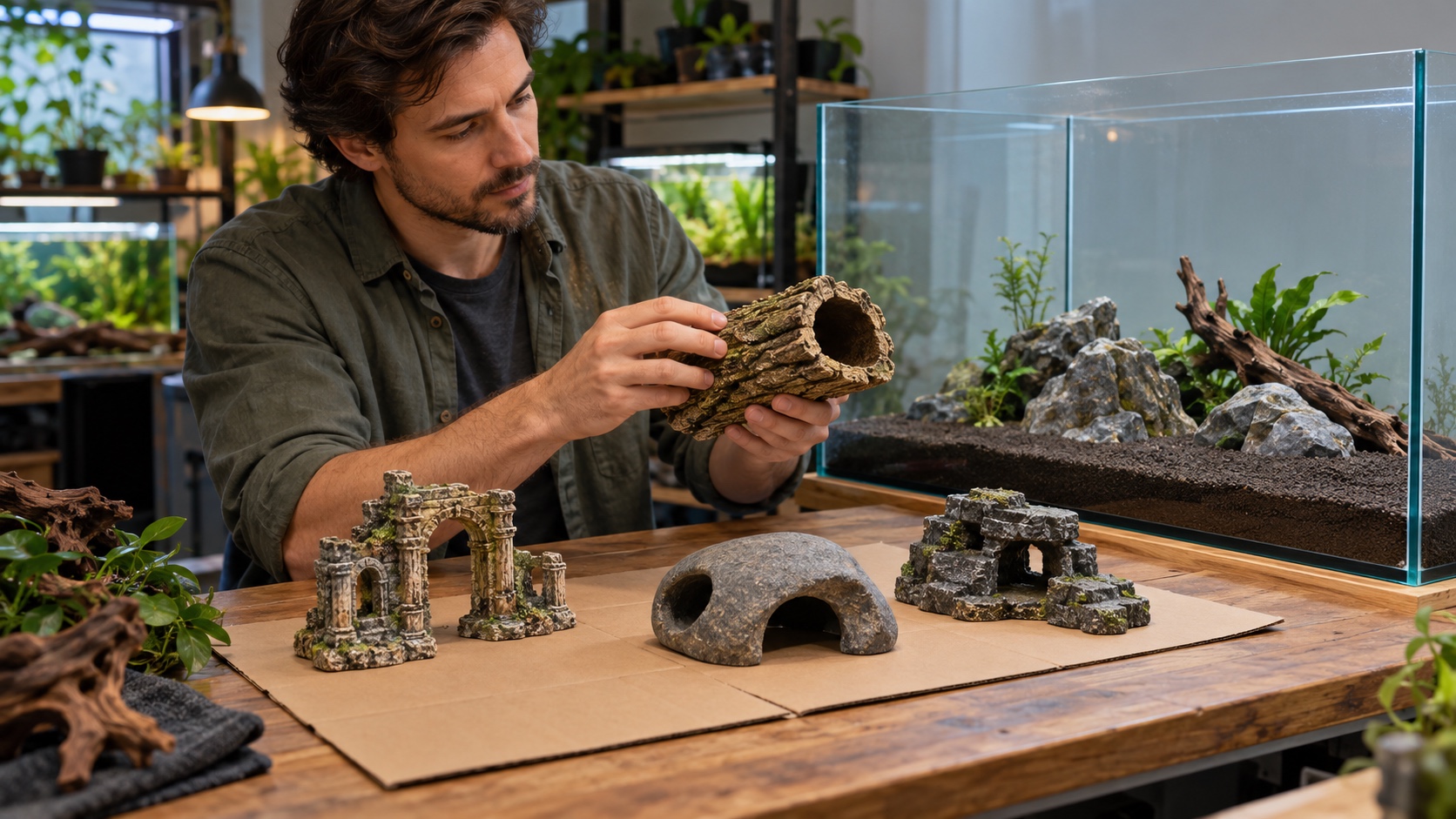
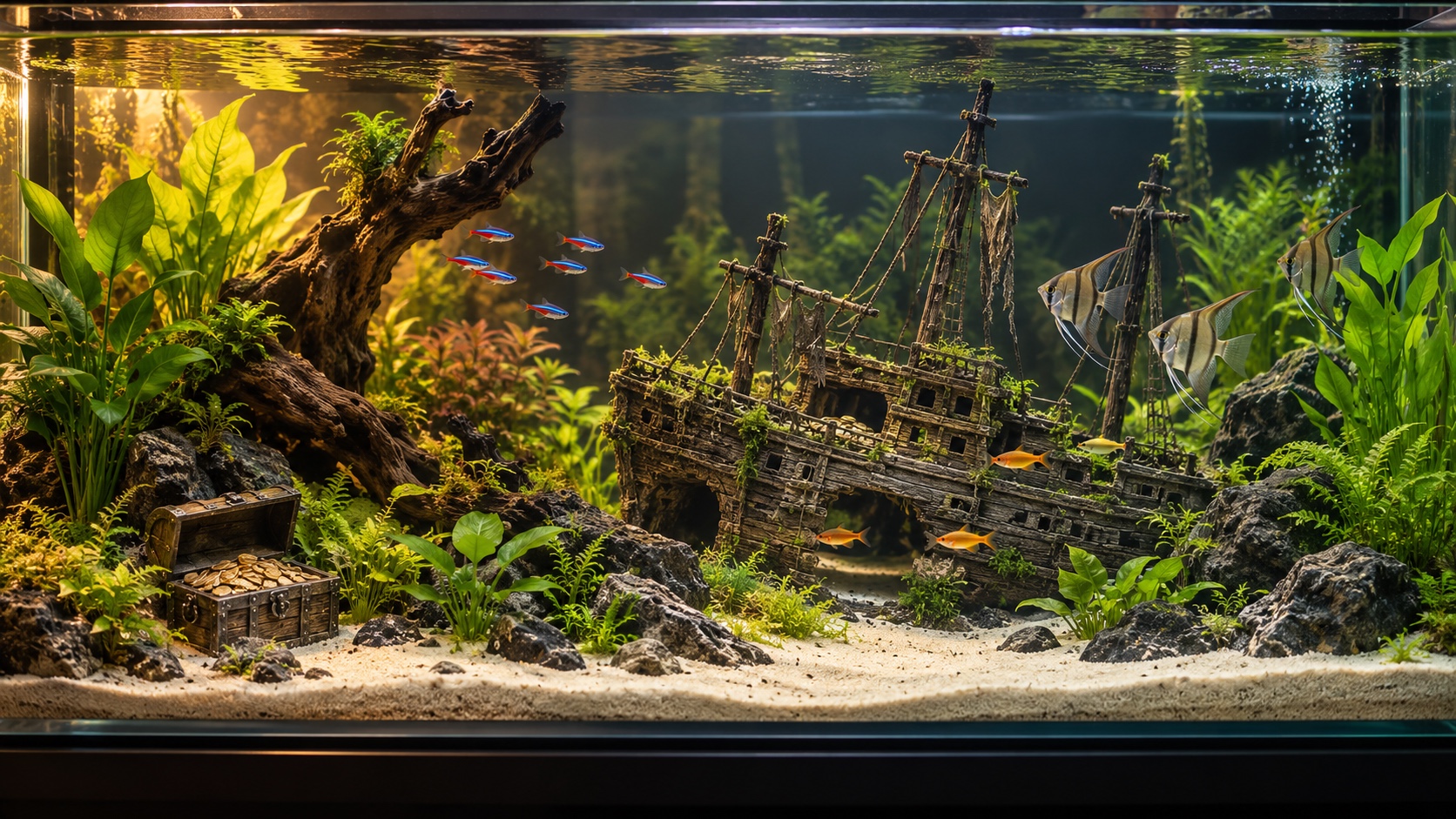
Resin caves can imitate stone, roots, ruins, or logs while remaining relatively light. Choose items clearly rated for aquarium use and inspect paint, seams, drain paths, and hollow chambers.
A light cave still needs stability. Burrowing fish or strong maintenance contact can move it. Avoid tall molded pieces with narrow bases or air pockets that create buoyancy.
Monitor coatings over time. Remove the item if it softens, peels, develops odor, or exposes unknown interior material. Do not apply household paint as a touch-up.
Build Stone Caves With Structural Support
Natural stone can create broad believable arches when chemistry and physical safety are understood. Select compatible rock and arrange it on an appropriate stable foundation before livestock is present. Match fracture, grain, and hardness so contact points remain predictable. Flat roofing stone requires enough bearing surface on both supports and must not teeter when approached from any service direction. Keep the span conservative and the entrance free of sharp chips. Test the structure dry, then again after substrate and water are added because buoyancy and settling can change how wood or supporting material behaves. Never use the aquarium glass as one wall of a precarious stone tunnel.
Do not rely on loose substrate to hold heavy roof stones. Every contact must resist digging, cleaning, and accidental bumps. Avoid pressure points against glass and top-heavy stacks.
Use Wood Tunnels With an Aging Plan
Aquarium wood can form shaded tunnels and branching retreats. It may release tannins, grow temporary biofilm, soften slowly, or change buoyancy as it saturates. Prepare and monitor it according to species and source.
Place Caves to Reduce Conflict
Separate entrances with plants, rocks, or wood so territorial fish cannot watch every shelter simultaneously. Face some openings in different directions. Preserve a clear route to open water.
Avoid placing every cave along the front pane for visibility. Fish may prefer shade and privacy. Use angled openings that permit observation without exposing the whole interior to room activity.
Keep shelters away from heater contact, intake suction, and unstable equipment. A fish resting inside should receive appropriate water circulation without being blasted by a return.
Provide open substrate near feeding zones so food can be seen and removed. A cave directly beneath heavy feeding may become a waste trap.
Integrate Shelter With Plants
Use epiphytes, moss, or low plants to soften the exterior and break sight lines. Do not cover the entrance, block interior flow, or bury rhizomes. Anticipate mature spread.
Rooted plants can stabilize the visual composition but should not be used as structural support for heavy stone. Trimming access must remain. Remove runners before they make the shelter impossible to lift safely.
Leave some cave surface visible for inspection. Total concealment may look natural while hiding cracks, trapped animals, or coating failure.
Test Caves Before Stocking
Run the filled aquarium and observe whether caves trap air, rattle, shift, or create stagnant pockets. Direct gentle flow around—not forcefully through—the shelters when the species permits. Complete the test before stocking and leave the system operating long enough for wood to saturate and substrate to settle. Look at each entrance from the normal room angle and from above. Use a flashlight to confirm interior visibility. Feed no animals during this test, but observe how ordinary suspended particles move around the structure. If debris immediately disappears into an unreachable chamber, the cave will likely become a maintenance problem regardless of how secure it looks.
Clean Without Destroying Security
Siphon around entrances during routine maintenance. Remove accumulated food before it decays. Avoid inserting tools blindly into occupied shelters. Approach slowly so the resident has time to leave or settle safely according to its normal behavior. A narrow baster can move debris toward an accessible area, but strong jets may injure a hidden fish or drive waste deeper. Schedule cleaning after observing where food lands. If the shelter requires complete removal at every water change, reconsider placement or choose a more accessible design. Frequent disruption can defeat the security the cave was meant to provide.
When lifting a cave, locate every animal first and block escape into unsafe work areas. Keep the object submerged in a container when appropriate so hidden fish or invertebrates are noticed. Grip from stable external surfaces and avoid fingers over entrances where a frightened animal may bolt. Do not tilt a heavy rock roof toward the glass. Prepare the replacement position and temporary cover before disturbing territory. After return, confirm the cave sits on the intended contacts and cannot rock. Watch residents for renewed conflict because the scent, orientation, or sight lines may have changed even when the object appears visually identical.
Reassess Shelter as Fish and Plants Mature
Measure the fish again as it approaches adult size. A cave that worked for a juvenile may become tight. Replace it before scraping or hesitation appears. Observe entry and exit from the side when possible. A fish turning repeatedly, folding fins, reversing awkwardly, or contacting both walls may need another shape even if it technically fits. Body condition and breeding state can also change clearance. Introduce the replacement nearby before removing the familiar shelter when territorial behavior permits, allowing the animal to investigate without suddenly losing security. Transfer useful cover and entrance direction, but do not reproduce a hazardous narrow interior merely because the fish used it previously.
Watch territorial patterns. An individual monopolizing the only preferred cave may require additional separated shelters or a stocking reassessment. More caves do not correct an aquarium too small for the species. Map where conflicts begin, which entrances are visible from each territory, and whether food forces animals through defended space. Additional caves should be genuinely usable, not smaller leftovers placed in one cluster. Rotate entrances and break sight lines with stable features while preserving escape routes. If aggression persists despite suitable options, reassess sex ratios, group size, compatibility, and overall footprint with species-appropriate guidance rather than continually adding barriers.
Inspect supports after digging and deep substrate cleaning. Stone contacts, resin bases, and wood positions can change when surrounding material moves. Rebuild only with animals protected elsewhere. Photograph stable contact points during initial construction and compare them after maintenance. Look for fresh scrape marks, widening gaps, tilted roof stones, or substrate channels beneath a base. Never reach into a stack blindly when a fish may be inside. Prepare a covered container with suitable water for temporary animal holding, dismantle from the top in a controlled order, and reconstruct on the intended foundation. If the same support fails repeatedly, simplify the cave instead of treating instability as inevitable.
Trim plants that narrow entrances or isolate a cave from circulation. Preserve shade through placement and compatible cover, not through unmanaged overgrowth. Moss mats can remain green outside while the compressed interior traps debris and loses attachment. Thin them rather than cutting only the surface. Remove runners from beneath movable ceramic and resin shelters so roots are not torn each time the cave is inspected. Keep rhizomes above the substrate and away from pinch points. After trimming, watch whether the shelter becomes too exposed for the animal; adjust a broad leaf, external hardscape, or entrance angle rather than sealing it again with dense growth.
The best aquarium cave is one the fish uses normally and the keeper can still inspect safely. Match function, adult dimensions, material, stability, placement, flow, and maintenance access. When these conditions agree, shelter becomes part of healthy behavior rather than a decorative risk hidden beneath the aquascape. Keep a shelter inventory for complex tanks: material, interior dimensions, intended species, installation date, and any coating or support changes. Review it when fish grow, breeding begins, new animals arrive, or the layout is rebuilt. Teach caretakers how to account for cave occupants before siphoning or lifting anything. A cave should increase security without making the animal disappear from responsible observation. The balance is achieved through patient placement and routine inspection, not by choosing the darkest or most elaborate object on the shelf. Observe use at several times of day because a shelter ignored under bright light may become important after lights dim. Note whether the animal rests, breeds, molts, feeds, or merely passes through, since each behavior tests the cave differently. Reassess the entrance after rearranging nearby plants or changing flow. If the preferred shelter consistently accumulates waste, solve circulation and access rather than removing security without an alternative. Record successful dimensions and orientation for future replacements, but measure each new occupant instead of assuming every individual of a species has identical needs. Thoughtful shelter selection remains an ongoing husbandry decision.