A reef food web starts with sunlight
Coral reef food webs can feel complicated, but they become easier to understand when sunlight, algae, plankton, grazers, cleaners, predators, and decomposers are followed step by step.
A: Sunlight starts much of it by powering algae, including symbiotic algae inside coral tissue.
A: Grazers move energy from algae into fish, urchins, snails, and other animals.
A: Plankton feeds corals, small fish, filter feeders, and many young animals.
A: They may sit high in the web, but they also change prey behavior throughout the reef.
A: Worms, crabs, brittle stars, snails, cucumbers, pods, and bacteria recycle uneaten material.
A: Rarely. Reef feeding links overlap, so a web is more accurate than a line.
A: Yes. Corals can capture food, and many also receive energy from symbiotic algae.
A: Excess nutrients, strong light, low grazing, or immature balance can all contribute.
A: Pressure shifts elsewhere, often changing algae growth, prey behavior, or water quality.
A: Follow one food source, such as algae or plankton, and see which animals use it.
Start with the reef as a living neighborhood
Coral reef food webs can feel complicated, but they become easier to understand when sunlight, algae, plankton, grazers, cleaners, predators, and decomposers are followed step by step. The important habit is to stop treating a reef as a background and start reading it as a place where every animal solves a problem. Some animals hold territory, some harvest food, some clean surfaces, and some spend most of their lives avoiding being noticed.
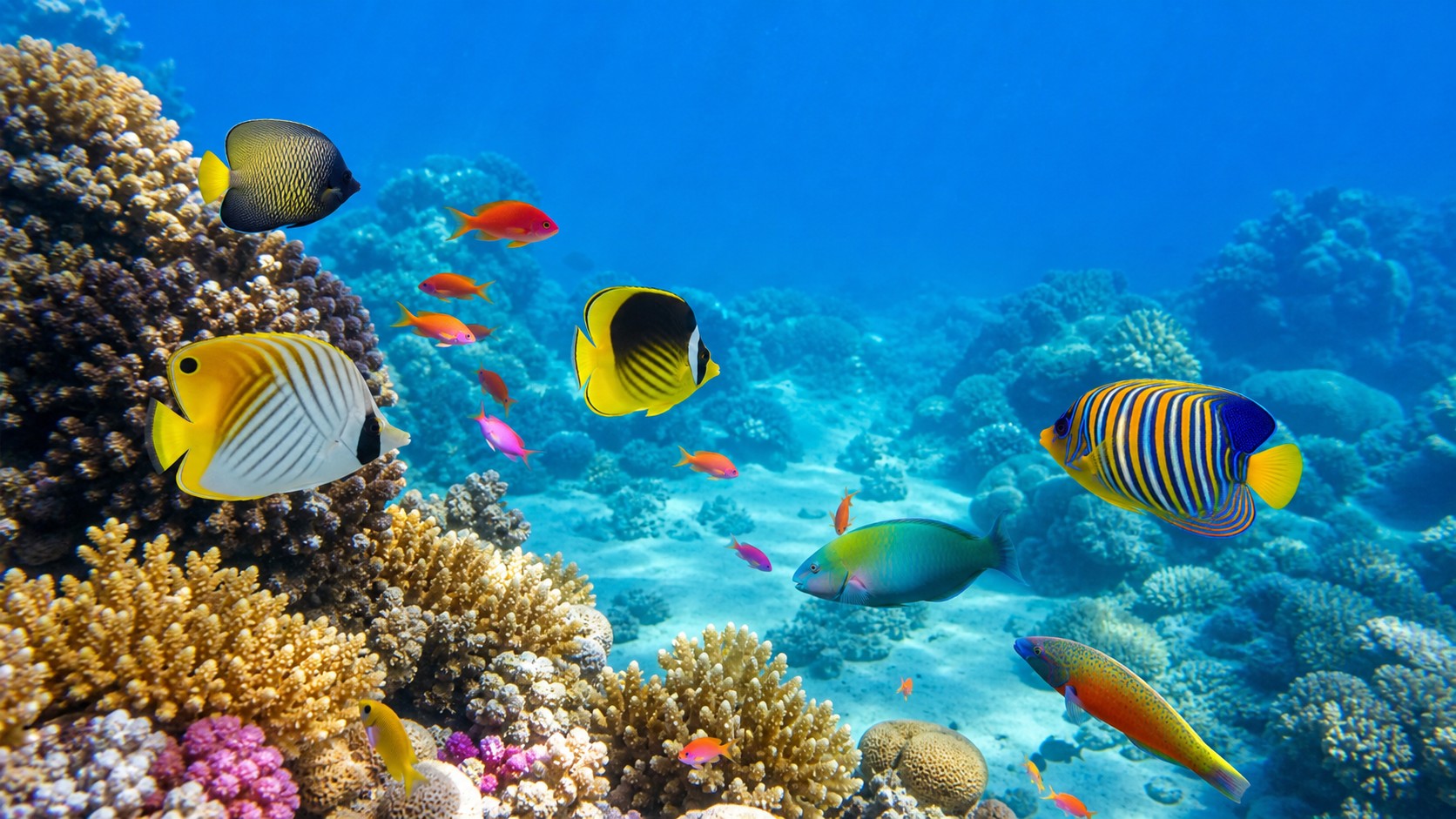
For a beginner, coral reef food web explained for beginners becomes clearer when the reef is divided into zones. Open water favors quick swimmers and plankton pickers. Coral branches shelter small fish and crustaceans. Sand channels are crossed by gobies, cucumbers, snails, and hunting fish. Crevices become apartments, nurseries, ambush points, and night shelters.
That neighborhood view also helps aquarists make better decisions. A beautiful animal may be unsuitable if its natural job cannot be supported in a home aquarium. A plain-looking grazer may be essential because it keeps surfaces usable for other life. Reef watching becomes richer when usefulness and beauty are noticed at the same time.
Corals create the foundation
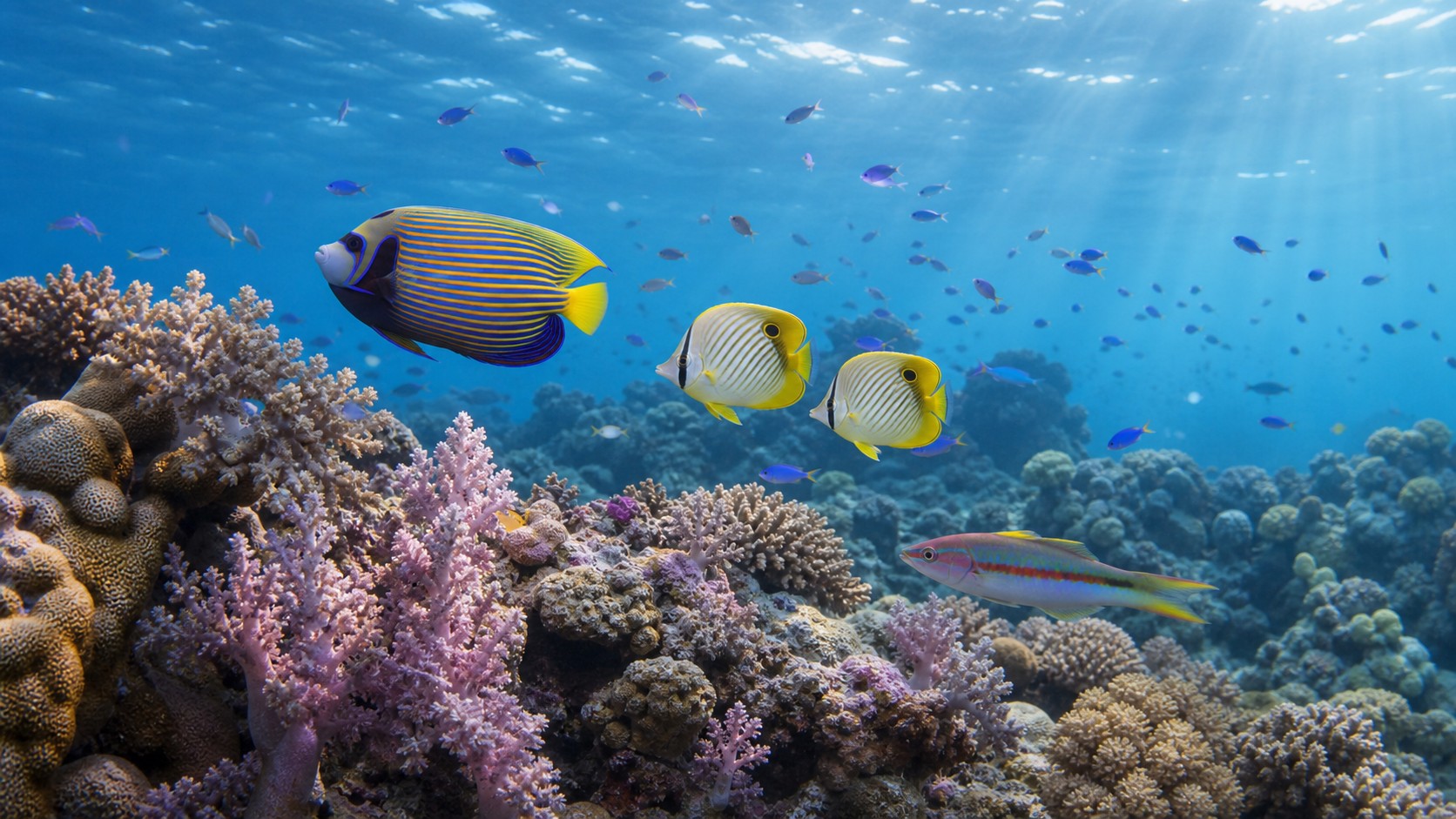
Reef-building corals are animals, but they also create architecture. Their skeletons form ledges, caves, towers, and branches that other animals use for feeding and shelter. Tiny polyps catch food from the water while also relying on symbiotic algae that use sunlight. That partnership is one reason clear, shallow tropical water can support such dense life.
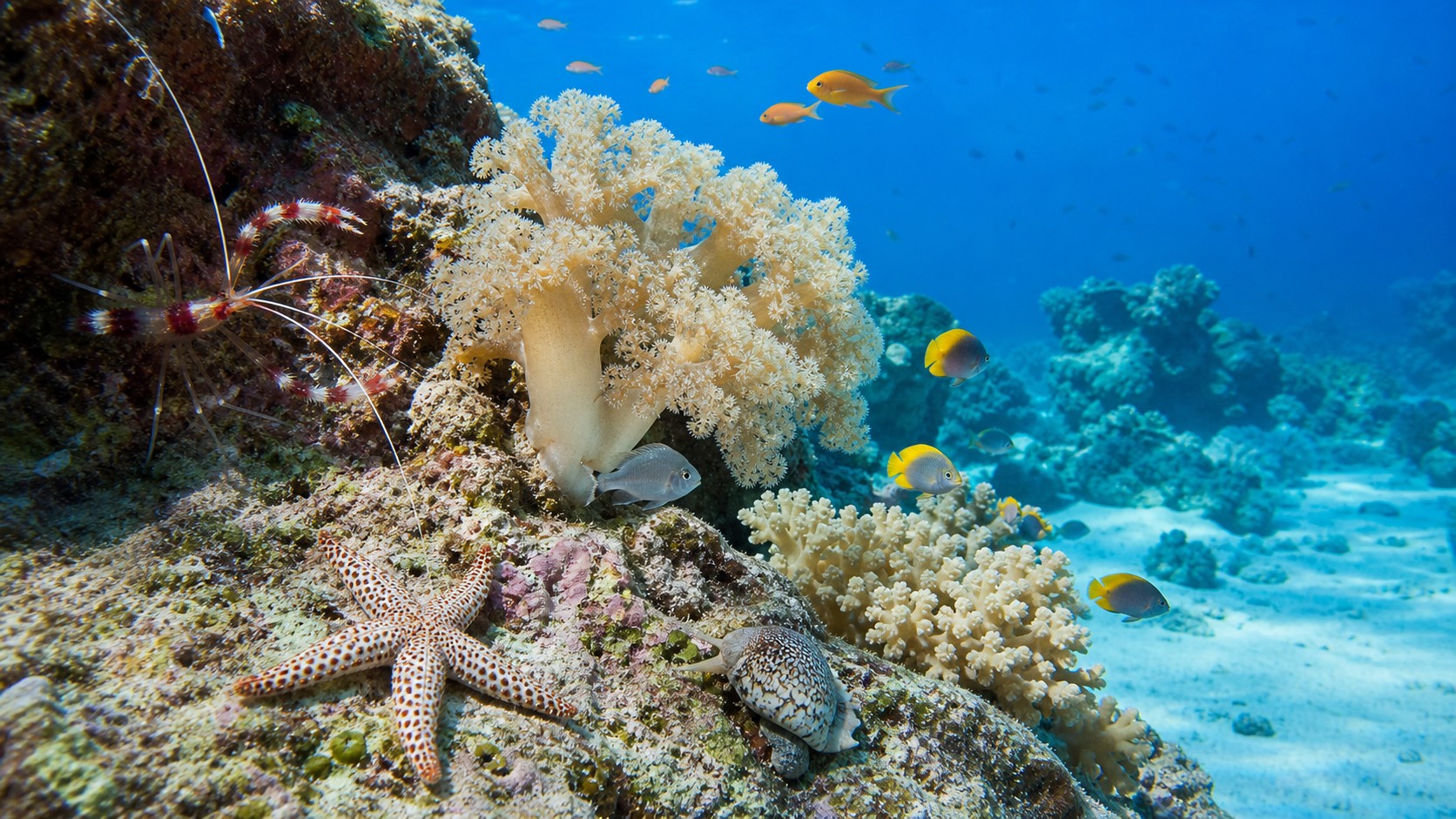
Soft corals, sponges, and other attached animals add texture to the reef. They filter, shelter, compete, and turn bare surfaces into living real estate. When people imagine reef life, they often picture fish first, yet the fixed animals set the stage long before the fish arrive.
Grazers keep space open
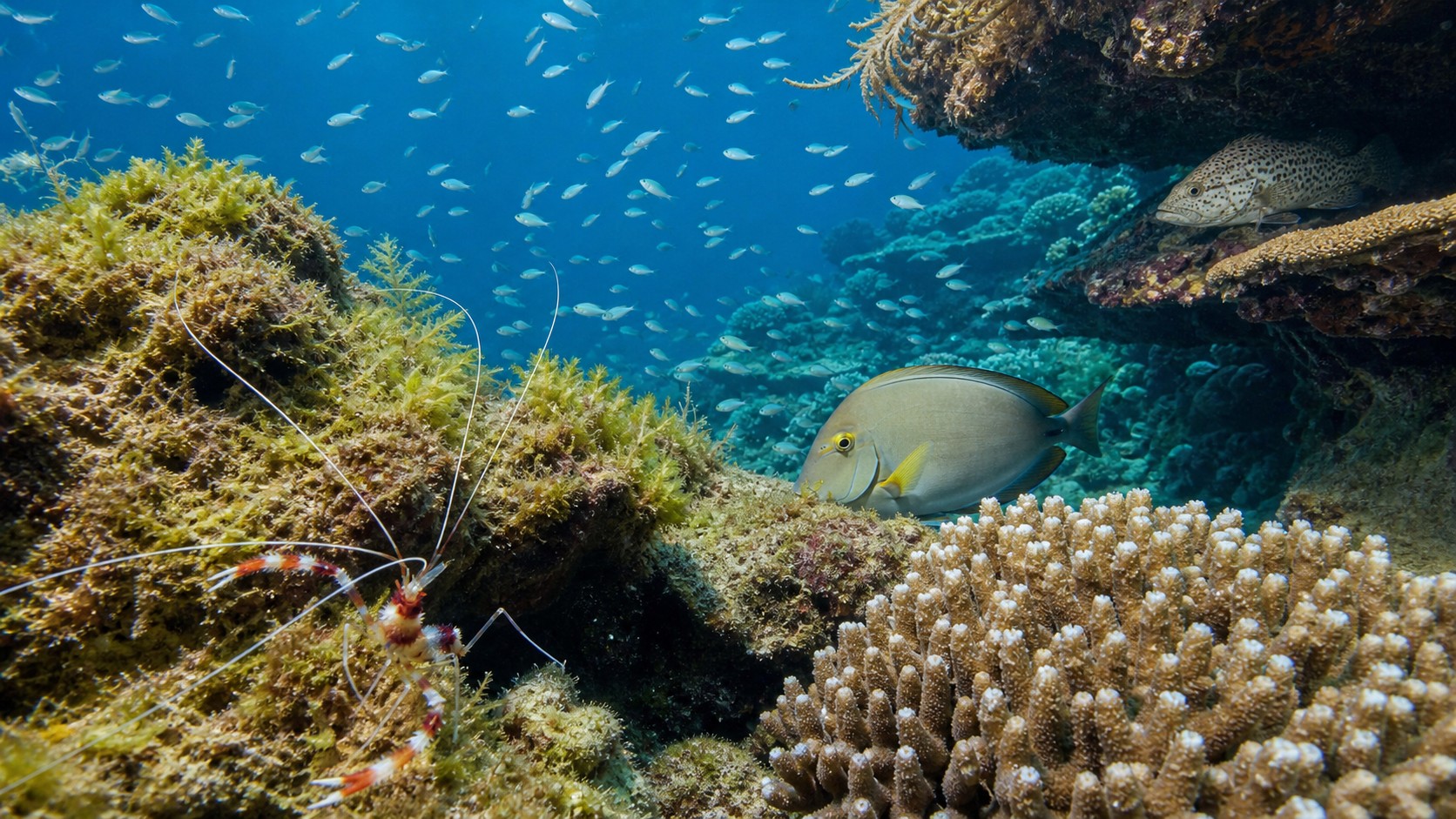
Algae grows quickly wherever sunlight and nutrients are available. Without grazers, it can smother young corals and cover the hard surfaces that many reef organisms need. Tangs, rabbitfish, parrotfish, urchins, snails, and some crabs all help keep that growth in check, though each feeds in a different way.
This grazing pressure is not tidy landscaping; it is a constant contest for space. A parrotfish scraping algae may also bite old coral skeleton. A tang may crop fine films from rock. An urchin may work after dark. Together, these animals help prevent the reef from becoming a simple algae field.
In aquariums, the same principle appears at a smaller scale. Cleanup animals can help, but they cannot replace balanced feeding, appropriate lighting, and stable maintenance. Grazers are partners, not magic erasers.
Small animals move food through the system
Tiny crustaceans, worms, larvae, and planktonic organisms are easy to overlook because they do not dominate photographs. On the reef, they are essential links. Many fish feed by picking small prey from the water or from rock surfaces. Corals and feather dusters capture suspended particles. Nocturnal animals emerge after dark to feed while larger daytime hunters rest.
The small scale is where a reef's abundance becomes most obvious. A coral head may contain shrimp, brittle stars, amphipods, worms, tiny crabs, and young fish. Much of this life stays hidden until the light changes or food appears. Patient observation reveals that the reef is busiest in places that first looked still.
Predators shape behavior, not just populations
Predators are often described as the animals at the top, but their influence reaches sideways through the reef. A grouper near a ledge changes how small fish use open water. A moray in a crevice makes neighboring fish keep distance. Hawkfish, lionfish, snappers, and larger wrasses all create pressure that affects where prey animals feed and hide.
That pressure can make reef life look more organized than it really is. Schools tighten, gobies hover close to burrows, and small fish retreat into coral branches when shadows pass overhead. Predation is not only about capture; it is about the constant possibility of capture.
For reef keepers, predator behavior is a reminder that mouth size and temperament matter. A fish that looks peaceful while small may still view tiny tankmates as food once it matures.
Cleaners and recyclers prevent waste from winning
Cleaner shrimp and cleaner wrasses are famous because their interactions are easy to see. Client fish pause, flare fins, or hold still while parasites and dead tissue are removed. These cleaning stations show cooperation, recognition, and risk management in a very visible form.
Less glamorous recyclers are just as important. Bristle worms, brittle stars, nassarius snails, cucumbers, bacteria, and countless micro-organisms break down leftover food, waste, and dead material. They return nutrients to the system and keep small problems from becoming large ones.
What beginners should take away
The best beginner lesson from coral reef food web explained for beginners is that a reef is built from relationships. Fish are connected to algae, corals are connected to sunlight and water quality, predators are connected to hiding places, and cleanup animals are connected to everything that dies or gets missed.
Once those connections are visible, reef care becomes less about collecting attractive animals and more about building a stable community. That mindset makes the natural reef more interesting and the home aquarium more responsible.
How this changes reef keeping choices
For aquarium planning, the lesson from coral reef food web explained for beginners is restraint. A good stock list is not only a collection of names; it is a set of jobs that can coexist in one volume of water. A fish that grazes all day, a shrimp that claims a cave, and a coral that needs stable light are connected by flow, nutrients, space, and daily maintenance.
This is why the most successful reef aquariums often look calmer than a wish list. They leave room for adult size, choose animals whose diets can be met, and avoid forcing incompatible roles into the same small territory. The result is not less interesting. It is more interesting because the animals have enough stability to behave naturally.
When in doubt, slow observation beats fast collecting. Study one species until its food, shelter, and social needs are clear. Then decide whether the rest of the system can support that life without turning another animal into a compromise.
Why a web is better than a chain
A simple food chain might say algae feeds a grazer, the grazer feeds a predator, and the predator dies and decomposes. That is useful as a first sketch, but a reef quickly becomes more complicated. The same algae may feed snails, tangs, urchins, and tiny crustaceans. The same small fish may eat plankton, pick at surfaces, and become prey for several hunters. Leftovers may feed worms, bacteria, crabs, and corals.
A web shows those overlapping routes. Energy does not move along one road. It spreads through many alleys, loops, and shortcuts. This is why removing or overemphasizing one group can create surprising effects. Too few grazers may allow algae to expand. Too many nutrients may feed algae and microbes. Too few hiding places may change how small fish feed.
For beginners, the web idea also reduces confusion. You do not have to memorize every link at once. Start with sunlight, algae, plankton, grazers, predators, and recyclers. Then add detail as you learn individual animals.
How aquarium feeding changes the web
In the wild, reef food arrives through sunlight, currents, grazing surfaces, plankton, predation, and decomposition. In an aquarium, the keeper becomes a major food source. Frozen foods, pellets, algae sheets, coral foods, and live foods all enter the system by choice. What is not eaten becomes part of the cleanup and nutrient side of the web.
This is why overfeeding is not just wasted food. It can shift the whole system toward algae, bacterial films, cloudy water, or stressed animals. Underfeeding creates different problems, especially for active planktivores or species that browse throughout the day. A reef tank needs feeding that matches the animals rather than a single routine applied to everything.
Good feeding observes results. Are grazers still grazing? Are fish maintaining weight? Are corals opening? Are leftovers disappearing because animals ate them or because they are decaying out of sight? Those questions connect daily care to the food web.
Using the food web to troubleshoot
When algae grows too quickly, the food web points to possible causes: excess nutrients, too much light, too few effective grazers, immature surfaces, or poor export. When fish hide and stop feeding, predator pressure, bullying, disease, or habitat stress may be interrupting normal energy flow. When sand becomes dirty, the system may lack movement, cleanup activity, or appropriate maintenance.
This does not mean every problem has one biological fix. Adding an animal to solve a symptom can create a new problem if the tank cannot support that animal long term. The web should guide diagnosis, not encourage impulse purchases. Sometimes the best answer is less food, better flow, manual removal, improved filtration, or patience.
A beginner who understands the food web gains a calmer way to think. Instead of reacting to every patch of algae or every leftover particle, they can ask where the material came from, who should use it, and why that link may not be working.
Putting the guide into practice
To use Coral Reef Food Web Explained for Beginners as more than a casual overview, turn it into a checklist before you buy, stock, or compare anything. Write down the animals that interest you, then add a note for where each one spends its time, what it eats, how it behaves around neighbors, and what might happen as it matures. That extra step slows the process in a useful way. It changes the question from whether an animal is attractive to whether the aquarium can support the life behind that attraction.
The strongest decisions usually come from matching energy flow, feeding pressure, and recycling. If a species depends on constant grazing, the tank needs surfaces that can support that behavior and a diet that fills the gaps. If an animal lives by hiding in branching coral or tight rockwork, the layout should offer more than open swimming space. If a fish is famous for color or elegance but grows large, chases similar species, or picks at invertebrates, that information belongs at the center of the decision rather than in small print.
It also helps to compare groups instead of isolated names. Looking at algae, plankton, corals, grazers, predators, detritus feeders, and bacteria side by side reveals how different reef animals solve different problems. Some turn sunlight and algae into food. Some move sand or process waste. Some keep other animals alert by hunting. Some become visual anchors that make people stop and look. A balanced reef display usually includes several kinds of contribution rather than one repeated type of animal.
For beginners, patience is the most useful tool. Spend time watching videos, reading care notes from experienced aquarists, and checking whether advice agrees across multiple reliable sources. Then imagine the animal on an ordinary day, not only on the day it arrives. Where will it sleep, what will it do at noon, what will it eat when you are not watching, and how will it behave six months later? Those questions make coral reef food web explained for beginners easier to understand and much easier to care about responsibly.
The same thinking improves reef observation in the wild. Instead of scanning for the biggest or brightest animal, choose one small area and read the relationships inside it. Notice who uses open water, who stays near shelter, who feeds from surfaces, who waits in current, and who appears only when another animal moves. A reef becomes more impressive when it is seen as a working system rather than a collection of separate attractions.