Color on a reef is never just decoration
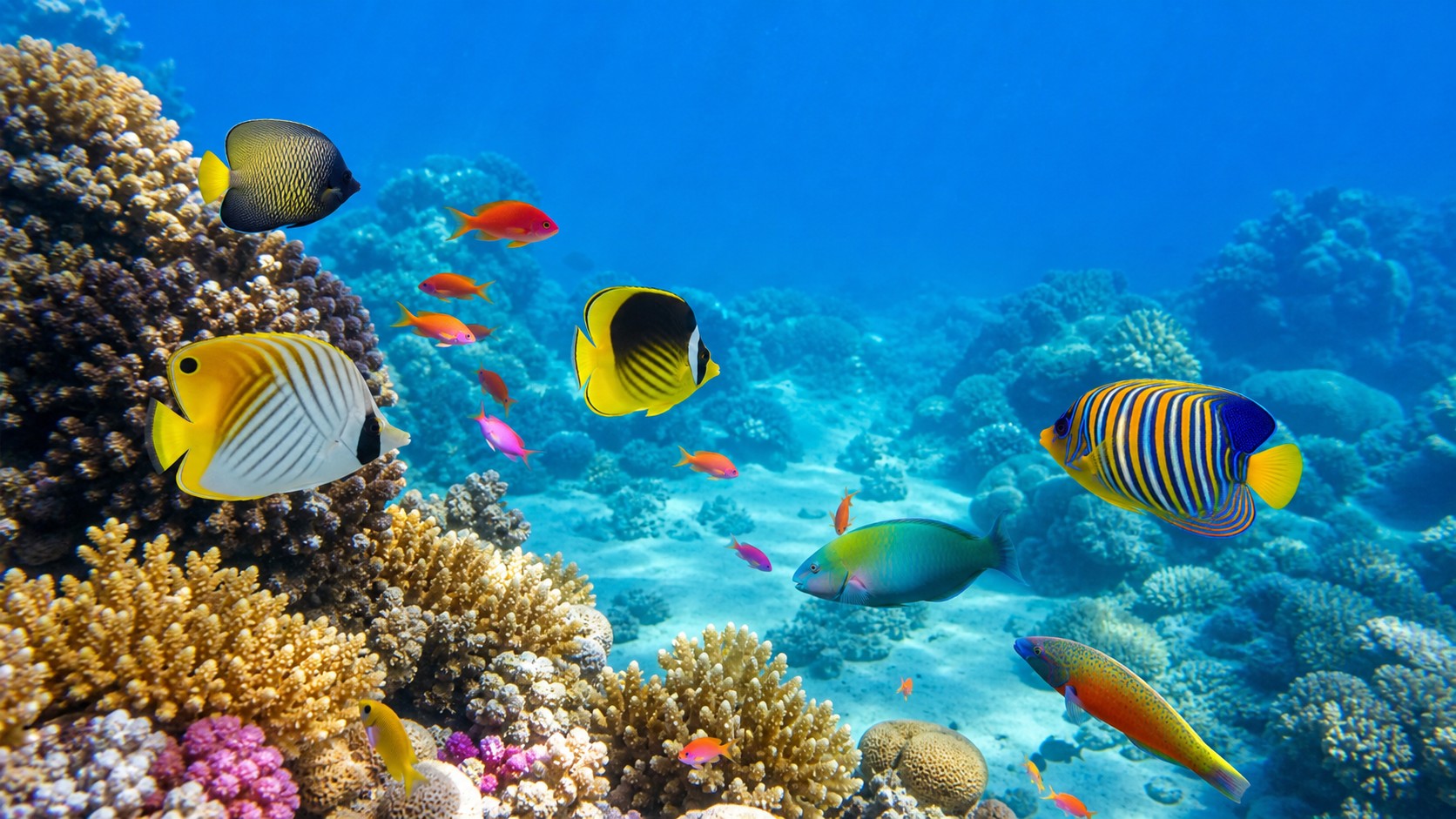
A coral reef can look like a living paint box, but the brightest fish are not showing off for people. Their colors help them recognize mates, warn rivals, blend into coral shadows, signal cleaning partnerships, and move safely through a crowded neighborhood. Once you know what to look for, the reef stops being a blur of blue, yellow, orange, and neon pink. It becomes a set of clues about where each fish feeds, how it avoids trouble, and why some species seem to own a particular ledge, coral head, or open-water lane.
A: No. Difficulty depends on diet, size, temperament, and collection history, not color alone.
A: Eye bars can make the head harder for predators or rivals to target.
A: They can fade when diet, water quality, lighting, or social conditions are poor.
A: Captive-bred clownfish are often a sensible first colorful saltwater choice.
A: Some are safer than others, but many angels may nip coral or clam tissue.
A: They naturally pick plankton from the water column throughout the day.
A: Yes. Small fish often show detailed behavior when given secure territories.
A: Strong color can be a good sign, but breathing, weight, activity, and appetite matter too.
A: Add fish slowly and plan around territory, size, and feeding style.
A: The best colors are tied to motion, habitat, social signals, and survival.
Why reef fish are so colorful
Color begins with survival. Many reef fish live in bright, shallow water where sunlight breaks into shimmering bands, and a flat gray body would not always be the best disguise. Stripes can interrupt the outline of a fish as it darts between coral fingers. Spots can mimic the broken texture of rubble and sponge. Bright side panels can flash one moment and disappear the next when the fish turns into shade.
Color also works as a language. A wrasse may use a distinct pattern to advertise its place in a cleaning station, while a damselfish may use bold markings to defend a patch of algae. Juveniles often wear different colors than adults because they live differently, hide in different places, or need to avoid being treated as competitors. The result is a reef community where beauty and behavior are tied together.
For aquarists, that matters because a colorful fish is not automatically an easy fish. Some of the most brilliant species need large swimming space, constant grazing, mature rock, or peaceful neighbors. The smartest way to appreciate reef color is to connect the pattern to the animal's daily life.
Anthias bring moving clouds of orange and pink
Anthias are often the fish that make a reef look alive from a distance. They hover above coral heads in loose groups, feeding on tiny plankton that drift through the water. Their orange, peach, pink, and violet tones stand out against blue water, especially when a group rises and drops together in the current.
Their color is tied to social structure. In many anthias groups, a dominant individual becomes more intensely colored and behaves more boldly. That social energy is part of their appeal, but it also explains why they need frequent feeding and room to move. They are not decorations pinned to one coral branch; they are active water-column fish with fast metabolisms.
In a reef display, anthias teach a useful lesson: motion can be as important as hue. A single bright fish catches the eye, but a coordinated group changes the whole rhythm of the scene.
Wrasses add electric detail and restless movement
Wrasses are among the reef's great shape-shifters. Some cruise over sand and rubble looking for tiny prey. Others flash through coral branches with a ribbon-like body and quick turns. Their colors can look painted on in fine lines, checker patterns, face markings, or glowing edges along the fins.
Fairy and flasher wrasses are famous for color displays, especially when males court or challenge one another. Cleaner wrasses use a very different visual signal, with markings that help larger fish recognize them as service providers rather than snacks. Halichoeres wrasses often combine useful pest-hunting behavior with lively color, though many need sand for sleeping and may investigate small invertebrates.
The important point is that wrasse color comes packaged with behavior. A dazzling wrasse may jump, bury, patrol, or spar. Knowing that before choosing one prevents the common mistake of admiring the palette while ignoring the personality.
Tangs and surgeonfish make bold color easy to see
Tangs are reef billboards. Their bodies are usually broad, their swimming style is confident, and their colors can be read from across the reef. Yellow tangs, blue tangs, powder blue tangs, and purple tangs all show how a simple block of color can be just as dramatic as a complicated pattern.
Those bright bodies belong to working grazers. Tangs spend much of the day picking at algae films and moving across wide reef surfaces. In aquariums, that means they often need more swimming room than a similarly sized fish with a quieter lifestyle. Their color is easy to love, but their space and diet needs deserve equal attention.
Butterflyfish and angelfish show the art of pattern
Butterflyfish often wear stripes, eye bars, false eyespots, and bright yellow panels that make them instantly recognizable. Many species pick at coral polyps, worms, or small invertebrates, which is why their aquarium suitability varies so much. On the reef, though, they are perfect examples of color used for both display and confusion.
Angelfish bring a different kind of drama. Their deeper bodies, strong outlines, and saturated colors make them look almost sculptural. Large angels can become commanding reef presences, while dwarf angels offer concentrated color in a smaller package. Some are safer with corals than others, so the word beautiful should always be followed by the question: beautiful in what kind of tank?
Together, butterflyfish and angelfish remind us that pattern has purpose. Bars can hide the eye, bright tails can redirect attention, and repeated lines can make it harder for a predator to judge the exact edge of the body.
Small fish can carry the brightest reef moments
Not every unforgettable reef fish is large. Chromis can glitter in groups above coral. Gobies can show jewel-like markings from a perch no bigger than a thumb. Dottybacks, basslets, and blennies may occupy tiny territories but still add intense color and character to the reef's lower levels.
These smaller fish are worth noticing because they reveal the reef at a slower pace. A huge tang announces itself immediately, but a tiny goby rewards patience. For reef keepers, this is also where thoughtful stocking can create depth. A tank built only around one centerpiece may feel empty; a tank with small, well-chosen color points feels lived in.
How to appreciate color responsibly
The best way to enjoy colorful reef fish is to connect admiration with care. Ask where the fish swims, what it eats, how large it gets, whether it lives alone or in groups, and how it treats corals and invertebrates. Those practical questions do not make the fish less magical. They make the beauty easier to protect.
Color is often the first thing people notice, but it should not be the only thing they remember. The most rewarding reef fish are not just bright. They fit their environment, behave naturally, and remain healthy long after the first impression fades.
Choosing favorites without missing the point
A useful way to compare colorful reef fish is to ask what first draws the eye and what keeps attention after the first minute. A yellow tang is instantly readable because the whole body works like a clean signal. A mandarin is the opposite; it rewards close inspection because the pattern is intricate and almost maze-like. Anthias are different again because a single fish may be pretty, while a group changes the entire upper half of a reef scene.
This distinction helps avoid shallow rankings. The most colorful fish is not always the one with the largest number of colors. Sometimes the strongest impression comes from contrast, from movement, or from a color appearing in the right place. A royal gramma's split body is memorable because purple and yellow meet so abruptly. A butterflyfish may be memorable because its eye stripe and body bands create rhythm. A wrasse may be memorable because it changes appearance with angle and mood.
For aquarium planning, choose color roles instead of collecting every bright species that fits on a list. One active swimmer can command open water, one cave-associated fish can add surprise near the rockwork, and one small perching species can reward slow viewing. That creates a fuller display than several fish competing for the same visual and behavioral space.
Care conditions that protect natural color
Healthy color depends on ordinary husbandry more than exotic tricks. Stable salinity, appropriate temperature, low chronic stress, and a varied diet all affect how a fish looks. Many species show duller tones when they are bullied, underfed, newly imported, or forced to live without enough shelter. A fish that hides constantly may still be colorful on paper, but the aquarium will rarely benefit from that color.
Diet is especially important because pigments and body condition are linked. Herbivorous fish need regular plant-based foods. Planktivores often do better with smaller, more frequent meals. Predatory fish need suitable meaty foods without being overfed into poor water quality. When feeding matches biology, color usually looks cleaner and behavior becomes more confident.
Lighting can help viewers appreciate color, but it cannot solve poor care. Excessively blue light may make some pigments glow while flattening others. Harsh lighting without shade can make shy fish retreat. The goal is not to force the brightest possible look at every moment; it is to create conditions where the fish behaves naturally and shows its color as part of normal life.
A beginner-friendly viewing exercise
Pick one bright fish and watch it for five minutes without switching attention. Track where it swims, what it pecks, which fish it avoids, and which areas it returns to. That simple exercise turns color into context. A tang's color becomes tied to grazing routes. A wrasse's flash becomes tied to quick inspections of rock and sand. A basslet's glow becomes tied to the safety of a cave entrance.
Next, watch how the same fish reacts when another animal enters its space. Does it flare, flee, ignore the visitor, or follow? Color often becomes more meaningful during those moments. A display may intensify, a body may tilt, or a fish may choose shadow instead of confrontation. Reef color is not static like paint on a wall. It is part of communication.
Finally, compare that fish with a less colorful neighbor. The quieter species may be doing work the bright fish does not do, such as sifting sand, grazing film algae, or guarding a burrow. That comparison is the heart of good reef appreciation: beauty is wonderful, but function makes the whole scene last.
Putting the guide into practice
To use The Most Colorful Coral Reef Fish You Need to Know as more than a casual overview, turn it into a checklist before you buy, stock, or compare anything. Write down the animals that interest you, then add a note for where each one spends its time, what it eats, how it behaves around neighbors, and what might happen as it matures. That extra step slows the process in a useful way. It changes the question from whether an animal is attractive to whether the aquarium can support the life behind that attraction.
The strongest decisions usually come from matching color, compatibility, and long-term health. If a species depends on constant grazing, the tank needs surfaces that can support that behavior and a diet that fills the gaps. If an animal lives by hiding in branching coral or tight rockwork, the layout should offer more than open swimming space. If a fish is famous for color or elegance but grows large, chases similar species, or picks at invertebrates, that information belongs at the center of the decision rather than in small print.
It also helps to compare groups instead of isolated names. Looking at anthias, wrasses, tangs, angelfish, butterflyfish, basslets, and gobies side by side reveals how different reef animals solve different problems. Some turn sunlight and algae into food. Some move sand or process waste. Some keep other animals alert by hunting. Some become visual anchors that make people stop and look. A balanced reef display usually includes several kinds of contribution rather than one repeated type of animal.
For beginners, patience is the most useful tool. Spend time watching videos, reading care notes from experienced aquarists, and checking whether advice agrees across multiple reliable sources. Then imagine the animal on an ordinary day, not only on the day it arrives. Where will it sleep, what will it do at noon, what will it eat when you are not watching, and how will it behave six months later? Those questions make the most colorful coral reef fish you need to know easier to understand and much easier to care about responsibly.
The same thinking improves reef observation in the wild. Instead of scanning for the biggest or brightest animal, choose one small area and read the relationships inside it. Notice who uses open water, who stays near shelter, who feeds from surfaces, who waits in current, and who appears only when another animal moves. A reef becomes more impressive when it is seen as a working system rather than a collection of separate attractions.