The best nano reef fish make small tanks feel complete
A nano reef does not need many fish to feel alive. It needs the right fish: small enough for the space, steady enough for beginner care, and interesting enough to reward daily observation.
A: Small adult size, calm behavior, easy feeding, and modest territory needs matter most.
A: No. Mature pairs can defend a large area in a small tank.
A: Usually no. Many schooling species need more room or group stability than a nano offers.
A: No, but gobies are often excellent because many use lower spaces well.
A: No. Tangs need far more swimming room and grazing space.
A: Many small marine fish jump when startled or stressed.
A: One at a time is safest in most nano systems.
A: They are often hardier, easier to feed, and a responsible first choice.
A: Choosing by color before checking adult behavior and space needs.
A: If adding one more fish reduces hiding space or feeding control, stop.
Small tanks reward small choices
Nano reef aquariums make every stocking decision more visible. A fish that would disappear into a larger reef may become the main personality in a small tank, while a fish that seems modest at the store can feel crowded once it starts defending rockwork. The best nano reef fish are not simply the smallest saltwater fish available. They are species whose adult size, swimming style, temperament, and feeding needs fit the limits of a compact aquarium.
That distinction matters because nano systems have less room for mistakes. Water quality can change faster, territories overlap sooner, and bullying has fewer escape routes. A smart fish list begins with restraint. One confident pair, one cave-associated species, or one sand-level character can create more interest than a crowded collection of restless swimmers.
The goal is a tank that looks alive without feeling busy. Fish should have places to retreat, open lanes to cross, and feeding opportunities that match their natural habits. When those basics are right, small reef fish often show more personality than people expect.
Clownfish remain the dependable starting point
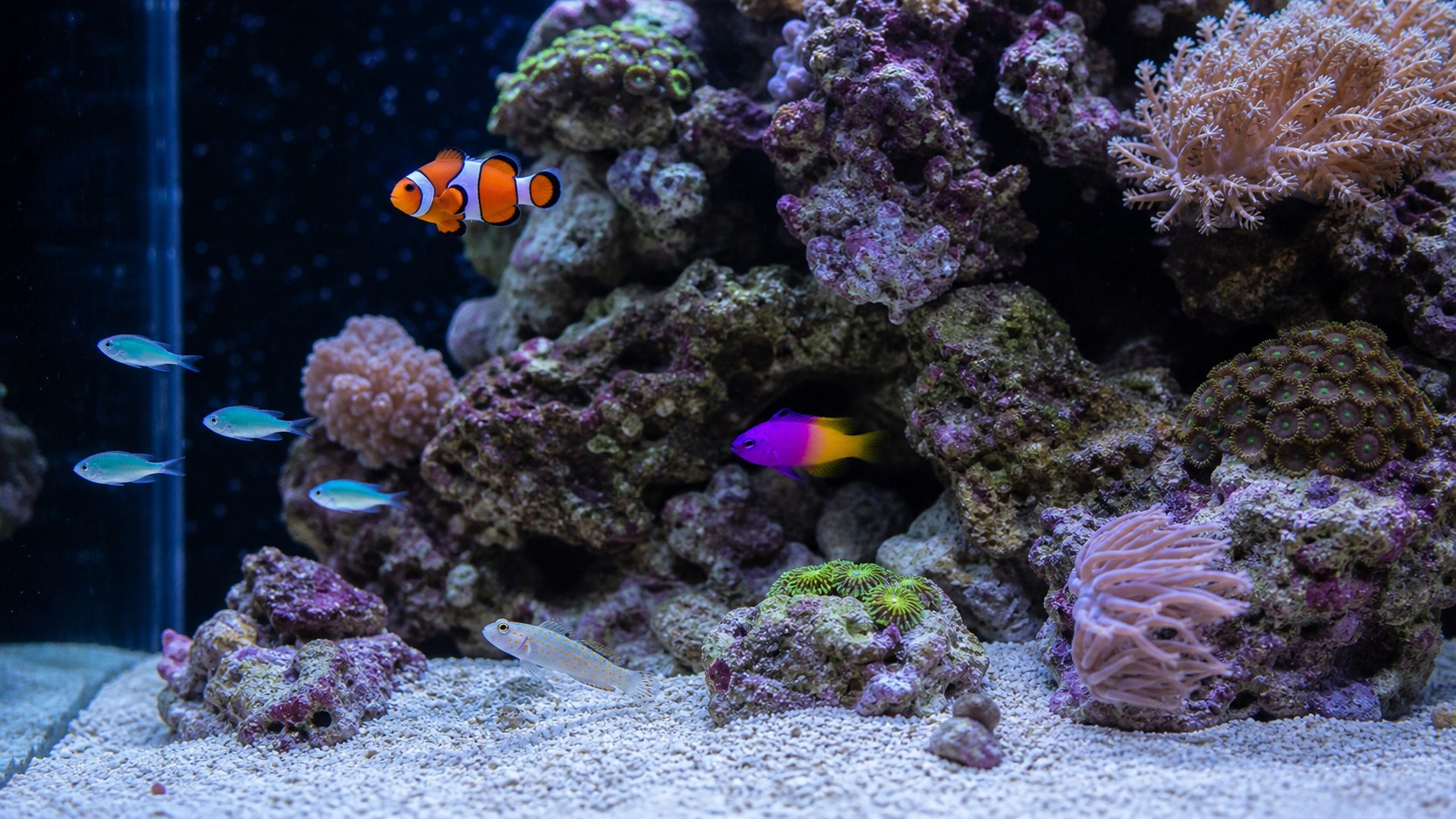
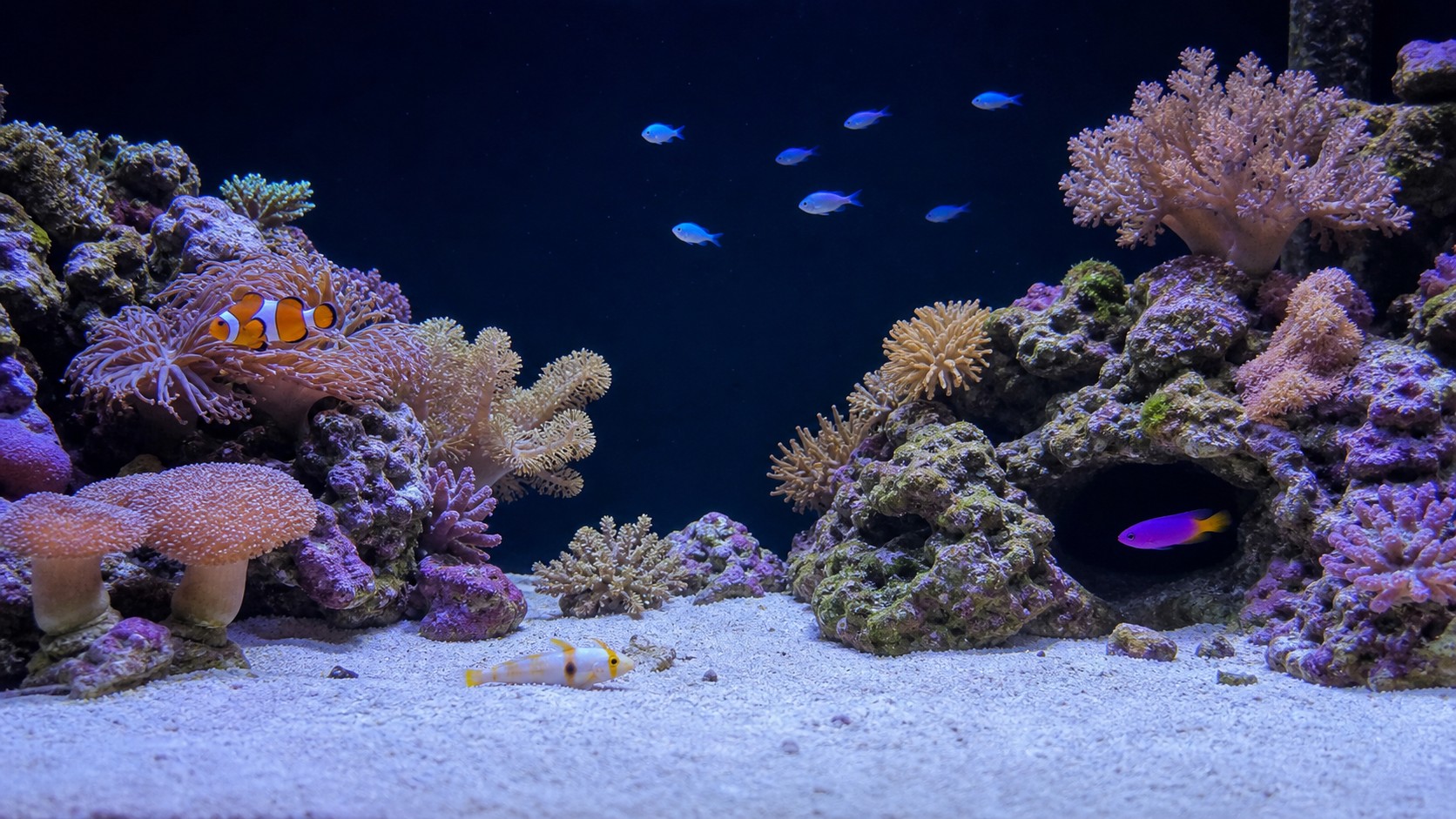
Captive-bred clownfish are popular in nano reefs for good reasons. They are hardy by marine standards, easy to feed, available in many varieties, and comfortable spending much of the day near a chosen corner, coral, or host substitute. Their limited roaming makes them easier to plan around than many active open-water species.
A pair can work beautifully in a small tank when the system is mature enough and tankmates are chosen carefully. The mistake is assuming clownfish are always gentle. Mature pairs can become territorial, especially near their preferred spot. In a nano reef, that territory may be a large percentage of the tank.
For beginners, clownfish teach an important lesson: hardy does not mean behavior-free. Give them space, avoid stacking too many similar midwater fish around them, and let their confidence become the anchor of the display.
Gobies bring character to the lower levels
Small gobies are some of the most rewarding nano reef fish because they use space differently from clownfish. Many perch, hover near sand, or claim a burrow entrance rather than pacing the full tank. That makes them excellent candidates for adding activity without overloading the open water.
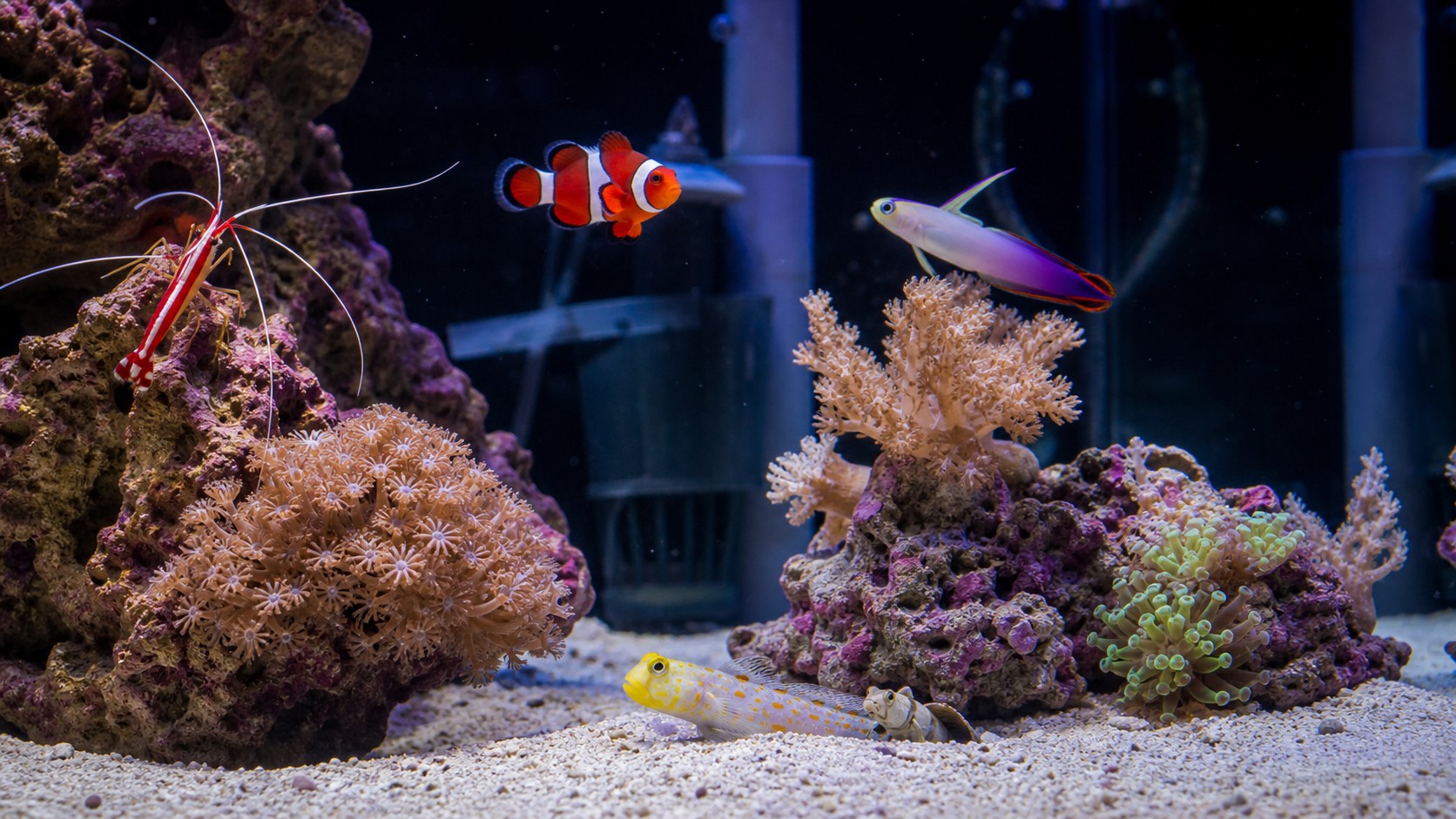
Watchman gobies, clown gobies, neon gobies, and other compact species each bring a different style. Some associate with pistol shrimp. Some perch among coral branches. Some clean or hover in full view. The best choice depends on the aquascape and whether the tank provides the right sand, caves, or coral structure.
Because gobies are small, feeding deserves attention. Confident tankmates may steal food quickly, so target feeding or careful observation may be needed. A goby that looks shy may simply be losing the race at mealtime.
Peaceful movement should be added sparingly
Many nano keepers want a little open-water motion, but this is where restraint matters most. Small chromis, dartfish, and similar swimmers can look perfect at first, yet some need more room, groups, or calmer company than a small tank can provide. A fish that lives by quick dashes also needs a covered tank because jumping is a real risk.
Firefish-style dartfish can be beautiful, but they often do best with peaceful neighbors and secure overhangs. Tiny blue-green fish add sparkle, but group dynamics may not stay simple in a cramped space. Before adding open-water species, ask whether the tank has both swimming room and quiet retreat options.
A nano reef does not need constant motion in every inch. Alternating stillness and movement often feels more natural.
Compatibility is more than reef-safe behavior
Reef-safe usually means a fish is unlikely to eat corals or ornamental invertebrates, but that is only one kind of compatibility. A fish can be reef-safe and still be wrong for a nano tank because it grows too large, bullies cave dwellers, eats too aggressively, or becomes stressed by limited swimming space.
Compatibility should include adult size, territory, diet, vertical zone, and temperament. Two fish that occupy different parts of the tank may coexist better than two similar fish that both want the same cave or current lane. A small peaceful fish may still suffer if it is added after a bolder species has claimed the entire rock structure.
A practical stocking rhythm
Start with the most important fish, not the most impulsive one. Let the tank mature, add livestock slowly, and watch behavior for several weeks before deciding what is missing. A nano reef often improves when the keeper resists filling every role immediately.
Add the shyest or most peaceful species before dominant fish whenever possible. Feed carefully, test consistently, and keep a lid on the aquarium if any species is known to jump. The best nano fish list is the one that still looks sensible after the animals are adults.
Stock the tank by zones
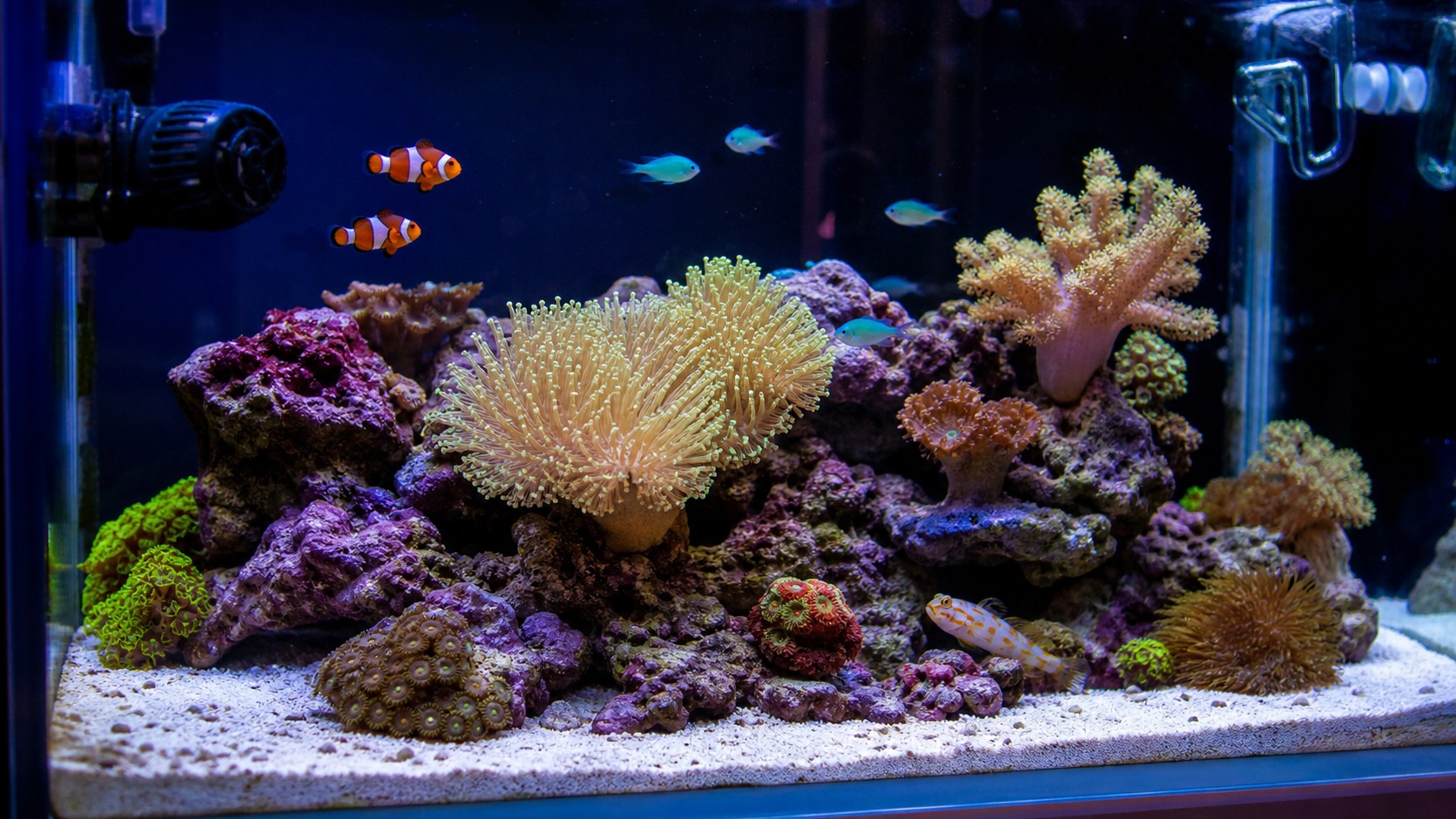
A practical nano reef stocking plan starts by dividing the aquarium into zones: sand, caves, rock faces, coral branches, and open water. Each zone can support only so much activity. A goby may own the sand and burrow entrance, while clownfish may claim a coral or upper corner. A shrimp may treat one cave as its station. When every animal wants the same zone, the tank feels smaller than it is.
Zone planning also creates a better viewing experience. Instead of all movement happening in one crowded area, the eye travels from sand to rock to water column. A small aquarium gains depth when animals use different spaces.
Use adult behavior as the standard
Juvenile livestock can make poor promises. Small fish grow, pairs form bonds, corals expand, and invertebrates become bolder. A nano reef stocking plan should be based on adult behavior, not the size of an animal on purchase day.
This is especially important with fish that become territorial. A young clownfish may seem timid, but a mature pair can defend a large patch. A small crab may seem harmless until it grows strong enough to bother neighbors. Planning around adult behavior prevents unpleasant surprises.
Keep bioload below the line
Bioload is not only the number of fish. It includes how much they eat, how much waste they create, how efficiently food is removed, and how stable the tank remains between water changes. A nano tank has less dilution, so a little overfeeding can matter quickly.
The safest plan leaves margin. If the tank looks full on paper, it may feel crowded in real life. Fewer animals, fed well and observed closely, usually outperform a maximal list that depends on perfect maintenance.
Turning the plan into a stable nano reef
Use Best Nano Reef Fish for Small Saltwater Aquariums as a planning tool rather than a shopping dare. Write the livestock list, then remove anything that needs more swimming room, heavier feeding, or more territorial space than the aquarium can comfortably provide. A good nano reef is usually edited, not packed.
After that, put the animals in a sensible order. Add peaceful or shy choices before bolder fish, give the tank time to show its nutrient pattern, and avoid adding several animals just because the water tests look good for one week. Stability is built through repeated ordinary days.
The most satisfying small saltwater aquariums have a quiet kind of confidence. The fish are visible but not frantic, the invertebrates have work to do, and the corals have room to expand. That is the standard worth aiming for.
Tank size changes the meaning of peaceful
In a nano reef, peaceful is not a fixed personality label. It depends on how much room an animal has to avoid conflict and how often it is forced to cross another animal's preferred space. A fish that is calm in a larger reef may become pushy in a small aquarium simply because every feeding lane, cave, and coral patch is nearby.
This is why fish should be planned around actual dimensions, not only gallons. A long shallow tank may give small swimmers more usable room than a tall narrow tank with the same volume. Rockwork can either create territories or block movement. A cave can reduce stress, but too much rock can remove open water and trap waste.
The best approach is to imagine ordinary daily movement. If clownfish, gobies, dartfish, basslets, and other compact reef-safe choices can feed, retreat, and rest without constant confrontation, the tank is probably moving in the right direction. If every animal must pass through the same narrow gap, the stocking list is asking for tension.
Feeding style can make or break the plan
Feeding is one of the easiest nano reef details to underestimate. Small fish often need small, regular meals, but small tanks cannot absorb unlimited leftovers. Fast feeders can steal everything before a shy goby or cautious firefish gets enough. Shrimp may learn to rush coral food. Snails and crabs may struggle if the tank is too clean or too new.
A good plan matches feeding behavior before livestock is added. Bold midwater fish can take prepared foods from the water column. Perching fish may need food delivered near their territory. Grazers need appropriate surfaces or supplemental algae-based food. Corals and invertebrates may benefit from occasional targeted feeding, but only if nutrients remain controlled.
The point is not to feed less at all costs. It is to feed deliberately. In a nano reef, deliberate feeding keeps animals full while preventing the nutrient swings that make algae, cloudy water, and stressed corals more likely.
The best nano reefs are edited over time
A nano reef should be allowed to mature visually and biologically. Early on, empty space can feel like a problem, but that space often becomes valuable as corals expand and animals claim routines. A tank that looks slightly understocked in month two may look balanced in month ten.
Editing also means saying no after the tank begins to work. If the current animals are visible, feeding well, and not fighting, a new addition must improve the system rather than merely fill a perceived gap. This is especially true for fish, where one extra fish can change the entire social balance.
Keep notes on what each animal does during feeding, at lights-on, at lights-out, and during maintenance. Those patterns reveal whether the tank has room for more life or whether it is already complete. The best nano keepers learn to recognize complete before the tank becomes crowded.
Warning signs that the list is too ambitious
Crowding rarely announces itself with one dramatic event. It usually appears as a pattern: one fish stays hidden, another guards the feeding area, a shrimp never leaves its cave, corals remain closed near a host fish, or nutrients climb even though maintenance has not changed. These signals deserve attention before adding anything else.
Another warning sign is needing complicated workarounds to justify the list. If several animals require target feeding at the same time, if aggression depends on perfect aquascape boundaries, or if water quality only stays acceptable with constant correction, the plan may be too tight for a small aquarium.
A successful nano reef should feel maintainable. It can still be detailed, colorful, and full of behavior, but it should not depend on luck. Leaving room for animal growth, coral expansion, and ordinary human inconsistency is part of responsible stocking.
A final check before adding the next animal
Before the next livestock purchase, spend a full week watching the tank as it is. Look for normal breathing, steady appetite, open coral tissue, clean but not sterile surfaces, and animals using several parts of the aquascape. If one fish controls every feeding, if a shy animal never appears, or if algae is accelerating, the next addition should wait.
Also check the maintenance pattern honestly. A nano reef that only stays stable with emergency water changes is not ready for more bioload. Evaporation, salinity, feeding, filter cleaning, and water changes should feel routine before the livestock list grows. The smaller the aquarium, the more important that routine becomes.
The best final question is simple: will this new animal still make sense when it is mature and the corals have grown? If the answer is uncertain, the responsible choice is to pause, research more, or choose a smaller role. Nano reefs reward patience with a tank that feels settled instead of stuffed. That patience is often what separates a compact reef that lasts from one that looks exciting for a month and then becomes difficult to manage.