Thriving in a small tank means fitting the rhythm of the space
Nano reef animals thrive when their daily habits match the aquarium. The best choices eat readily, use small territories well, and do not need a larger reef to behave naturally.
A: Fish, corals, shrimp, snails, crabs, and other living additions all count.
A: Hardy corals can work early, but only after salinity and basic stability are controlled.
A: Small at first, then adjusted to actual algae and leftover food.
A: No. They can help, but they may bother snails or each other.
A: Many can, if tankmates are peaceful and water quality is stable.
A: Animals with specialized diets, large adult size, or poor survival records.
A: They add less waste than fish, but feeding and die-off still affect water quality.
A: Slow additions let the filter, nutrients, and territories adjust.
A: No. Many small hitchhikers are harmless or helpful after identification.
A: A lightly stocked, stable tank where every animal is easy to observe.
Livestock means the whole community
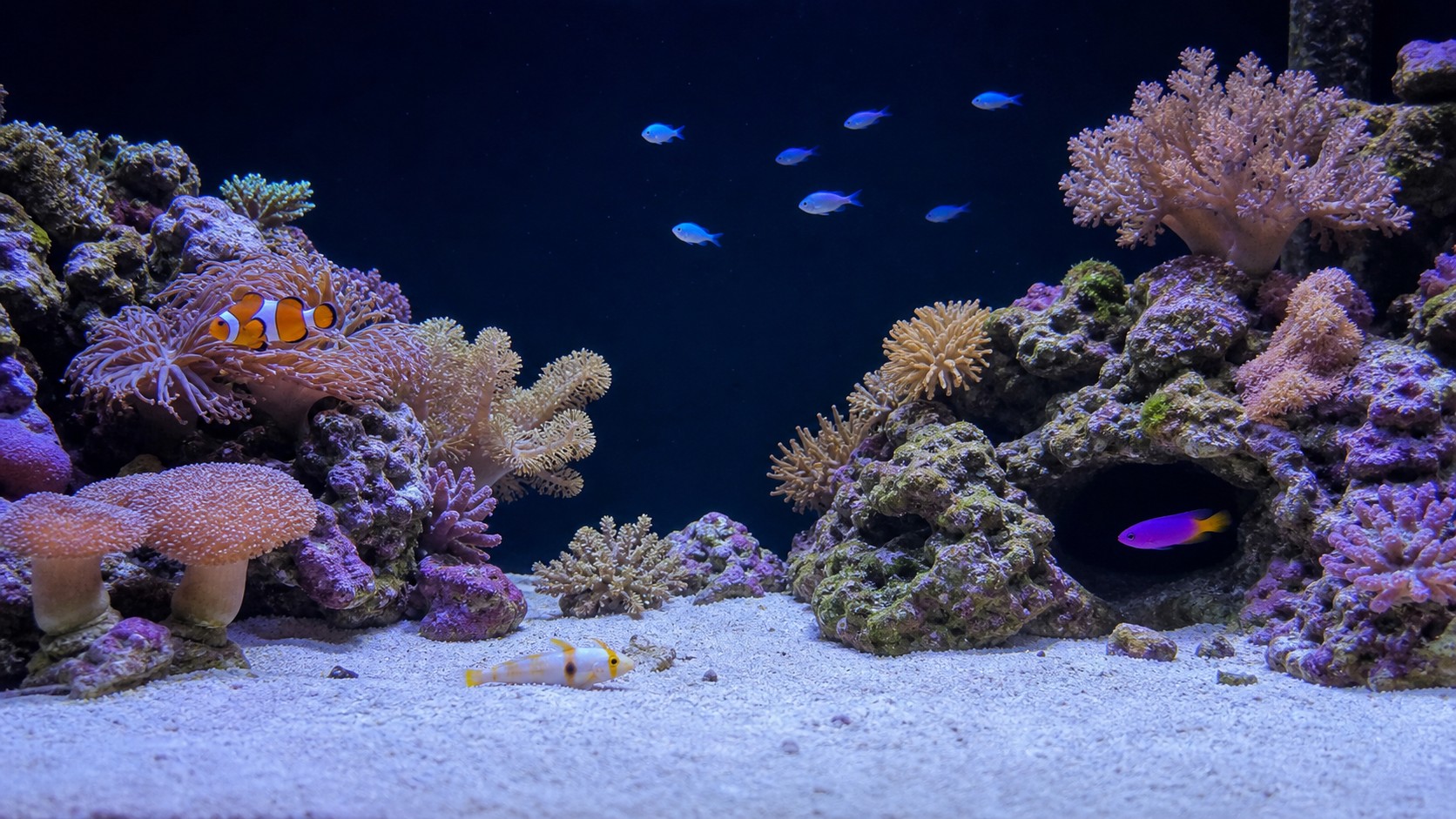
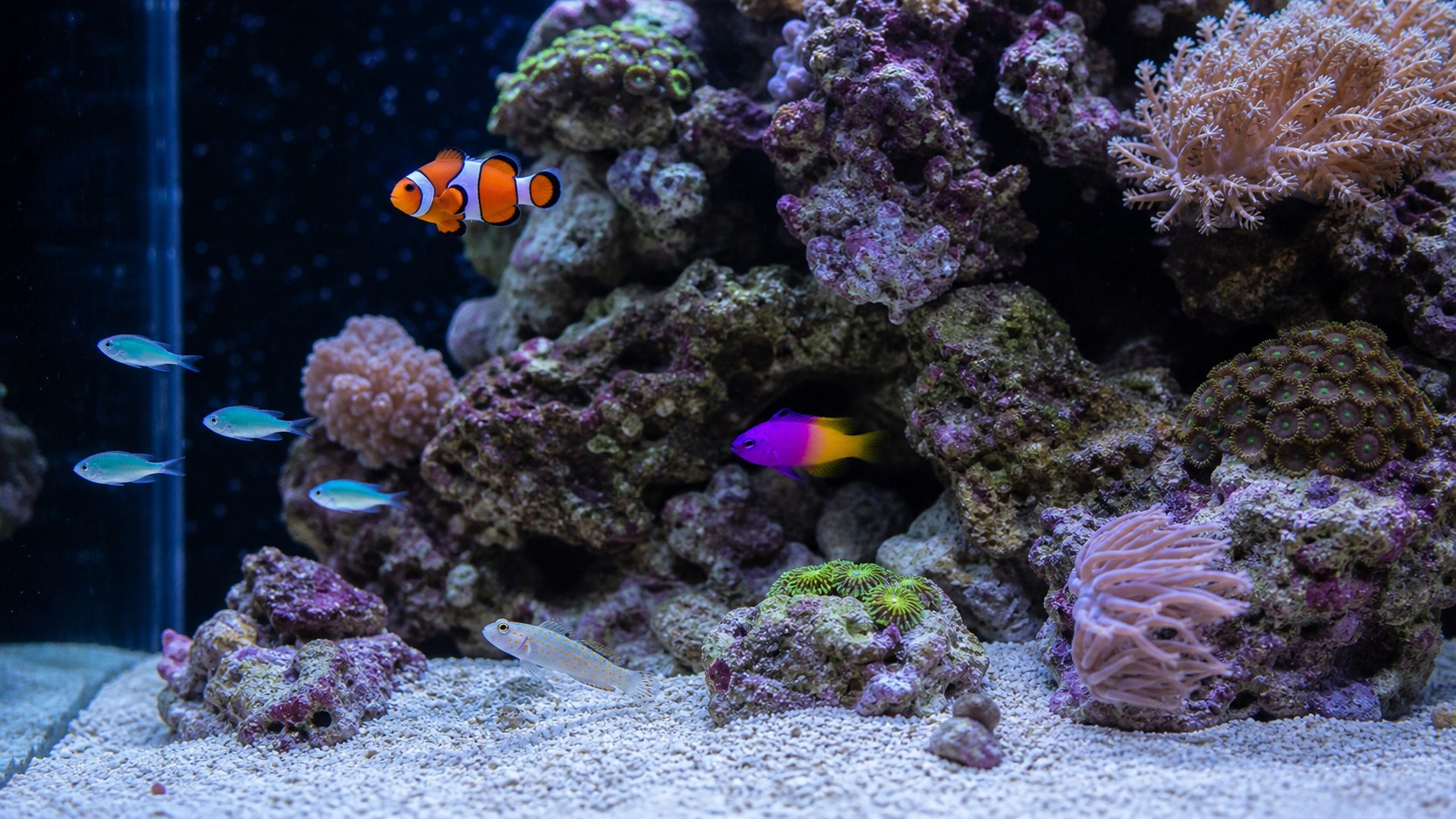
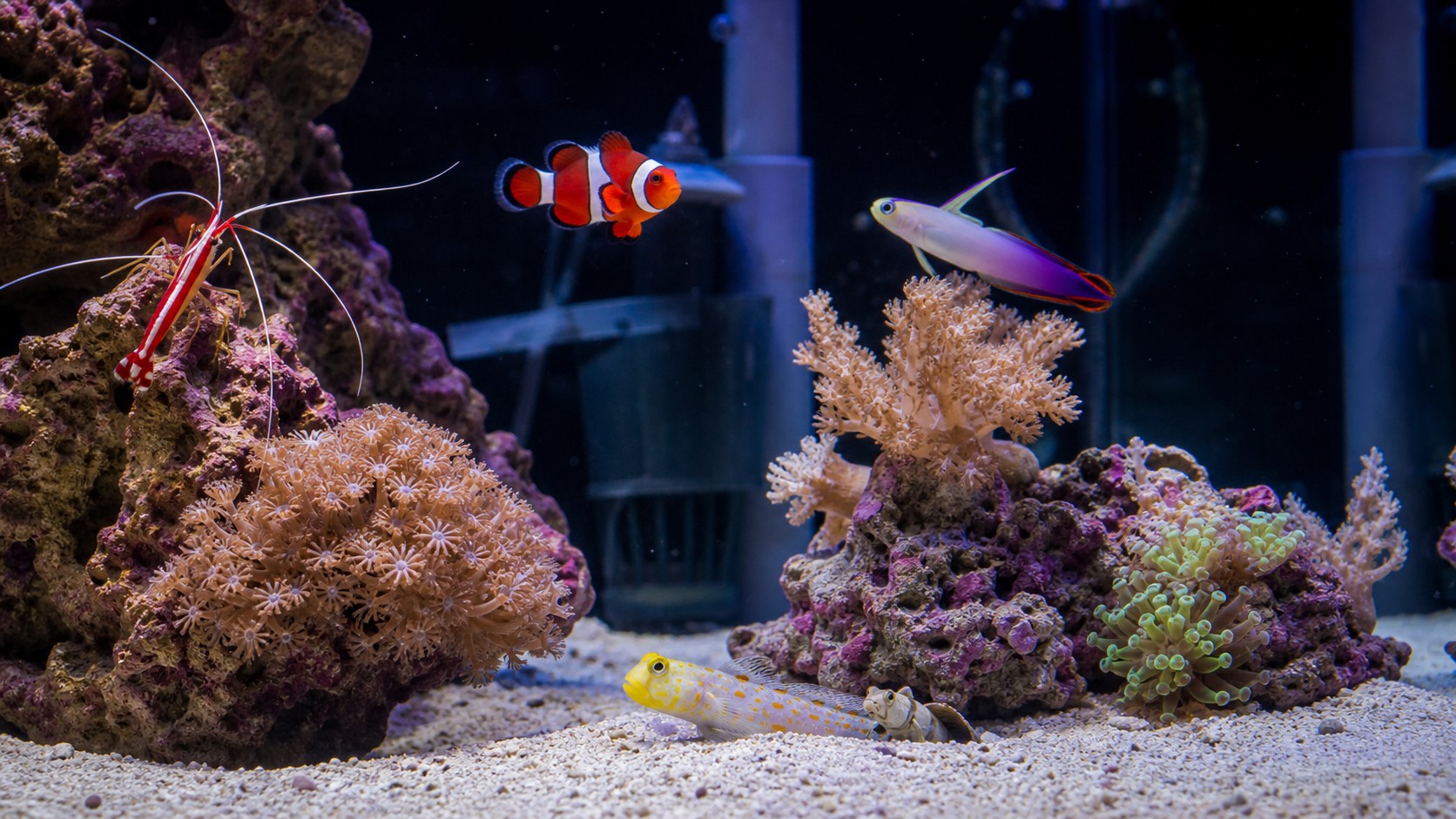
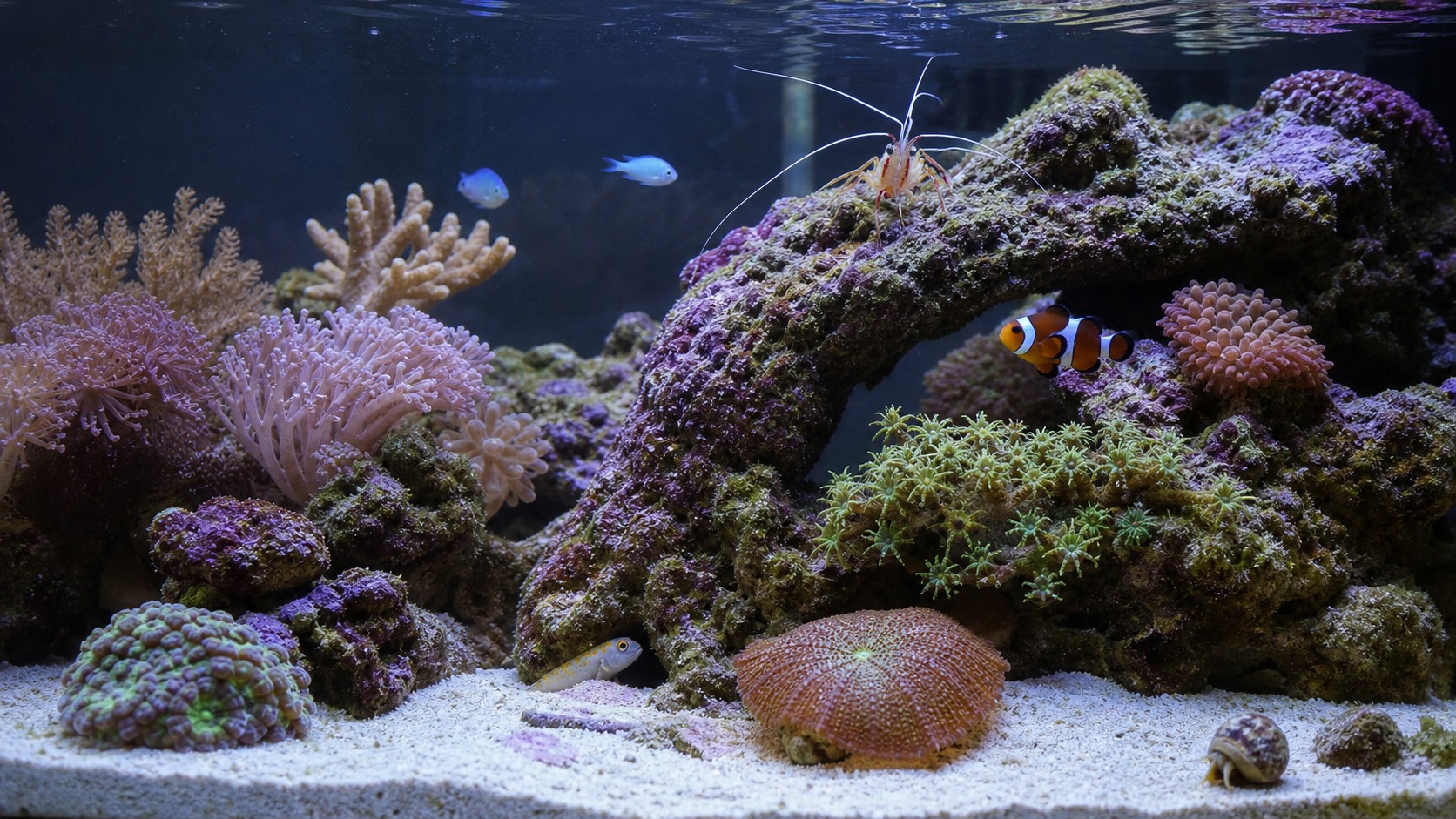
Nano reef livestock is more than a fish list. It includes fish, corals, shrimp, snails, crabs, and the hidden life that develops in rock and sand. In a small saltwater aquarium, those choices are tightly connected. A messy feeder affects the cleanup crew. A territorial fish changes where shrimp and gobies feel safe. A coral that expands at night may reduce usable space for nearby animals.
Beginners do best when they think in layers. Fish provide personality and movement. Corals create structure and color. Invertebrates handle grazing, scavenging, and visual detail. Bacteria and microfauna keep the invisible side of the system working. The tank succeeds when those layers support one another instead of competing for the same limited space.
Begin with hardy, observable animals
The first livestock choices should be easy to feed, easy to observe, and tolerant of normal beginner learning curves. Captive-bred clownfish, sturdy soft corals, common snails, and carefully chosen shrimp often make better early choices than delicate fish or demanding corals.
Hardy does not mean disposable. It means the animal is more likely to thrive while the aquarist learns the rhythm of salinity, evaporation, feeding, testing, and water changes. A nano reef gives quick feedback, so the first animals should help build confidence rather than create constant emergencies.
Observation is part of the value. A beginner should be able to tell whether an animal is eating, extending, moving normally, or being harassed. Livestock that vanishes for days or requires specialized feeding can wait.
Cleanup crews should fit the actual problem
Snails, hermit crabs, shrimp, and other small invertebrates are often sold as a cleanup crew, but they are not interchangeable. Some graze film algae, some stir sand, some scavenge meaty leftovers, and some behave opportunistically if underfed. The right mix depends on what the tank actually produces.
Adding too many cleaners too early can create starvation. A brand-new nano tank may not have enough algae or detritus to support a large crew. It is better to start modestly and adjust as surfaces mature. A few well-matched animals are more useful than a package chosen only by tank size.
Cleanup animals reduce pressure; they do not replace maintenance. Water changes, careful feeding, and stable equipment still do the heavy lifting.
Corals change the livestock plan
Soft corals and beginner-friendly LPS corals can make a nano reef feel full without adding fish waste. They also create new space considerations. A mushroom coral may expand wider than expected. Zoanthids may spread. Euphyllia-style corals can sting neighbors with sweeper tentacles. Even peaceful corals occupy territory.
Fish and invertebrates interact with those coral choices. Clownfish may adopt a coral and irritate it. Gobies may perch on polyps. Shrimp may steal food from corals during feeding. These behaviors are not always disasters, but they are easier to manage when the aquascape leaves room around each animal.
The hidden livestock matters too
Pods, worms, tiny brittle stars, bacteria, and other small life forms often arrive with rock, coral plugs, or mature media. Some are pests, but many are part of a healthy reef system. They process leftovers, feed small predators, and make the tank feel biologically mature.
Beginners sometimes react to every unknown creature with panic. A better response is identification before action. Many small animals are harmless or helpful. Learning the difference between useful hitchhikers and real pests is part of becoming a reef keeper.
Build slowly and let the tank answer
A nano reef should be stocked in stages. Add a small number of animals, watch how nutrients and behavior respond, then decide what the next gap really is. This approach prevents the common beginner spiral of adding livestock to solve problems caused by too much livestock.
The tank will show patterns if given time. Algae may appear, stabilize, and decline. Corals may reveal preferred flow. Fish may claim territories. Shrimp may choose caves. Those signals make the next choice clearer than any one-size-fits-all stocking chart.
Stock the tank by zones
A practical nano reef stocking plan starts by dividing the aquarium into zones: sand, caves, rock faces, coral branches, and open water. Each zone can support only so much activity. A goby may own the sand and burrow entrance, while clownfish may claim a coral or upper corner. A shrimp may treat one cave as its station. When every animal wants the same zone, the tank feels smaller than it is.
Zone planning also creates a better viewing experience. Instead of all movement happening in one crowded area, the eye travels from sand to rock to water column. A small aquarium gains depth when animals use different spaces.
Use adult behavior as the standard
Juvenile livestock can make poor promises. Small fish grow, pairs form bonds, corals expand, and invertebrates become bolder. A nano reef stocking plan should be based on adult behavior, not the size of an animal on purchase day.
This is especially important with fish that become territorial. A young clownfish may seem timid, but a mature pair can defend a large patch. A small crab may seem harmless until it grows strong enough to bother neighbors. Planning around adult behavior prevents unpleasant surprises.
Keep bioload below the line
Bioload is not only the number of fish. It includes how much they eat, how much waste they create, how efficiently food is removed, and how stable the tank remains between water changes. A nano tank has less dilution, so a little overfeeding can matter quickly.
The safest plan leaves margin. If the tank looks full on paper, it may feel crowded in real life. Fewer animals, fed well and observed closely, usually outperform a maximal list that depends on perfect maintenance.
Turning the plan into a stable nano reef
Use Nano Reef Animals That Thrive in Small Tanks as a planning tool rather than a shopping dare. Write the livestock list, then remove anything that needs more swimming room, heavier feeding, or more territorial space than the aquarium can comfortably provide. A good nano reef is usually edited, not packed.
After that, put the animals in a sensible order. Add peaceful or shy choices before bolder fish, give the tank time to show its nutrient pattern, and avoid adding several animals just because the water tests look good for one week. Stability is built through repeated ordinary days.
The most satisfying small saltwater aquariums have a quiet kind of confidence. The fish are visible but not frantic, the invertebrates have work to do, and the corals have room to expand. That is the standard worth aiming for.
Tank size changes the meaning of peaceful
In a nano reef, peaceful is not a fixed personality label. It depends on how much room an animal has to avoid conflict and how often it is forced to cross another animal's preferred space. A fish that is calm in a larger reef may become pushy in a small aquarium simply because every feeding lane, cave, and coral patch is nearby.
This is why long-term thriving should be planned around actual dimensions, not only gallons. A long shallow tank may give small swimmers more usable room than a tall narrow tank with the same volume. Rockwork can either create territories or block movement. A cave can reduce stress, but too much rock can remove open water and trap waste.
The best approach is to imagine ordinary daily movement. If animals whose habits stay manageable in a compact reef can feed, retreat, and rest without constant confrontation, the tank is probably moving in the right direction. If every animal must pass through the same narrow gap, the stocking list is asking for tension.
Feeding style can make or break the plan
Feeding is one of the easiest nano reef details to underestimate. Small fish often need small, regular meals, but small tanks cannot absorb unlimited leftovers. Fast feeders can steal everything before a shy goby or cautious firefish gets enough. Shrimp may learn to rush coral food. Snails and crabs may struggle if the tank is too clean or too new.
A good plan matches feeding behavior before livestock is added. Bold midwater fish can take prepared foods from the water column. Perching fish may need food delivered near their territory. Grazers need appropriate surfaces or supplemental algae-based food. Corals and invertebrates may benefit from occasional targeted feeding, but only if nutrients remain controlled.
The point is not to feed less at all costs. It is to feed deliberately. In a nano reef, deliberate feeding keeps animals full while preventing the nutrient swings that make algae, cloudy water, and stressed corals more likely.
The best nano reefs are edited over time
A nano reef should be allowed to mature visually and biologically. Early on, empty space can feel like a problem, but that space often becomes valuable as corals expand and animals claim routines. A tank that looks slightly understocked in month two may look balanced in month ten.
Editing also means saying no after the tank begins to work. If the current animals are visible, feeding well, and not fighting, a new addition must improve the system rather than merely fill a perceived gap. This is especially true for long-term thriving, where one extra fish can change the entire social balance.
Keep notes on what each animal does during feeding, at lights-on, at lights-out, and during maintenance. Those patterns reveal whether the tank has room for more life or whether it is already complete. The best nano keepers learn to recognize complete before the tank becomes crowded.
Warning signs that the list is too ambitious
Crowding rarely announces itself with one dramatic event. It usually appears as a pattern: one fish stays hidden, another guards the feeding area, a shrimp never leaves its cave, corals remain closed near a host fish, or nutrients climb even though maintenance has not changed. These signals deserve attention before adding anything else.
Another warning sign is needing complicated workarounds to justify the list. If several animals require target feeding at the same time, if aggression depends on perfect aquascape boundaries, or if water quality only stays acceptable with constant correction, the plan may be too tight for a small aquarium.
A successful nano reef should feel maintainable. It can still be detailed, colorful, and full of behavior, but it should not depend on luck. Leaving room for animal growth, coral expansion, and ordinary human inconsistency is part of responsible stocking.
A final check before adding the next animal
Before the next livestock purchase, spend a full week watching the tank as it is. Look for normal breathing, steady appetite, open coral tissue, clean but not sterile surfaces, and animals using several parts of the aquascape. If one fish controls every feeding, if a shy animal never appears, or if algae is accelerating, the next addition should wait.
Also check the maintenance pattern honestly. A nano reef that only stays stable with emergency water changes is not ready for more bioload. Evaporation, salinity, feeding, filter cleaning, and water changes should feel routine before the livestock list grows. The smaller the aquarium, the more important that routine becomes.
The best final question is simple: will this new animal still make sense when it is mature and the corals have grown? If the answer is uncertain, the responsible choice is to pause, research more, or choose a smaller role. Nano reefs reward patience with a tank that feels settled instead of stuffed. That patience is often what separates a compact reef that lasts from one that looks exciting for a month and then becomes difficult to manage.